
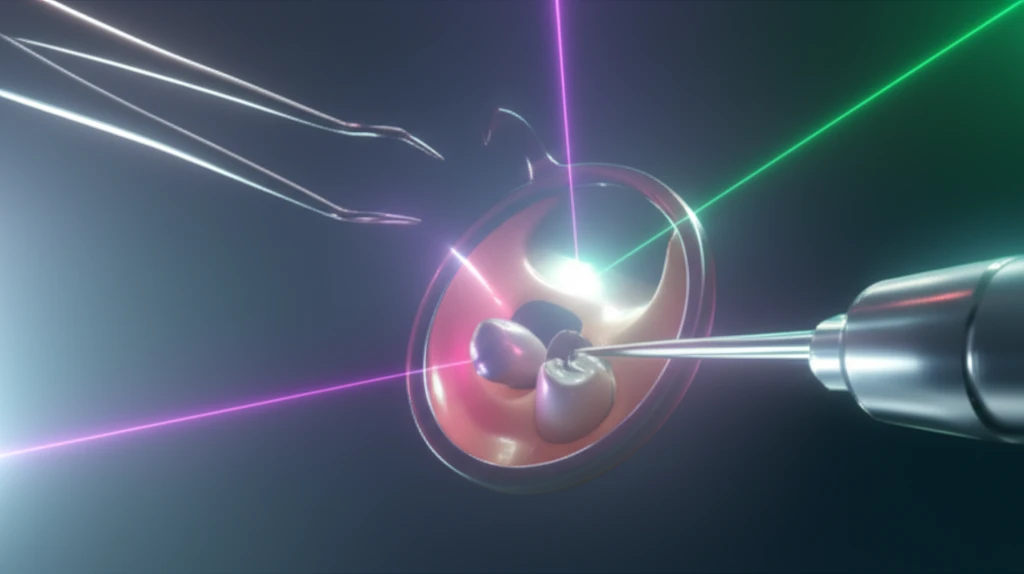
Laser therapy aiding tooth extraction healing

Laser Therapy After Tooth Extraction: Does It Really Speed Up Healing?

"A closer look at the science behind laser treatments and how they can potentially enhance your recovery after a tooth extraction."


Tooth extractions are a common dental procedure, but the healing process can sometimes be lengthy and uncomfortable. Innovative methods, like laser therapy, are gaining attention for their potential to enhance recovery. Laser therapy involves using focused light to stimulate tissue repair, reduce inflammation, and alleviate pain.

The application of lasers in dentistry dates back several decades. Early studies highlighted the potential of low-energy lasers to improve wound healing. Since then, various types of lasers have been explored, each with unique properties and applications. Lasers work by stimulating cellular activity, boosting the body's natural healing mechanisms.

This article explores the current evidence on laser therapy following tooth extractions, examining how it works, the types of lasers used, and what the research says about its effectiveness in improving the healing process. Whether you're a dental professional or a patient considering this option, this guide provides a comprehensive overview of laser therapy for post-extraction care.

How Does Laser Therapy Support Wound Healing After Tooth Extraction?

Laser therapy aiding tooth extraction healing

Laser therapy aims to amplify the natural wound-healing cascade in the oral environment. After a tooth extraction, the body initiates a complex repair process that involves multiple stages, from inflammation to tissue regeneration. Lasers can influence these stages by:

When laser light interacts with tissues, it can trigger several beneficial effects:

  • Stimulating Cell Regeneration: Lasers can activate cells involved in tissue repair, such as fibroblasts and osteoblasts.
  • Reducing Pain: Laser therapy can modulate nerve activity and reduce pain signals.
  • Modulating the Immune System: Lasers can influence the inflammatory response, promoting a balanced healing environment.
  • Improving Blood Flow: Lasers can stimulate blood vessel formation, ensuring adequate nutrient supply to the healing area.
These combined effects potentially lead to faster and more comfortable recovery after tooth extraction.

The Future of Laser Therapy in Post-Extraction Care

Laser therapy presents a promising avenue for improving the tooth extraction healing process. Ongoing research is refining laser protocols and identifying the patients who can benefit most from this approach. As the evidence base grows, laser therapy may become a standard component of post-extraction care, offering patients a smoother and more comfortable recovery experience.

About this Article -

This article was crafted using a human-AI hybrid and collaborative approach. AI assisted our team with initial drafting, research insights, identifying key questions, and image generation. Our human editors guided topic selection, defined the angle, structured the content, ensured factual accuracy and relevance, refined the tone, and conducted thorough editing to deliver helpful, high-quality information.See our About page for more information.

This article is based on research published under:

DOI-LINK: 10.1111/wrr.12678, Alternate LINK

Title: Does Laser Therapy Improve The Wound Healing Process After Tooth Extraction? A Systematic Review

Subject: Dermatology

Journal: Wound Repair and Regeneration

Publisher: Wiley

Authors: Carmen Helena Jacques Lemes, Wellington Luiz De Oliveira Da Rosa, Camila Leal Sonego, Bianca Jacques Lemes, Rafael Ratto Moraes, Adriana Fernandes Da Silva

Published: 2018-11-15

Everything You Need To Know

1

How does laser therapy help after a tooth extraction?

Laser therapy helps after tooth extraction by stimulating tissue repair with focused light. This stimulation can reduce inflammation, alleviate pain, and generally improve recovery. The process involves stimulating cellular activity to enhance the body’s natural healing mechanisms, potentially leading to a faster and more comfortable recovery experience.

2

What are the specific effects of laser light interacting with tissues during post-extraction laser therapy?

When laser light interacts with tissues, it can trigger several beneficial effects that promote healing, including stimulating cell regeneration by activating cells like fibroblasts and osteoblasts, reducing pain by modulating nerve activity, modulating the immune system to promote a balanced inflammatory response, and improving blood flow by stimulating blood vessel formation. All of these effects can lead to faster and more comfortable recovery after tooth extraction.

3

What types of lasers are used in laser therapy following tooth extractions, and why are they effective?

Various types of lasers have been explored in dentistry, each with unique properties and applications for post-extraction care. Low-energy lasers, in particular, have shown potential in improving wound healing by stimulating cellular activity and boosting the body's natural healing mechanisms. These lasers work by stimulating cell regeneration, reducing pain signals, modulating the immune system, and improving blood flow to the healing area.

4

Can laser therapy become a standard component of post-extraction dental care in the future?

Laser therapy presents a promising method for improving the tooth extraction healing process, and ongoing research is refining laser protocols and identifying which patients can benefit most from this approach. As the evidence base grows, laser therapy may become a standard component of post-extraction care, offering patients a smoother and more comfortable recovery experience. More studies are needed to explore how to personalize the treatment and to compare its effectiveness with other established methods.

5

Besides pain reduction, what other benefits does laser therapy offer in post-extraction care, and how do these benefits contribute to overall healing?

Beyond pain reduction, laser therapy can offer multiple benefits in post-extraction care. It stimulates cell regeneration, activates cells involved in tissue repair such as fibroblasts and osteoblasts, modulates the immune system to promote a balanced inflammatory response, and improves blood flow by stimulating blood vessel formation. These effects can all lead to a faster and more comfortable recovery after tooth extraction.

Newsletter Subscribe

Subscribe to get the latest articles and insights directly in your inbox.