
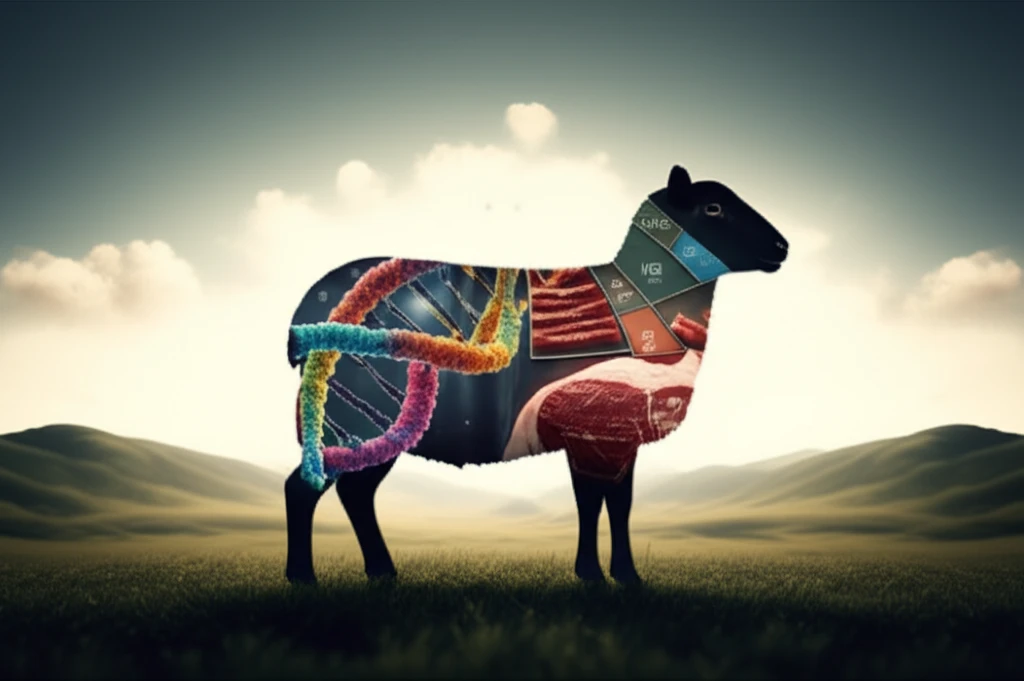
Lamb meat quality illustration showing genetic influence.

Lamb Meat Quality: Decoding the Best Breed and Weight for Your Plate

"Discover how genetics and slaughter weight impact lamb tenderness and taste – a guide for informed consumers."


In recent years, the demand for high-quality lamb has surged, driven by consumers who are increasingly discerning about taste and quality. This has created a need for standardized lamb production, focusing on lean meat and optimal muscle content. Understanding the factors that influence lamb quality, such as genetics and slaughter weight, is crucial for both producers and consumers alike.

One of the key indicators of lamb quality is the composition of the 12th rib, which can reveal valuable information about overall body composition. By analyzing the muscle, fat, and bone content in this area, producers can assess the potential of different breeds and management systems. This knowledge helps in tailoring breeding and feeding strategies to meet specific market demands.

Crossbreeding, combining naturalized and exotic breeds, offers a promising avenue for enhancing lamb productivity and meat quality. This approach leverages desirable traits from different breeds, improving overall performance. Determining the optimal slaughter weight is vital, as it directly impacts the quality of the final product, considering factors like age, sex, and feeding regime. This guide examines how genetic groups and slaughter weights affect the tissue and centesimal composition of lamb.

Genetics vs. Weight: How They Shape Lamb Quality

Lamb meat quality illustration showing genetic influence.

A study was conducted to evaluate the impact of genetic groups and slaughter weight on various meat quality attributes of lamb. The research focused on three genetic groups: Santa Ines, 1/2 Ile de France x 1/2 Santa Ines, and 1/2 Texel x 1/2 Santa Ines. Lambs from these groups were slaughtered at two different weights, 35kg and 45kg. After slaughter, the 12th rib was analyzed for tissue composition, including muscle, fat, and bone, as well as centesimal composition, such as moisture, protein, and fat content.

The study revealed significant differences among the genetic groups. Texel x Santa Ines lambs had a higher muscle weight (43.7g) and fat content (36.1%). These lambs showed great finishing potential for slaughter. Santa Ines lambs were also high in muscle (43.3%) and low in fat (33.0%). These findings indicate that breed selection plays a crucial role in determining meat quality and carcass composition.

  • Texel Crosses: Ideal for muscle and earlier finishing.
  • Santa Ines: Leaner profile with less fat deposition.
Slaughter weight also emerged as a key factor influencing lamb quality. Lambs slaughtered at 35kg had the lowest fat content and the highest edible portion. This is the recommended slaughter weight. These results suggest that slaughter weight should be carefully considered to optimize meat quality and minimize fat content, catering to consumer preferences for leaner meat.

Making Informed Choices for Better Lamb

Understanding how genetics and slaughter weight influence lamb meat composition empowers consumers and producers alike. By selecting breeds known for their muscle content and optimizing slaughter weights, it's possible to produce leaner, higher-quality lamb that meets consumer demand for taste and health. The results of this study underscore the importance of informed decision-making in the lamb industry, driving improvements in meat quality and consumer satisfaction.

About this Article -

This article was crafted using a human-AI hybrid and collaborative approach. AI assisted our team with initial drafting, research insights, identifying key questions, and image generation. Our human editors guided topic selection, defined the angle, structured the content, ensured factual accuracy and relevance, refined the tone, and conducted thorough editing to deliver helpful, high-quality information.See our About page for more information.

This article is based on research published under:

DOI-LINK: 10.1590/s1519-99402015000200004, Alternate LINK

Title: Tissue And Centesimal Composition Of The 12Th Rib Of Lambs From Genetic Groups Different

Subject: Animal Science and Zoology

Journal: Revista Brasileira de Saúde e Produção Animal

Publisher: FapUNIFESP (SciELO)

Authors: Aline Vieira Landim, Angela Maria De Vasconcelos, Marilma Pacheco Corrêa, Hélio Henrique Araújo Costa, Maria Clorinda Soares Fioravanti, Helder Louvandini, Concepta Mcmanus

Published: 2015-06-01

Everything You Need To Know

1

What is the significance of the 12th rib in assessing lamb quality?

The 12th rib is a key indicator of overall body composition in lamb. Analyzing the muscle, fat, and bone content in this area provides insights into the potential of different breeds and management systems. The composition of the 12th rib helps producers tailor breeding and feeding strategies to meet specific market demands, ultimately affecting the quality of the lamb meat available to consumers.

2

How does crossbreeding improve lamb quality?

Crossbreeding involves combining traits from different breeds, such as naturalized and exotic breeds, to improve lamb productivity and meat quality. This approach leverages desirable characteristics from various breeds, enhancing overall performance. An example is the use of Santa Ines and Texel genetics. Crossbreeding is significant because it allows producers to optimize the genetic potential of their lambs, leading to better meat quality and meeting consumer preferences.

3

What factors were investigated in the study on lamb quality?

The study investigated the impact of genetics and slaughter weight on lamb quality. Three genetic groups were assessed: Santa Ines, 1/2 Ile de France x 1/2 Santa Ines, and 1/2 Texel x 1/2 Santa Ines. The study compared lambs slaughtered at 35kg and 45kg. The research focused on the 12th rib, analyzing tissue composition, including muscle, fat, and bone, and centesimal composition, such as moisture, protein, and fat content. The findings revealed significant differences in meat quality attributes among the genetic groups and slaughter weights.

4

How does slaughter weight affect lamb quality?

Slaughter weight significantly influences lamb quality. Lambs slaughtered at 35kg exhibited the lowest fat content and highest edible portion. In contrast, lambs slaughtered at 45kg had higher fat content. This highlights the importance of carefully considering slaughter weight to optimize meat quality and cater to consumer preferences for leaner meat. Choosing the right slaughter weight is crucial for achieving the desired balance between muscle and fat.

5

How do different genetic groups impact lamb meat quality?

Genetic groups, such as Santa Ines and Texel crosses, play a vital role in determining lamb meat quality. Texel crosses are known for higher muscle and fat content, which can lead to earlier finishing. Santa Ines lambs have a leaner profile with lower fat deposition. These differences in genetic groups provide valuable information for producers and consumers when making informed choices about lamb production and consumption. Understanding these genetic variations allows for better selection and management practices to meet specific market demands for lamb quality.

Newsletter Subscribe

Subscribe to get the latest articles and insights directly in your inbox.