
Lab-Grown Liver Tissue: A New Hope for Treating Liver Disease?

"Stem cell-derived 'mini-livers' show promise for research and potential future therapies."
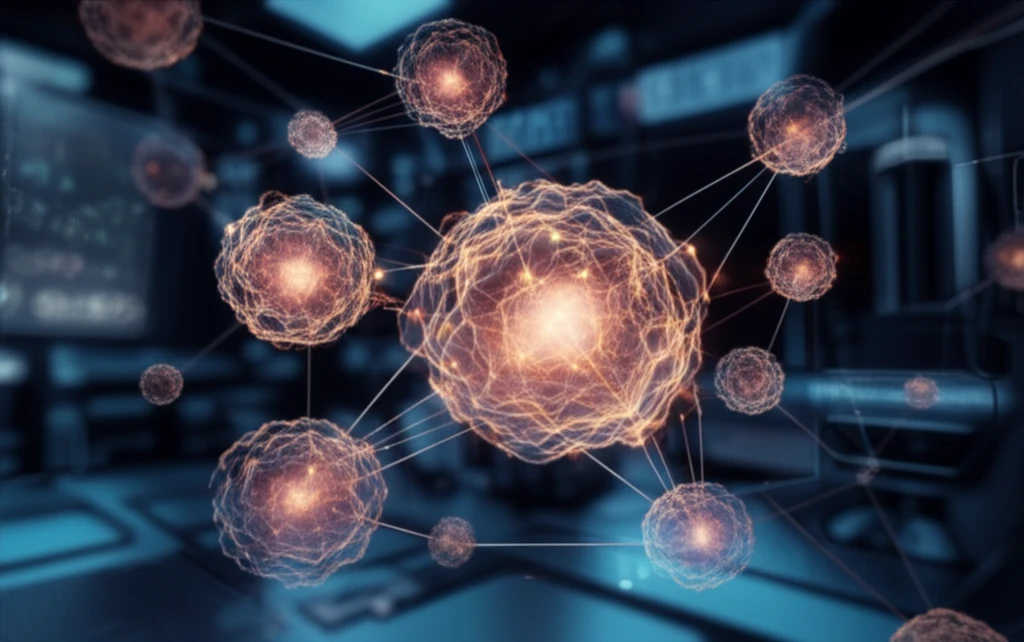
In a recent issue of Archives of Toxicology, Hassan Rashidi and his team from the University of Edinburgh unveiled a study detailing the creation of 3D liver tissue spheroids derived from pluripotent stem cells. These spheroids, essentially miniature versions of liver tissue, hold immense potential for advancing our understanding and treatment of liver diseases.
The team utilized various human pluripotent stem cell lines, including H9, Man12, FSPS13B, and P106, to generate these 3D structures. The process involved differentiating the stem cells into hepatoblasts (precursor liver cells) and then further into hepatocyte-like cells (HLCs) using specific growth factors (HGF and OSM) in a culture environment that encouraged spheroid formation. These spheroids could be maintained in the lab for up to a year, showcasing their stability and potential for long-term study.
The resulting spheroids exhibited high expression of key liver proteins like HNF4A and albumin, confirming their liver-like characteristics. Importantly, the expression of specific liver enzymes (CYP3A4, SULT1, and MRP1) was observed primarily in the periphery of the spheroids, mirroring certain aspects of liver tissue organization. The success of this method across different stem cell lines (hESC and hiPSC) further strengthens its potential for wider application.
Why are Liver Spheroids a Big Deal?
The creation of these liver spheroids addresses a critical need in the field of liver research. For years, scientists have been working to develop reliable in vitro (lab-based) systems for studying liver function and toxicity. Traditional methods often fall short of accurately replicating the complexity of the human liver, making it difficult to predict how drugs and other substances will affect the organ in vivo (in a living organism).
- Improved Liver Function: 3D structures allow cells to interact with each other in a more natural way, leading to better representation of liver-specific functions like metabolism and enzyme induction.
- Long-Term Studies: The ability to maintain these spheroids for extended periods (up to a year) enables long-term toxicity studies and investigations into chronic liver diseases.
- Omics Applications: Spheroids can be used for advanced “omics” studies (genomics, proteomics, metabolomics) to analyze the effects of various compounds on liver cells at a molecular level.
- Personalized Medicine Potential: iPS cells from individuals with genetic liver diseases can be used to generate spheroids, creating models for studying and potentially treating these specific conditions.
Future Directions: From Lab to Clinic?
The development of liver spheroids represents a significant advancement in liver research, offering a more realistic and versatile model for studying liver function, toxicity, and disease.
However, further research is needed to fully characterize these HLCs and optimize their differentiation to more closely resemble primary human hepatocytes. Specifically, future studies should focus on:
Determining whether the supportive effect of HLC-spheroids in mouse models of partial hepatectomy have a clinical perspective, and if this may lead to applications for transplants.