
Knee Surgery Pain Relief: Are Nerve Blocks Safe & Effective?

"A closer look at the retracted study on adductor canal vs. femoral nerve blocks for knee arthroplasty."
Knee replacement surgery, also known as knee arthroplasty, is a common procedure for individuals suffering from severe knee pain and disability due to arthritis or injury. While the surgery can significantly improve quality of life, managing post-operative pain is crucial for a successful recovery. Various pain management techniques are employed, including opioid medications, physical therapy, and nerve blocks.
Nerve blocks involve injecting a local anesthetic near specific nerves to block pain signals from reaching the brain. Two common types of nerve blocks used in knee arthroplasty are adductor canal blocks and femoral nerve blocks. The adductor canal block targets nerves in the thigh, providing pain relief to the front and inner side of the knee. The femoral nerve block targets the femoral nerve, which supplies sensation to the front of the thigh and knee.
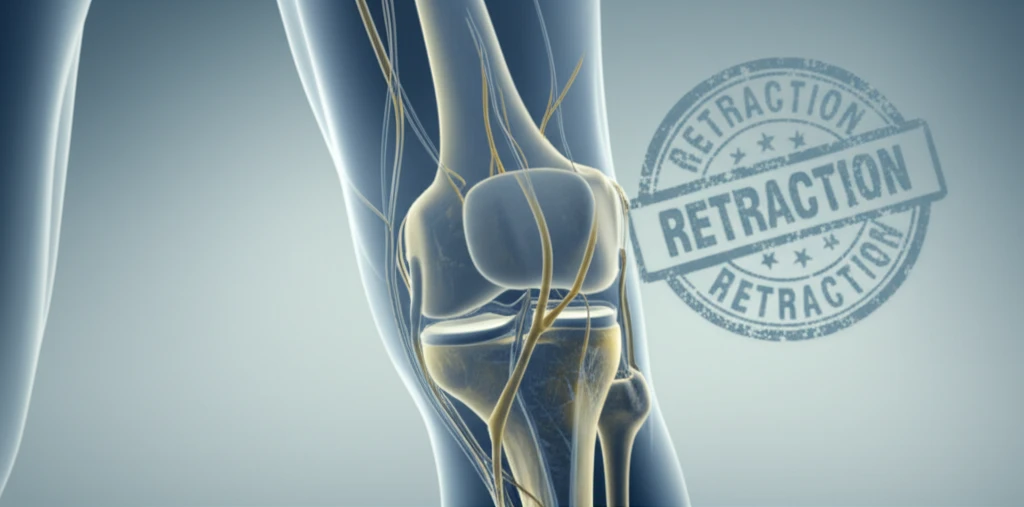
A study published in the Journal of Anesthesia & Clinical Research compared the effectiveness of adductor canal blocks and femoral nerve blocks for pain management after knee arthroplasty. However, this study was later retracted due to concerns raised by the publisher regarding the validity of the author's personal opinions presented within the research. In this article, we'll explore the findings of the retracted study, discuss the implications of its retraction, and examine the broader context of nerve blocks for knee arthroplasty pain relief.
Current Statistics & Impact
Peripheral nerve blocks are established as an efficient method of pain control after total knee arthroplasty (TKA), though their impact on chronic post-surgical pain remains understudied. A prospective observational study beginning March 2026 aims to compare commonly used peripheral nerve block techniques on postoperative pain control and early mobilization in TKA patients under spinal anesthesia. Recent systematic reviews and meta-analyses have examined the analgesic efficacy of sciatic nerve block added to femoral nerve block, while comprehensive comparisons of different peripheral nerve blocks for TKA patients assess outcomes including postoperative pain, function, adverse events, and oral morphine equivalents. These ongoing investigations reflect continued clinical interest in optimizing nerve block protocols for knee replacement surgery.
Standard Approach & Limitations
Current standard practice for postoperative pain management following knee arthroplasty typically incorporates peripheral nerve blocks as part of multimodal analgesia protocols, with femoral nerve blocks and adductor canal blocks among the most commonly employed techniques. While these approaches effectively reduce acute postoperative pain and opioid consumption, they may produce varying degrees of motor blockade that can delay early mobilization and rehabilitation. The balance between analgesic efficacy and preservation of quadriceps function remains a key consideration in technique selection, and optimal dosing, timing, and block choice continue to be refined based on evolving evidence.
Historical Perspective
The use of regional anesthesia for knee surgery has evolved significantly from early landmark-based techniques to modern ultrasound-guided approaches that enable precise nerve targeting. Femoral nerve blockade represented an early milestone in providing reliable postoperative analgesia for knee procedures, though its associated quadriceps weakness prompted development of more selective blocks. Subsequent innovations including the adductor canal block and infiltration between the popliteal artery and capsule of the knee (iPACK) block emerged from anatomical research demonstrating that sensory innervation of the knee could be blocked while largely sparing motor function. These advances reflect a progressive shift toward motor-sparing analgesia.
Adductor Canal vs. Femoral Nerve Blocks: What the Retracted Study Found
The retracted study, titled "Adductor Canal vs. Femoral Continuous Peripheral Nerve Blocks for Knee Arthroplasty: A One-year Follow-up Pilot Study of 2 Randomized, Controlled Clinical Trials," investigated whether adductor canal blocks were superior to femoral nerve blocks in providing pain relief and improving functional outcomes after knee arthroplasty. The study followed patients for one year after surgery.
- Pain Relief: The study aimed to determine which nerve block technique provided better pain relief in the immediate postoperative period and during the one-year follow-up.
- Functional Outcomes: Researchers assessed functional outcomes such as range of motion, walking ability, and overall knee function to see if one nerve block led to better recovery.
- Side Effects: The study monitored potential side effects associated with each nerve block, such as muscle weakness or numbness, to evaluate the safety of each technique.
- Opioid Consumption: Researchers tracked opioid consumption among patients in both groups to determine if one nerve block could reduce the need for opioid pain medications.
Latest Research & Reviews
Recent research has focused on comparing adductor canal block with femoral nerve block regarding analgesic effect, early rehabilitation effectiveness, and lateral knee pain relief in the immediate postoperative period after total knee arthroplasty. A bibliometric analysis of nerve block research trends identified total knee arthroplasty, femoral nerve block, adductor canal block, meta-analysis, and analgesia as the most prevalent keywords, highlighting the field's current emphasis. Emerging techniques such as ultrasound-guided genicular nerve blocks are being explored for pain management following total knee replacement, with narrative reviews examining their role alongside established methods. These studies collectively indicate a research landscape prioritizing motor-sparing blocks and multimodal analgesic strategies.
Counter Arguments & Failures
Despite widespread adoption, nerve blocks for knee surgery are not without limitations or clinical scenarios where they may provide inadequate analgesia or introduce complications. Some patients experience breakthrough pain requiring supplemental systemic opioids, while others develop transient or persistent neurological deficits related to needle trauma or local anesthetic toxicity. Technical failures can occur due to anatomical variability, inadequate ultrasound visualization, or catheter dislodgement in continuous techniques. Additionally, certain patient populations such as those with coagulopathy or infection at the injection site may be ineligible for regional techniques, necessitating alternative analgesic strategies.
Comparative Analysis
Comparative studies have investigated whether distal femoral triangle and distal adductor canal blocks offer superior motor preservation compared to traditional femoral nerve block during early postoperative hours after total knee arthroplasty. Research examining single-injection versus continuous femoral nerve block has assessed impacts on hospital length of stay and long-term functional recovery within established clinical pathways. Modern motor-sparing approaches including spinal anesthesia, adductor canal block, and iPACK block have been reported to reduce opioid use by approximately 60 to 70 percent in the first 48 hours while preserving roughly 92 percent of quadriceps strength. Various nerve block types specifically designed for knee surgery target different neural structures to optimize the balance between analgesia and motor function.
The Publisher's Concerns: Why the Study Was Retracted
The study was retracted because the publisher found the author's personal opinions influenced the presentation of the data. This raised concerns about potential bias and whether the conclusions were solely based on objective evidence. Retractions are a way for journals to correct the scientific record when serious errors or issues of integrity are identified.
Synthesis & Expert Commentary
A major collaborative study evaluated the efficacy and safety of regional nerve blocks after total knee arthroplasty to support combined clinical practice guidelines from the American Association of Hip and Knee Surgeons, American Academy of Orthopaedic Surgeons, Hip Society, Knee Society, and American Society of Regional Anesthesia and Pain Management. Regional nerve blocks are widely utilized in primary total knee arthroplasty to reduce postoperative pain and opioid consumption, with evidence supporting their role in multimodal analgesic regimens. Expert reviews emphasize that determining optimal analgesic protocols for total knee arthroplasty is critical for improving postoperative pain, patient satisfaction, decreasing opioid usage, recovery times, and functional outcomes, positioning peripheral nerve blocks as a viable option to supplement perioperative analgesic requirements.
Future Outlook
Future research directions in nerve block techniques for knee surgery are likely to focus on further refining motor-sparing approaches, optimizing block duration through novel local anesthetic formulations or adjuvant medications, and personalizing block selection based on patient-specific factors and surgical techniques. Integration of nerve blocks with enhanced recovery after surgery (ERAS) protocols and advances in continuous catheter technologies may further improve outpatient and same-day discharge pathways. Emerging imaging modalities and artificial intelligence applications could enhance block precision and training, while long-term outcome studies will better define the relationship between acute pain control and chronic post-surgical pain development.
Broader Context & Challenges
The adoption of nerve blocks for knee surgery exists within broader healthcare system challenges including variability in provider expertise and training, resource constraints for ultrasound equipment and dedicated regional anesthesia teams, and inconsistent insurance reimbursement models. Disparities in access to advanced regional anesthesia techniques may affect underserved populations, while opioid stewardship initiatives create both incentives and pressures for nerve block utilization. Institutional protocols and interdisciplinary coordination between anesthesiology, orthopedic surgery, and nursing teams significantly influence the consistency and quality of nerve block delivery across different practice settings.
Human Element & Real-World Impact
Individual patient experiences highlight the tangible impact of nerve block techniques on recovery trajectories, as illustrated by a 65-year-old male with severe osteoarthritis who received an ultrasound-guided femoral nerve block as part of a comprehensive pain management plan for elective total knee arthroplasty. In cases where standard approaches fail, modified protocols such as a modified genicular nerve diagnostic block have provided pain relief for post-TKA patients after classical injection techniques proved ineffective, suggesting that individualized technical adaptations may be necessary. Narrative reviews focusing on the role of peripheral nerve blocks in postoperative pain management emphasize techniques, efficacy, safety, and long-term clinical outcomes from the patient perspective, underscoring that successful pain control directly influences rehabilitation participation, functional recovery, and overall satisfaction with surgical outcomes.