
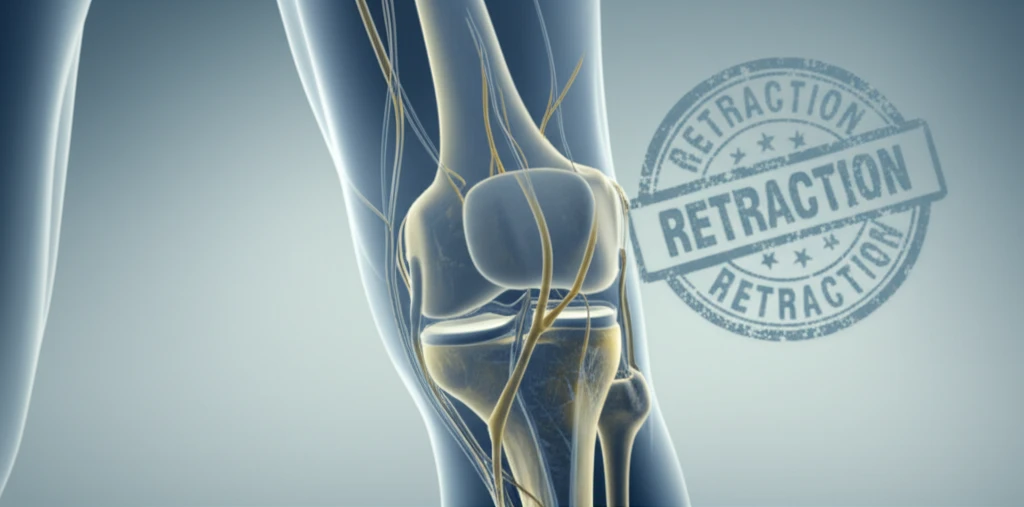
Illustration of knee joint and nerve pathways symbolizing retracted study on nerve blocks.

Knee Surgery Pain Relief: Are Nerve Blocks Safe & Effective?

"A closer look at the retracted study on adductor canal vs. femoral nerve blocks for knee arthroplasty."


Knee replacement surgery, also known as knee arthroplasty, is a common procedure for individuals suffering from severe knee pain and disability due to arthritis or injury. While the surgery can significantly improve quality of life, managing post-operative pain is crucial for a successful recovery. Various pain management techniques are employed, including opioid medications, physical therapy, and nerve blocks.

Nerve blocks involve injecting a local anesthetic near specific nerves to block pain signals from reaching the brain. Two common types of nerve blocks used in knee arthroplasty are adductor canal blocks and femoral nerve blocks. The adductor canal block targets nerves in the thigh, providing pain relief to the front and inner side of the knee. The femoral nerve block targets the femoral nerve, which supplies sensation to the front of the thigh and knee.

A study published in the Journal of Anesthesia & Clinical Research compared the effectiveness of adductor canal blocks and femoral nerve blocks for pain management after knee arthroplasty. However, this study was later retracted due to concerns raised by the publisher regarding the validity of the author's personal opinions presented within the research. In this article, we'll explore the findings of the retracted study, discuss the implications of its retraction, and examine the broader context of nerve blocks for knee arthroplasty pain relief.

Adductor Canal vs. Femoral Nerve Blocks: What the Retracted Study Found

Illustration of knee joint and nerve pathways symbolizing retracted study on nerve blocks.

The retracted study, titled "Adductor Canal vs. Femoral Continuous Peripheral Nerve Blocks for Knee Arthroplasty: A One-year Follow-up Pilot Study of 2 Randomized, Controlled Clinical Trials," investigated whether adductor canal blocks were superior to femoral nerve blocks in providing pain relief and improving functional outcomes after knee arthroplasty. The study followed patients for one year after surgery.

According to the retracted publication, the research suggested potential differences between the two nerve block techniques. Here are some key areas that were examined:

  • Pain Relief: The study aimed to determine which nerve block technique provided better pain relief in the immediate postoperative period and during the one-year follow-up.
  • Functional Outcomes: Researchers assessed functional outcomes such as range of motion, walking ability, and overall knee function to see if one nerve block led to better recovery.
  • Side Effects: The study monitored potential side effects associated with each nerve block, such as muscle weakness or numbness, to evaluate the safety of each technique.
  • Opioid Consumption: Researchers tracked opioid consumption among patients in both groups to determine if one nerve block could reduce the need for opioid pain medications.
It's important to note that the retraction of this study means its findings should not be considered reliable or used to guide clinical practice. However, it serves as a reminder of the importance of rigorous research methodology and unbiased interpretation of results.

The Publisher's Concerns: Why the Study Was Retracted

The study was retracted because the publisher found the author's personal opinions influenced the presentation of the data. This raised concerns about potential bias and whether the conclusions were solely based on objective evidence. Retractions are a way for journals to correct the scientific record when serious errors or issues of integrity are identified.

About this Article -

This article was crafted using a human-AI hybrid and collaborative approach. AI assisted our team with initial drafting, research insights, identifying key questions, and image generation. Our human editors guided topic selection, defined the angle, structured the content, ensured factual accuracy and relevance, refined the tone, and conducted thorough editing to deliver helpful, high-quality information.See our About page for more information.

Everything You Need To Know

1

What are the main types of nerve blocks used for pain management after knee arthroplasty?

Two primary types of nerve blocks are utilized for pain relief following knee arthroplasty, also known as knee replacement surgery: adductor canal blocks and femoral nerve blocks. The adductor canal block targets nerves in the thigh, specifically addressing pain in the front and inner aspects of the knee. Conversely, the femoral nerve block focuses on the femoral nerve, which provides sensation to the front of the thigh and knee, providing pain relief to that region.

2

Why was the study comparing adductor canal blocks and femoral nerve blocks retracted?

The study, titled "Adductor Canal vs. Femoral Continuous Peripheral Nerve Blocks for Knee Arthroplasty: A One-year Follow-up Pilot Study of 2 Randomized, Controlled Clinical Trials," was retracted due to concerns regarding the influence of the author's personal opinions on the presentation of the data. The publisher identified that these opinions might have introduced bias, thereby casting doubt on the objectivity of the conclusions drawn. Retractions are a critical mechanism for maintaining the integrity of scientific research, allowing journals to correct the scientific record when significant errors or integrity issues are found.

3

What are the key differences between adductor canal blocks and femoral nerve blocks?

Adductor canal blocks and femoral nerve blocks differ primarily in their targets and the areas of pain relief they provide. Adductor canal blocks target nerves within the thigh, offering pain relief to the front and inner sides of the knee. Femoral nerve blocks, on the other hand, target the femoral nerve, which supplies sensation to the front of the thigh and knee. These distinct targets mean that the type of block chosen might affect the specific areas of pain relief and potentially influence functional outcomes and the incidence of side effects, such as muscle weakness or numbness, after knee replacement surgery.

4

Besides pain relief, what other factors do researchers consider when evaluating the effectiveness of nerve blocks after knee arthroplasty?

Beyond pain relief, researchers evaluate several key factors when assessing nerve blocks' effectiveness following knee arthroplasty. These include functional outcomes, such as range of motion and walking ability, to determine how well the nerve block supports recovery and overall knee function. Side effects, such as muscle weakness or numbness, are monitored to assess the safety of each technique. Additionally, opioid consumption is tracked to see if one nerve block can reduce the need for opioid pain medications, addressing the opioid crisis and minimizing the risks associated with these powerful drugs.

5

How does the retraction of a study impact the decisions made by healthcare providers regarding pain management after knee arthroplasty?

The retraction of a study, like the one comparing adductor canal blocks and femoral nerve blocks, significantly impacts healthcare providers' decisions regarding pain management after knee arthroplasty. It means that the findings of the retracted study should not be relied upon to guide clinical practice, as the conclusions are not considered reliable. Healthcare providers must turn to other studies and established clinical guidelines to determine the best pain management strategies. This emphasizes the importance of evidence-based medicine, relying on robust research and unbiased data to inform patient care decisions, which is critical to ensuring effective and safe pain management practices.

Newsletter Subscribe

Subscribe to get the latest articles and insights directly in your inbox.