
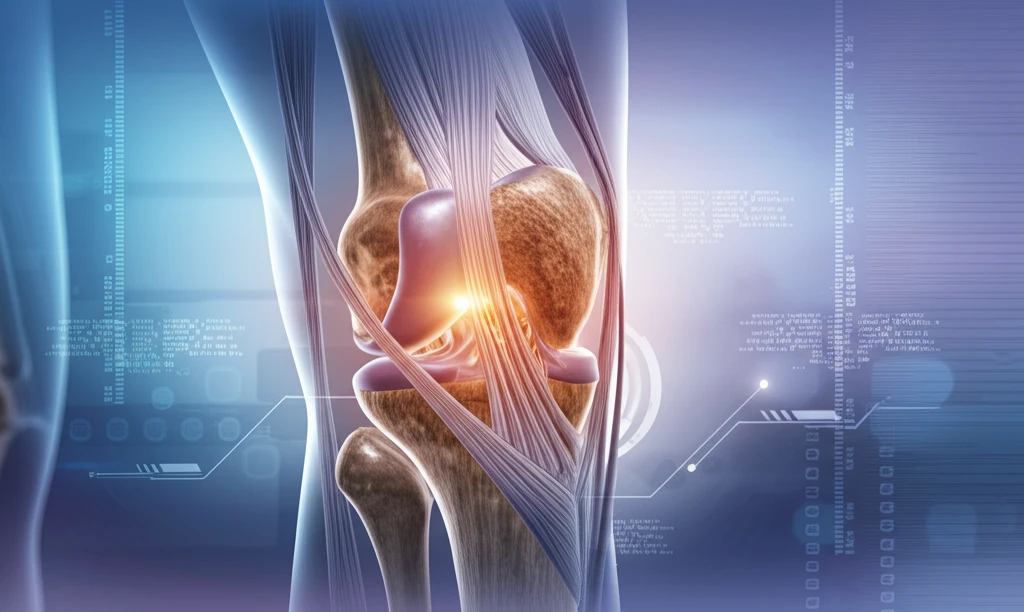
Illustration of a knee joint with glowing ligaments and MRI overlay, symbolizing knee surgery recovery.

Knee Stability After Surgery: What You Need to Know About Recovery

"A comprehensive guide to understanding post-operative imaging, surgical procedures, and rehabilitation for patellofemoral instability."


The knee is a complex joint. It relies on both bone and soft tissue to function correctly. When things go wrong with the patellofemoral joint (the area where your kneecap sits), it can lead to instability or persistent pain.

If you're dealing with patellofemoral issues, careful assessment through clinical exams and imaging is key. Cross-sectional imaging like MRI plays a vital role in planning any potential surgery.

Surgical treatments for patellofemoral problems can address soft tissue, bone issues, or both. This article explains what happens after surgery, focusing on imaging results of the knee's extensor mechanism. We'll cover common procedures, why they're done, and possible complications, empowering you to understand your recovery.

Understanding Post-operative Procedures and Imaging

Illustration of a knee joint with glowing ligaments and MRI overlay, symbolizing knee surgery recovery.

After knee surgery, imaging (especially MRI) is essential to see how well the procedure worked and to spot any potential problems. The images will show the surgical site and any changes made to the surrounding tissues.

The appearance on these images can vary based on the type of surgery you had. Open surgeries, where the joint is accessed through a larger incision, may show a more prominent thickening of the vastus medialis obliquus muscle (a key muscle for knee stability). Arthroscopic procedures, done through smaller incisions, often have more subtle appearances on imaging.

  • Lateral Release and Medial Reefing: A lateral release involves cutting the tight tissues on the outer side of your kneecap. Medial reefing tightens the tissues on the inner side. Imaging may show subtle changes in the soft tissues.
  • MPFL Reconstruction: The medial patellofemoral ligament (MPFL) is a crucial stabilizer of the kneecap. If it's damaged, reconstruction involves replacing it with a graft. Imaging will show the new ligament and the screws or anchors used to hold it in place.
  • Distal Realignment Procedures: These surgeries address the alignment of the lower leg. The tibial tuberosity (the bony bump below your kneecap) is moved to improve the kneecap's tracking. Imaging shows the new position of the tuberosity and any hardware used.
  • Trochleoplasty: This procedure reshapes the trochlear groove (the groove in your femur where the kneecap sits) to provide better stability. Imaging will reveal the altered shape of the groove.
It's important to remember that imaging findings are just one piece of the puzzle. Your doctor will combine these findings with your symptoms and physical exam to get a complete picture of your knee's health.

Working Together for a Successful Recovery

Knee surgery is a significant step, but understanding what to expect afterward can make the recovery process smoother. By knowing the types of surgeries, what imaging reveals, and potential complications, you can be an active participant in your care. Partner with your orthopedic surgeon and physical therapist to create a personalized plan that gets you back to your active life with confidence. Your active involvement significantly contributes to a more effective and satisfying recovery journey.

About this Article -

This article was crafted using a human-AI hybrid and collaborative approach. AI assisted our team with initial drafting, research insights, identifying key questions, and image generation. Our human editors guided topic selection, defined the angle, structured the content, ensured factual accuracy and relevance, refined the tone, and conducted thorough editing to deliver helpful, high-quality information.See our About page for more information.

This article is based on research published under:

DOI-LINK: 10.1007/s00256-018-3091-5, Alternate LINK

Title: Surgical Management Of Patellofemoral Instability Part 2: Post-Operative Imaging

Subject: Radiology, Nuclear Medicine and imaging

Journal: Skeletal Radiology

Publisher: Springer Science and Business Media LLC

Authors: Neeraj Purohit, Nicholas Hancock, Asif Saifuddin

Published: 2018-10-20

Everything You Need To Know

1

What is the role of imaging, particularly MRI, after knee surgery for patellofemoral instability?

Post-operative imaging, especially MRI, plays a crucial role in assessing the success of surgical procedures and identifying potential complications. These images provide detailed views of the surgical site, including changes to the surrounding soft tissues. Specifically, MRI helps visualize the effects of various procedures like Lateral Release and Medial Reefing, MPFL Reconstruction, Distal Realignment Procedures, and Trochleoplasty. For example, after MPFL Reconstruction, the MRI will reveal the new ligament and the hardware used to secure it. Doctors use the imaging findings, along with your symptoms and physical exam results, to get a complete picture of your knee's recovery.

2

How do different surgical procedures for patellofemoral instability, such as Lateral Release and Medial Reefing, impact the appearance of the knee on imaging?

Different surgical approaches lead to distinct appearances on post-operative imaging. In the case of Lateral Release and Medial Reefing, imaging may show subtle changes in the soft tissues. This is because a lateral release involves cutting the tight tissues on the outer side of your kneecap, while medial reefing tightens the tissues on the inner side. MPFL Reconstruction will show the new medial patellofemoral ligament (MPFL) graft and the fixation hardware. Distal Realignment Procedures, such as tibial tuberosity transfers, will reveal the new position of the bony bump below your kneecap and any hardware used to secure it. Trochleoplasty, which reshapes the trochlear groove, will show the altered shape of the groove in your femur. The specific changes visible on imaging help doctors understand the impact of each procedure and assess its effectiveness.

3

What are the key components of the knee joint that contribute to stability, and what happens when these are compromised?

The knee joint relies on a combination of bone structure and soft tissues to function correctly. The patellofemoral joint, where the kneecap (patella) sits within the trochlear groove of the femur, is crucial. The soft tissues include ligaments like the MPFL, and muscles like the vastus medialis obliquus muscle (VMO), which contribute significantly to knee stability. When there are problems with the patellofemoral joint, such as damage to the MPFL, or misalignment, it can lead to instability and pain. The clinical exams and imaging help to understand which of these structures are compromised.

4

What is MPFL Reconstruction, and why is it performed for patellofemoral instability?

MPFL Reconstruction, or Medial Patellofemoral Ligament Reconstruction, is a surgical procedure designed to address instability of the kneecap. The MPFL is a crucial ligament that stabilizes the kneecap. If this ligament is damaged or torn, the kneecap can become unstable, leading to recurrent dislocations or feelings of giving way. The reconstruction involves replacing the damaged MPFL with a graft (often a piece of the patient's own tissue or a donor graft). Imaging after the procedure will reveal the new ligament and the hardware (screws or anchors) used to secure it in place, confirming the successful repair.

5

How can I actively participate in my recovery after knee surgery, and why is it important?

You can actively participate in your recovery by understanding your surgical procedure, what to expect from post-operative imaging, and potential complications. Partnering with your orthopedic surgeon and physical therapist to create a personalized plan is also important. By being aware of the types of surgeries, such as Lateral Release and Medial Reefing, MPFL Reconstruction, Distal Realignment Procedures, and Trochleoplasty, and how they appear on imaging, you can better understand your progress. Active involvement in your care significantly contributes to a more effective and satisfying recovery journey, enabling you to regain confidence and return to an active life.

Newsletter Subscribe

Subscribe to get the latest articles and insights directly in your inbox.