
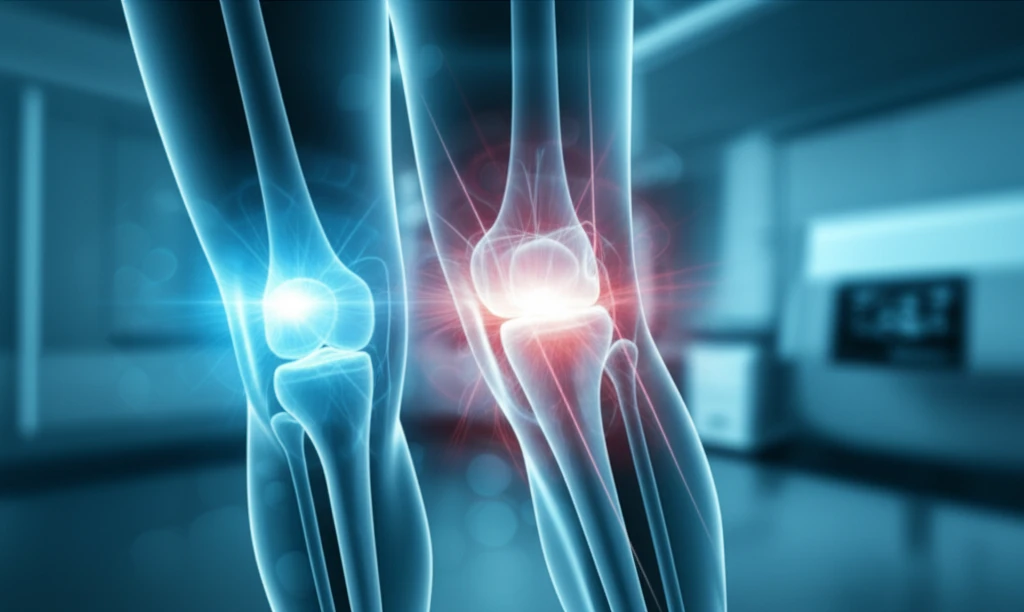
Illustration of ideal vs misaligned knee replacement.

Knee Replacement Alignment: Are You a Candidate for a More Precise Fit?

"New research highlights how personalized knee alignment can improve outcomes for Korean patients—and what it could mean for you."


Total knee arthroplasty (TKA), or knee replacement, is a common procedure aimed at relieving pain and restoring function in individuals with severe knee joint damage. A critical factor in the long-term success of TKA is the accurate alignment of the implant components. If the implant is not properly aligned, it can lead to premature wear, instability, and ultimately, failure of the replacement.

Traditional methods for aligning knee replacement components rely on either intramedullary or extramedullary alignment systems. Intramedullary systems use a rod inserted into the tibia's (shinbone) canal as a guide, while extramedullary systems use external landmarks around the knee. However, these systems may not always account for individual variations in bone shape and alignment, potentially leading to suboptimal outcomes.

Recent research has shed light on the importance of considering individual tibial morphology, particularly the tibial intramedullary canal axis, for achieving optimal knee replacement alignment. A study focusing on Korean patients revealed significant differences in tibial shape and alignment compared to Caucasian populations, suggesting that a one-size-fits-all approach may not be appropriate.

Why Tibial Alignment Matters for Knee Replacement Success

Illustration of ideal vs misaligned knee replacement.

The tibia's shape, especially the intramedullary canal axis (the central line running through the bone), plays a vital role in determining the ideal alignment for knee replacement components. Achieving neutral alignment, where the mechanical axis of the leg passes straight from the hip to the ankle, is the goal. Proper alignment ensures even weight distribution across the knee joint, reducing stress on the implant and surrounding tissues.

Misalignment, even slight deviations, can lead to several complications. Varus alignment (bowleggedness) or valgus alignment (knock-knees) can cause uneven wear of the implant, leading to instability and pain. It can also put excessive stress on ligaments and other soft tissues around the knee, potentially causing further damage.

  • Reduced implant longevity: Misalignment leads to uneven wear and premature failure of the knee replacement.
  • Increased risk of revision surgery: Poor alignment is a common reason for needing a second knee replacement.
  • Persistent pain and instability: Improper alignment can cause ongoing discomfort and a feeling of instability in the knee.
  • Compromised range of motion: Misalignment can restrict the knee's ability to bend and straighten fully.
The study highlighted that Koreans often have unique tibial characteristics, including a greater prevalence of varus alignment and differences in the intramedullary canal axis. These findings suggest that using traditional alignment methods, which are often based on Caucasian anatomy, may result in suboptimal outcomes for Korean patients. This underscores the need for personalized approaches to knee replacement that consider individual tibial morphology.

The Future of Knee Replacement: Personalized Alignment

The research emphasizes the growing importance of personalized alignment in knee replacement surgery. By carefully assessing individual tibial morphology and considering factors like the intramedullary canal axis and overall bone shape, surgeons can achieve more accurate and stable implant positioning. This approach has the potential to significantly improve long-term outcomes, reduce the risk of complications, and enhance the overall satisfaction of patients undergoing TKA. As technology advances, expect to see more sophisticated tools and techniques for achieving personalized knee replacement alignment, offering the promise of longer-lasting and better-performing knee implants for all.

About this Article -

This article was crafted using a human-AI hybrid and collaborative approach. AI assisted our team with initial drafting, research insights, identifying key questions, and image generation. Our human editors guided topic selection, defined the angle, structured the content, ensured factual accuracy and relevance, refined the tone, and conducted thorough editing to deliver helpful, high-quality information.See our About page for more information.

Everything You Need To Know

1

What is a total knee arthroplasty?

Total Knee Arthroplasty, or TKA, is a surgical procedure designed to alleviate pain and restore function in individuals suffering from severe knee joint damage. It involves replacing the damaged joint surfaces with artificial implants. The goal of TKA is to provide a stable and functional knee joint, allowing patients to return to their daily activities with reduced pain and improved mobility. Accurate alignment of the implant components during TKA is crucial for its long-term success. Failure to achieve proper alignment can lead to premature wear, instability, and eventual failure of the replacement, necessitating revision surgery.

2

What is the tibial intramedullary canal axis and why is it important for knee replacement?

The tibial intramedullary canal axis is the central line running through the tibia (shinbone). Its shape and alignment are important because they significantly influence the ideal positioning of knee replacement components. Understanding the unique morphology of the tibia, including the intramedullary canal axis, allows surgeons to achieve more accurate alignment during TKA. This personalized approach aims to ensure even weight distribution across the knee joint, reducing stress on the implant and surrounding tissues, and ultimately improving the longevity and performance of the knee replacement.

3

What does 'neutral alignment' mean in the context of knee replacement, and why is it the goal?

Neutral alignment refers to the ideal positioning of the leg where the mechanical axis runs straight from the hip to the ankle. Achieving neutral alignment during knee replacement surgery is crucial because it ensures even weight distribution across the knee joint. When the knee is properly aligned, stress on the implant and surrounding tissues is minimized, reducing the risk of premature wear, instability, and pain. Deviations from neutral alignment, such as varus or valgus alignment, can lead to uneven weight distribution and increased stress on specific areas of the implant, potentially causing complications and the need for revision surgery.

4

What are the potential complications of misalignment after knee replacement?

Misalignment following knee replacement can lead to several complications that negatively impact the outcome of the surgery. Varus alignment (bowleggedness) or valgus alignment (knock-knees) can cause uneven wear of the implant, leading to instability, pain, and compromised range of motion. Misalignment can also put excessive stress on ligaments and other soft tissues around the knee, potentially causing further damage. Ultimately, misalignment increases the risk of revision surgery, where the initial knee replacement needs to be replaced due to failure or complications arising from the improper alignment.

5

What is personalized alignment in knee replacement, and how does it improve outcomes?

Personalized alignment in knee replacement surgery involves carefully assessing individual tibial morphology and considering factors like the intramedullary canal axis and overall bone shape to achieve more accurate and stable implant positioning. This approach recognizes that individuals have unique anatomical variations that may not be adequately addressed by traditional, one-size-fits-all alignment methods. By tailoring the alignment to the specific characteristics of each patient's tibia, surgeons can potentially improve long-term outcomes, reduce the risk of complications, and enhance the overall satisfaction of patients undergoing TKA. This may involve advanced imaging techniques and computer-assisted surgery to optimize implant placement based on the individual's unique anatomy.

Newsletter Subscribe

Subscribe to get the latest articles and insights directly in your inbox.