
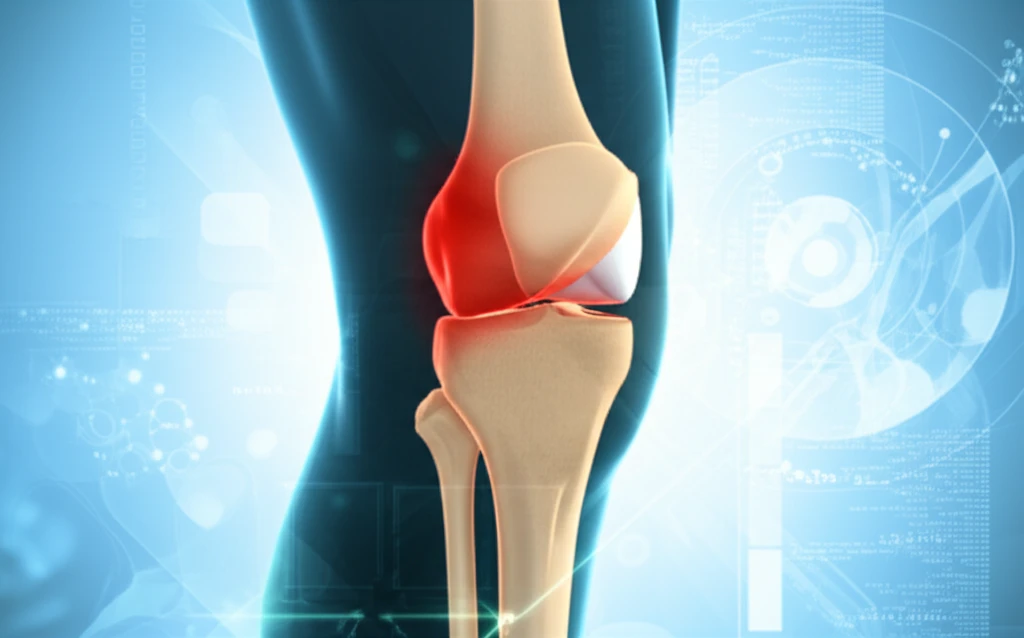
Digital illustration of a knee joint with perfectly aligned tibia for pain-free movement.

Knee Pain Relief: Unveiling the Secrets of Tibial Alignment for a Pain-Free Life

"Discover How Precise Tibial Alignment Can Transform Your Knee Health and Mobility"


Knee pain is a widespread issue, impacting millions and significantly affecting quality of life. Whether from arthritis, injury, or wear and tear, the discomfort can make everyday activities challenging. While various treatments exist, understanding the mechanics of your knee and how it functions is a crucial step toward effective relief. One key aspect often overlooked is the alignment of the tibia, the large bone in your lower leg, and its relationship with knee health.

This article delves into the science of tibial alignment, specifically focusing on the nuances of how the tibial intramedullary canal axis and its entry points influence knee health. Drawing insights from advanced research, we'll unravel how accurate alignment, particularly in the context of total knee arthroplasty (TKA), can make a world of difference in pain management and long-term mobility. We'll cover what tibial alignment is, why it matters, and the latest advancements in achieving optimal results.

For many, the prospect of knee surgery, such as TKA, can be daunting. However, with a clearer understanding of the principles involved, you can approach these decisions with confidence. This article is designed to empower you with the knowledge to make informed choices about your knee health, focusing on the critical role of tibial alignment in achieving a pain-free and active lifestyle. Whether you're seeking to understand your current knee pain or are preparing for a TKA, you'll find valuable insights here.

The Tibia and Knee Health: What is Tibial Alignment and Why Does It Matter?

Digital illustration of a knee joint with perfectly aligned tibia for pain-free movement.

The tibia, or shinbone, plays a pivotal role in knee function. It forms the lower part of the knee joint, articulating with the femur (thigh bone) to facilitate movement. Proper alignment of the tibia is crucial for distributing weight evenly across the joint and ensuring smooth, pain-free motion. When the tibia is misaligned, it can lead to increased stress on the joint, accelerating the wear and tear of cartilage and potentially leading to chronic pain and reduced mobility.

Accurate tibial alignment involves ensuring that the tibial plateau (the top surface of the tibia) is correctly positioned relative to the rest of the leg. This includes both the angle of the tibial cut during surgery and the overall orientation of the bone. Misalignment can lead to a range of issues, including accelerated joint degeneration, instability, and increased risk of implant failure after TKA. Therefore, understanding and achieving proper tibial alignment are key components of effective knee pain treatment.

  • Reduced Pain: Correct alignment minimizes stress on the joint, leading to significant pain reduction.
  • Improved Mobility: Proper alignment supports a wider range of motion and easier movement.
  • Enhanced Stability: Aligned joints are more stable, reducing the risk of falls and injuries.
  • Optimal Implant Performance: In TKA, correct alignment prolongs the lifespan and effectiveness of the implant.
  • Better Quality of Life: With reduced pain and improved mobility, daily activities become easier and more enjoyable.
In the context of TKA, the goal is to replace the damaged knee joint surfaces with artificial components. The accuracy of the tibial cut, which dictates the position of the tibial implant, is directly linked to successful outcomes. Misalignment can cause uneven loading on the implant, which can result in premature wear, pain, and the need for revision surgery. Precise alignment is, therefore, not just about immediate comfort but about ensuring the long-term success and durability of the replacement.

Take Control of Your Knee Health

Understanding the intricacies of tibial alignment is a crucial step in managing knee pain and ensuring a good quality of life. By recognizing the importance of precise alignment, whether through conservative treatments or surgical interventions like TKA, you empower yourself to make informed choices. Always consult with healthcare professionals for personalized advice and treatment options. With the right approach, you can regain mobility, reduce pain, and live a healthier, more active life. The knowledge shared here is intended to complement, not replace, professional medical advice.

About this Article -

This article was crafted using a human-AI hybrid and collaborative approach. AI assisted our team with initial drafting, research insights, identifying key questions, and image generation. Our human editors guided topic selection, defined the angle, structured the content, ensured factual accuracy and relevance, refined the tone, and conducted thorough editing to deliver helpful, high-quality information.See our About page for more information.

This article is based on research published under:

DOI-LINK: 10.5115/acb.2010.43.3.260, Alternate LINK

Title: Tibial Intramedullary Canal Axis And Its Influence On The Intramedullary Alignment System Entry Point In Koreans

Subject: Cell Biology

Journal: Anatomy & Cell Biology

Publisher: Korean Association of Anatomists

Authors: Dai-Soon Kwak, Chang Whan Han, Seung-Ho Han

Published: 2010-01-01

Everything You Need To Know

1

What exactly is tibial alignment, and why is it so important for knee health?

Tibial alignment refers to the correct positioning of the tibial plateau relative to the rest of the leg. The tibia, or shinbone, forms the lower part of the knee joint, articulating with the femur to facilitate movement. Proper tibial alignment is crucial because it ensures weight is distributed evenly across the knee joint, promoting smooth and pain-free motion. Misalignment can lead to increased stress on the joint, accelerating cartilage wear and potentially causing chronic pain, reduced mobility, instability, and even increasing the risk of implant failure following a Total Knee Arthroplasty (TKA).

2

How does tibial misalignment specifically impact the success of a Total Knee Arthroplasty (TKA)?

In a Total Knee Arthroplasty (TKA), the accuracy of the tibial cut is paramount. This cut dictates the position of the tibial implant. Misalignment can cause uneven loading on the implant, leading to premature wear, pain, and potentially requiring revision surgery. Achieving precise tibial alignment during TKA is essential not only for immediate comfort but also for ensuring the long-term success and durability of the knee replacement. Understanding the relationship between the tibial intramedullary canal axis and its entry points is essential for achieving optimal results.

3

Beyond surgery, what are some benefits of achieving proper tibial alignment?

Achieving proper tibial alignment, whether through conservative treatments or surgical interventions like Total Knee Arthroplasty (TKA), offers several key benefits: reduced pain by minimizing stress on the joint, improved mobility supporting a wider range of motion, enhanced stability reducing the risk of falls, optimal implant performance in the context of TKA prolonging the lifespan and effectiveness of the implant, and an overall better quality of life making daily activities easier and more enjoyable.

4

What role does the tibial intramedullary canal axis play in determining the correct tibial alignment during a Total Knee Arthroplasty (TKA)?

The tibial intramedullary canal axis is a critical reference point during Total Knee Arthroplasty (TKA) because it guides the surgeon in making accurate tibial cuts. Its relationship with the entry points on the tibia determines the final alignment of the tibial component of the knee replacement. Precise alignment relative to this axis is essential for even weight distribution across the new joint, preventing premature wear and ensuring the longevity of the implant. Deviation from the ideal axis can lead to instability and potential failure of the TKA.

5

If I'm considering a Total Knee Arthroplasty (TKA), what questions should I ask my surgeon regarding tibial alignment?

When considering a Total Knee Arthroplasty (TKA), it's important to discuss tibial alignment in detail with your surgeon. Questions to consider asking include: How will you ensure accurate tibial alignment during my surgery? What techniques or technologies do you use to assess and correct tibial alignment? How will the tibial intramedullary canal axis and entry points be used to guide the procedure? What are the potential risks and benefits of different tibial alignment strategies? And, how will my tibial alignment be monitored after surgery to ensure optimal performance and longevity of the implant?

Newsletter Subscribe

Subscribe to get the latest articles and insights directly in your inbox.