
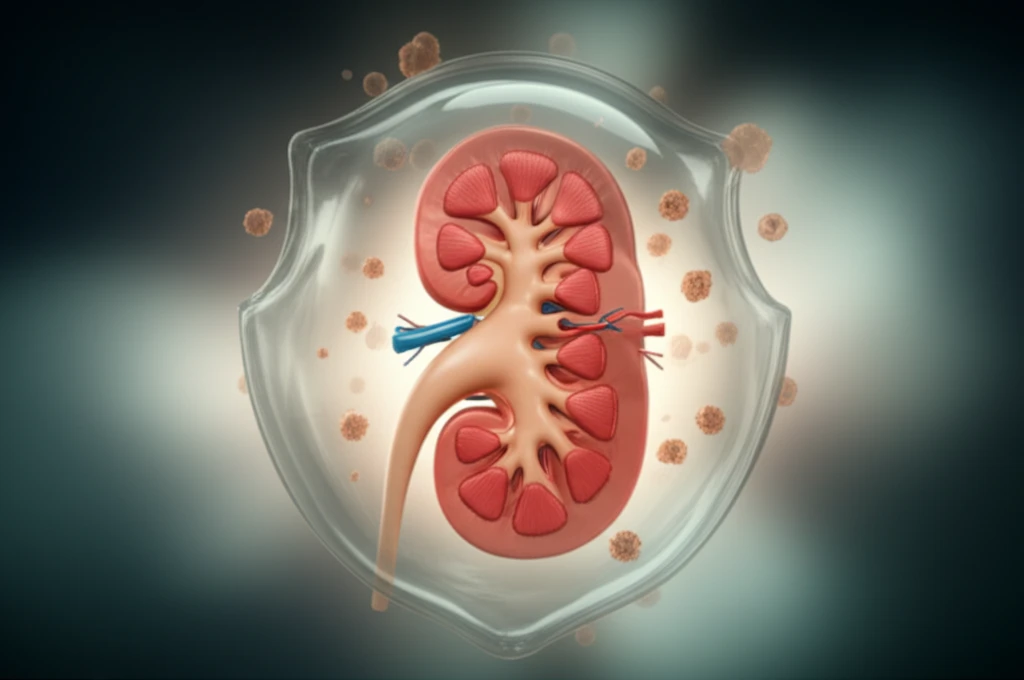
Kidney Transplant with Protective Immune Shield

Kidney Transplants: Unlocking the Secrets to Immune Tolerance and a Life Without Rejection

"Researchers are making strides in understanding how to wean kidney transplant patients off lifelong immunosuppressants, paving the way for a future with fewer side effects and better quality of life."


For individuals facing end-stage renal disease, a kidney transplant offers a new lease on life. However, this life-saving procedure comes with a significant caveat: the need for lifelong immunosuppressant (IS) drugs. While these medications prevent the body from rejecting the new organ, they also bring a host of potential side effects, including increased risk of infection, cancer, and other complications. The ideal scenario would be to achieve a state of 'immune tolerance,' where the body accepts the transplanted kidney without the need for continuous medication.

Imagine a future where transplant recipients are free from the burden of daily immunosuppressants, enjoying improved health and a better quality of life. This is the promise of operational tolerance – a state where the transplanted organ functions normally, without rejection, even after immunosuppression is withdrawn. While spontaneous operational tolerance has been observed in some patients, the ability to predict and induce this state remains a significant challenge.

Recent research is diving deep into the mechanisms of immune quiescence in kidney transplantation, seeking to identify biomarkers that can indicate when a patient is likely to achieve stable tolerance. This article explores the cutting-edge research that's bringing us closer to a future where kidney transplant recipients can live healthier, medication-free lives.

Decoding Immune Quiescence: The Path to Transplant Tolerance

Kidney Transplant with Protective Immune Shield

The central question driving this research is: How can we accurately identify when a kidney transplant recipient has achieved a state of immune quiescence, making it safe to reduce or eliminate immunosuppression? Defining this state is more complex than it seems. A seemingly well-functioning graft, based on traditional clinical assessments, might still harbor subclinical inflammation or injury.

Traditional diagnostic methods, such as serum creatinine levels and biopsies, have limitations in detecting early signs of rejection or subtle tissue damage. This is where the search for biomarkers comes in. Researchers are looking for specific molecules or cellular signatures in the blood or urine that can act as indicators of a stable, tolerant state.

  • Genomic Signatures: Analyzing gene expression patterns in blood cells to identify unique profiles associated with tolerance.
  • Immune Cell Phenotyping: Characterizing the types and functions of immune cells involved in regulating the immune response to the transplanted kidney.
  • Donor-Specific Antibodies (DSAs): Monitoring the presence and levels of antibodies that target the donor organ.
One promising area of research focuses on regulatory T cells (Tregs), a type of immune cell that plays a crucial role in suppressing immune responses and maintaining tolerance. Studies have shown that an increased presence or activity of Tregs is often associated with stable graft function in the absence of immunosuppression. Other immune cells, such as regulatory B cells (Bregs) and regulatory macrophages (Mregs), are also being investigated for their potential roles in promoting tolerance.

The Future of Kidney Transplantation: A Personalized Approach

The pursuit of biomarkers for immune quiescence is paving the way for a more personalized approach to kidney transplantation. Instead of relying on a one-size-fits-all immunosuppression regimen, clinicians may one day be able to tailor treatment based on an individual patient's immune profile. This could involve reducing or eliminating immunosuppression in patients who show signs of stable tolerance, while closely monitoring those at higher risk of rejection. While significant challenges remain, the ongoing research into the mechanisms of immune quiescence holds immense promise for improving the lives of kidney transplant recipients.

About this Article -

This article was crafted using a human-AI hybrid and collaborative approach. AI assisted our team with initial drafting, research insights, identifying key questions, and image generation. Our human editors guided topic selection, defined the angle, structured the content, ensured factual accuracy and relevance, refined the tone, and conducted thorough editing to deliver helpful, high-quality information.See our About page for more information.

Everything You Need To Know

1

What is the main goal of current kidney transplant research?

The primary goal of current kidney transplant research is to achieve 'immune tolerance' in recipients. This means the body accepts the transplanted kidney without the need for continuous immunosuppressant (IS) drugs. Researchers are working to identify biomarkers and understand mechanisms that can indicate when a patient has reached this state, allowing them to potentially reduce or eliminate IS drugs and improve the quality of life by avoiding IS side effects, such as infection, cancer, and other complications.

2

Why are immunosuppressant drugs necessary after a kidney transplant, and what are the drawbacks?

Immunosuppressant (IS) drugs are essential after a kidney transplant because they prevent the body from rejecting the new organ. However, these drugs come with significant drawbacks. The primary concern is the increased risk of side effects such as infections, cancer, and other complications. The ideal outcome is to avoid these side effects by achieving a state of immune tolerance where the body accepts the kidney without IS drugs.

3

What is 'immune quiescence' in the context of kidney transplantation, and how is it being studied?

'Immune quiescence' represents a state where the immune system is calm and does not attack the transplanted kidney. Researchers are investigating this state to determine if it's safe to reduce or eliminate immunosuppression. They are doing so by searching for biomarkers that indicate a stable, tolerant state. They are using methods like analyzing genomic signatures (gene expression patterns), immune cell phenotyping (characterizing immune cell types and functions), and monitoring Donor-Specific Antibodies (DSAs).

4

How do regulatory T cells (Tregs) contribute to achieving immune tolerance after a kidney transplant?

Regulatory T cells (Tregs) play a crucial role in promoting immune tolerance. Tregs are a type of immune cell that suppresses the immune response, preventing the body from attacking the transplanted kidney. Research has shown that an increased presence or activity of Tregs is often associated with stable graft function without immunosuppression, suggesting their importance in achieving and maintaining immune tolerance. Other immune cells, like regulatory B cells (Bregs) and regulatory macrophages (Mregs), are also being investigated for their roles.

5

How might a personalized approach to kidney transplantation change the way patients are treated in the future?

A personalized approach to kidney transplantation, guided by research on immune quiescence, could revolutionize treatment. Instead of a 'one-size-fits-all' immunosuppression regimen, clinicians might tailor treatment based on an individual patient's immune profile. For example, patients showing signs of stable tolerance, indicated by specific biomarkers, could have their immunosuppression reduced or eliminated. This would allow clinicians to closely monitor those at higher risk of rejection and adjust treatment accordingly, leading to improved outcomes and a better quality of life for kidney transplant recipients.

Newsletter Subscribe

Subscribe to get the latest articles and insights directly in your inbox.