
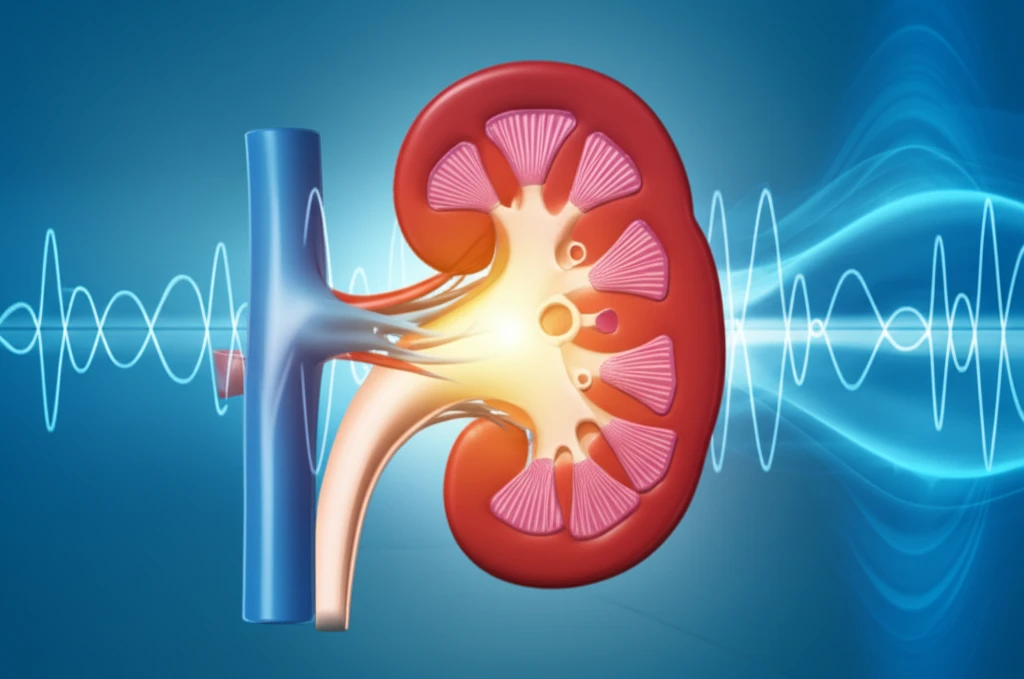
Kidney Transplant Health: Can Shear-Wave Sonoelastography Help?

"A new study explores how shear-wave sonoelastography can improve the detection and management of kidney transplant dysfunction."
After a kidney transplant, ensuring the new organ functions well is crucial. Doctors use various methods to monitor the health of the transplanted kidney, known as an allograft. Traditionally, this involves blood tests, ultrasound imaging, and sometimes biopsies, which can be invasive. Researchers are always looking for ways to improve these evaluations.
Shear-wave sonoelastography is emerging as a promising non-invasive technique. It measures tissue stiffness, offering clues about the organ's condition. Think of it like feeling for firmness to detect problems, but with sound waves. This method has shown promise in diagnosing issues in other organs, and now, researchers are exploring its potential in kidney transplants.
A recent study published in "Radiology" investigated whether shear-wave sonoelastography could differentiate between healthy transplanted kidneys and those experiencing acute or chronic dysfunction. The study also examined how these measurements correlated with other standard health indicators, providing a comprehensive view of the allograft's health.
How Does Shear-Wave Sonoelastography Work in Kidney Transplants?
The study, conducted at Indraprastha Apollo Hospital in New Delhi, involved 60 patients who had undergone kidney transplants. These patients were categorized into three groups: those with stable allografts, those with acute allograft dysfunction, and those with chronic allograft dysfunction. The categorization was based on clinical assessments and laboratory results.
- Stable Allograft: Kidneys functioning well with consistent eGFR (estimated glomerular filtration rate) above 50 mL/min over the previous six months.
- Acute Allograft Dysfunction: Sudden decline in kidney function, indicated by reduced eGFR, increased serum creatinine (by at least 0.3 mg/dL or 50%), and presence of proteinuria.
- Chronic Allograft Dysfunction: Gradual worsening of kidney function over more than three months, with eGFR below 50 mL/min, elevated serum creatinine, and proteinuria.
The Future of Kidney Transplant Monitoring
This study provides valuable insights into the potential of shear-wave sonoelastography as a tool for monitoring kidney transplant health. While further research is needed, these findings suggest that this non-invasive technique could play an important role in the early detection and management of allograft dysfunction, ultimately improving outcomes for transplant recipients.