
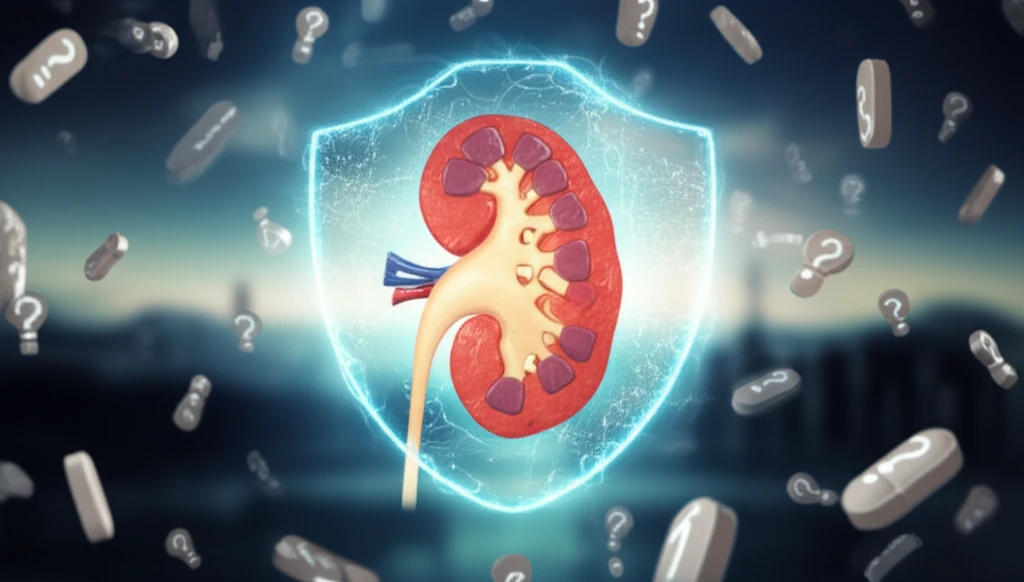
Kidney transplant protected from drug interactions

Kidney Transplant Alert: How Common Meds Can Sabotage Your Sirolimus

"Unmasking the Hidden Risks of Drug Interactions with Sirolimus After Renal Transplant"


After a kidney transplant, managing your medications is crucial. Sirolimus, also known as Rapamune, is often prescribed to prevent your body from rejecting the new kidney. This drug suppresses the immune system, but its effectiveness can be significantly affected by other medications you might be taking.

One often overlooked interaction involves nefazodone, an antidepressant. While nefazodone isn't as widely used today, understanding its potential impact on sirolimus levels highlights a broader concern: many drugs can interfere with sirolimus, leading to either dangerously high or ineffectively low levels. Knowing about these interactions is key to protecting your transplant.

This article will explore the critical interaction between sirolimus and other medications, especially focusing on a case study involving nefazodone. We'll break down what you need to know to ensure your sirolimus levels remain stable, safeguarding your kidney transplant and overall health.

Sirolimus and Drug Interactions: What Every Transplant Patient Needs to Know

Kidney transplant protected from drug interactions

Sirolimus is metabolized in the body by an enzyme system called cytochrome P450 3A4 (CYP3A4). This enzyme system is responsible for breaking down many drugs, including sirolimus. When another drug inhibits CYP3A4, it prevents sirolimus from being broken down properly, leading to increased levels in the blood. Conversely, some drugs can induce CYP3A4, causing sirolimus to be broken down too quickly, reducing its effectiveness.

Nefazodone, an antidepressant, is one such CYP3A4 inhibitor. While it can help with depression and insomnia, nefazodone's interaction with sirolimus can be problematic. When nefazodone is taken with sirolimus, it can block CYP3A4, causing sirolimus levels to spike. This increases the risk of sirolimus toxicity, which can lead to various side effects, including:

  • Increased risk of infection
  • Swelling in the legs and arms (edema)
  • High cholesterol
  • Mouth sores
  • Anemia
Conversely, when nefazodone is stopped, the CYP3A4 enzyme system is no longer inhibited, and sirolimus is broken down more quickly. This can cause sirolimus levels to drop, potentially leading to rejection of the transplanted kidney. This seesaw effect makes managing sirolimus levels particularly challenging when starting or stopping interacting medications like nefazodone.

Protecting Your Transplant: What Steps to Take

If you're taking sirolimus after a kidney transplant, it's vital to be aware of potential drug interactions. Always inform your transplant team about every medication you're taking, including over-the-counter drugs and supplements. Regular monitoring of sirolimus levels is essential, especially when starting or stopping any new medication. By staying informed and proactive, you can help ensure the long-term success of your kidney transplant.

About this Article -

This article was crafted using a human-AI hybrid and collaborative approach. AI assisted our team with initial drafting, research insights, identifying key questions, and image generation. Our human editors guided topic selection, defined the angle, structured the content, ensured factual accuracy and relevance, refined the tone, and conducted thorough editing to deliver helpful, high-quality information.See our About page for more information.

This article is based on research published under:

DOI-LINK: 10.4321/s0213-61632011000300001, Alternate LINK

Title: Sirolimus And Nefazodone Interaction In A Renal Transplant Patient

Subject: Psychiatry and Mental health

Journal: The European Journal of Psychiatry

Publisher: SciELO Espana/Repisalud

Authors: Laura S. Michalski, Dimple Bhuva, Anita Pakrasi, David R. Holt, Susan H. Hou

Published: 2011-09-01

Everything You Need To Know

1

Why is Sirolimus so important after a kidney transplant?

Sirolimus, also known as Rapamune, is crucial after a kidney transplant because it prevents the body from rejecting the new kidney. It works by suppressing the immune system, which is designed to identify and attack foreign substances like the transplanted organ. Without Sirolimus, the immune system would recognize the new kidney as a threat and attack it, leading to transplant failure. The success of the transplant depends heavily on maintaining appropriate Sirolimus levels through careful medication management and monitoring.

2

What are the key risks associated with drug interactions involving Sirolimus?

Drug interactions with Sirolimus can lead to two primary dangers: either dangerously high or ineffectively low levels of the drug in your bloodstream. When another drug inhibits the CYP3A4 enzyme, which metabolizes Sirolimus, the levels of Sirolimus can spike, increasing the risk of toxicity, which can lead to infections, edema, high cholesterol, mouth sores, and anemia. Conversely, drugs that induce CYP3A4 can cause Sirolimus levels to drop, potentially leading to rejection of the transplanted kidney. This makes managing Sirolimus levels challenging, especially when starting or stopping interacting medications.

3

How does Nefazodone interact with Sirolimus, and what are the implications?

Nefazodone, an antidepressant, inhibits the CYP3A4 enzyme, which is responsible for metabolizing Sirolimus. When taken together, Nefazodone blocks the breakdown of Sirolimus, causing Sirolimus levels to increase. This can lead to Sirolimus toxicity, increasing the risk of side effects such as infections, edema, high cholesterol, mouth sores, and anemia. Stopping Nefazodone reverses this effect, potentially leading to decreased Sirolimus levels and an increased risk of kidney transplant rejection. Therefore, managing Sirolimus levels becomes particularly difficult when starting or stopping Nefazodone.

4

What is CYP3A4, and why is it important in the context of Sirolimus?

CYP3A4 is an enzyme system within the body, specifically the cytochrome P450 3A4 enzyme, that plays a vital role in metabolizing, or breaking down, various drugs, including Sirolimus. When another drug inhibits CYP3A4, it prevents Sirolimus from being broken down properly, leading to increased levels in the blood and potential toxicity. Conversely, drugs that induce CYP3A4 speed up Sirolimus metabolism, reducing its effectiveness. Understanding the effects of CYP3A4 inhibitors and inducers is crucial for predicting and managing drug interactions involving Sirolimus to ensure the transplanted kidney's success.

5

What steps should a kidney transplant patient take to protect their Sirolimus levels and ensure transplant success?

To protect Sirolimus levels and ensure the success of a kidney transplant, patients should take several proactive steps. First, it is crucial to inform your transplant team about all medications you are taking, including over-the-counter drugs and supplements, as many can interact with Sirolimus. Secondly, regular monitoring of Sirolimus levels is essential, especially when starting or stopping any new medication. This monitoring helps to identify and manage potential drug interactions promptly. By staying informed, being proactive, and communicating openly with your healthcare providers, patients can help ensure the long-term success of their kidney transplant and their overall health.

Newsletter Subscribe

Subscribe to get the latest articles and insights directly in your inbox.