
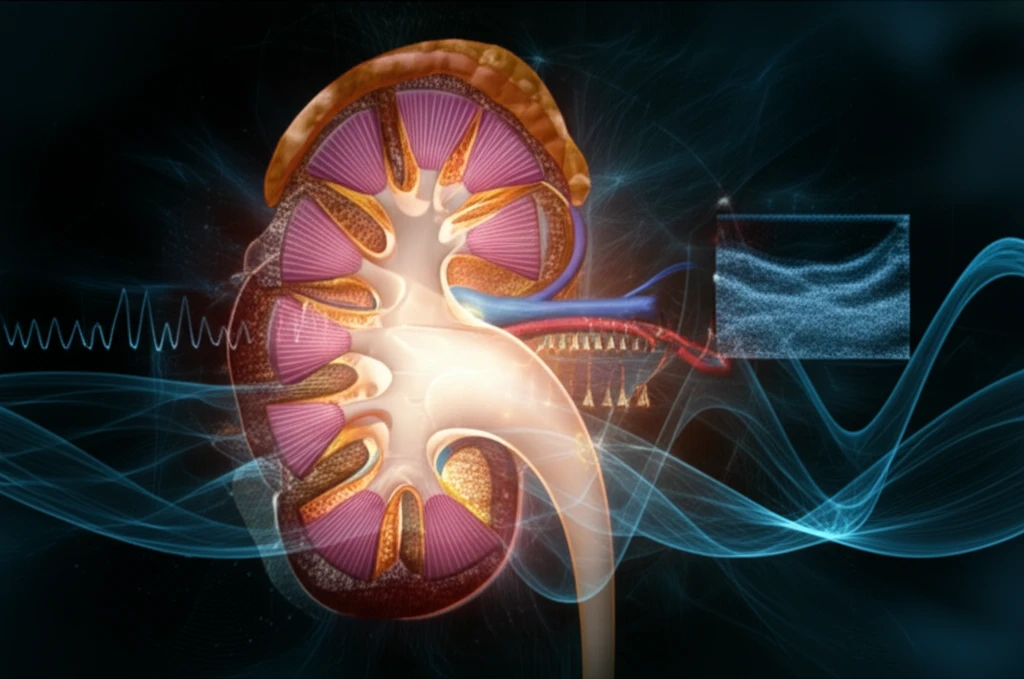
Glowing Kidney with Ultrasound Waves

Kidney Size Matters: What Ultrasound Measurements Reveal About Your Health

"Unlocking the secrets of kidney health: Discover how ultrasound measurements provide vital insights for early detection and management of kidney-related issues."


Your kidneys, often unsung heroes, play a crucial role in maintaining overall health. These bean-shaped organs filter waste, regulate blood pressure, and produce essential hormones. Monitoring their size and condition is vital for detecting potential problems early. One of the most effective and non-invasive methods for assessing kidney health is ultrasonography (USG), commonly known as ultrasound.

Ultrasound uses sound waves to create detailed images of your kidneys, allowing doctors to measure their length and identify any abnormalities. While you may not think about kidney size often, these measurements offer valuable insights into your health and can help guide personalized treatment strategies. Like checking the engine of your car to see if everything is running smoothly, looking inside the kidneys is just as important.

This article explores the fascinating world of kidney ultrasound measurements, revealing what these assessments can tell you about your kidney health, why they matter, and what to expect during the procedure. We'll break down the technical aspects in an easy-to-understand way, empowering you to take a more active role in your well-being.

Why Kidney Size Matters: What Ultrasound Can Tell You

Glowing Kidney with Ultrasound Waves

Kidney size is not just an arbitrary number; it's a key indicator of overall kidney health. Significant deviations from the normal size range can signal underlying issues that require further investigation. Here are some key reasons why kidney size matters:

Early Detection of Kidney Disease: Changes in kidney size can be an early warning sign of kidney disease, even before symptoms appear. Ultrasound measurements can help detect these subtle changes, allowing for prompt diagnosis and treatment.

  • Diagnosis of Various Conditions: Ultrasound can help diagnose a wide range of kidney-related conditions, including:
  • Chronic Kidney Disease (CKD): Gradual loss of kidney function.
  • Kidney Stones: Hard deposits that can cause pain and block urine flow.
  • Infections: Inflammation of the kidneys due to bacterial or viral infections.
  • Tumors: Abnormal growths in the kidneys.
Monitoring Disease Progression: For individuals already diagnosed with kidney disease, ultrasound measurements can track the progression of the condition and assess the effectiveness of treatment. It is a tool to see whether things are improving or getting worse. By regularly measuring the kidneys, doctors can track if treatments are working or if changes are needed.

Empowering Your Kidney Health Journey

Understanding kidney ultrasound measurements is a powerful step towards taking control of your kidney health. By knowing what these measurements mean, you can actively participate in discussions with your doctor and make informed decisions about your care. Remember, early detection and proactive management are key to maintaining healthy kidneys and a vibrant life.

About this Article -

This article was crafted using a human-AI hybrid and collaborative approach. AI assisted our team with initial drafting, research insights, identifying key questions, and image generation. Our human editors guided topic selection, defined the angle, structured the content, ensured factual accuracy and relevance, refined the tone, and conducted thorough editing to deliver helpful, high-quality information.See our About page for more information.

This article is based on research published under:

DOI-LINK: 10.3126/jnphyssoc.v4i1.17336, Alternate LINK

Title: Ultrasonic Measurement Of Kidney Length In Nepalese People

Subject: General Medicine

Journal: Journal of Nepal Physical Society

Publisher: Nepal Journals Online (JOL)

Authors: Rajendra Prasad Koirala, Sunil Pradhan, Shesh Kanta Aryal

Published: 2017-05-22

Everything You Need To Know

1

Why is kidney size considered important for overall health?

Kidney size is a key indicator of overall kidney health. Significant deviations from the normal size range, as measured by ultrasonography, can signal underlying issues such as Chronic Kidney Disease (CKD), kidney stones, infections, or tumors that require further investigation. Monitoring size allows for early detection and prompt treatment.

2

How does ultrasonography (USG) help in assessing kidney health?

Ultrasonography (USG), commonly known as ultrasound, uses sound waves to create detailed images of the kidneys. This non-invasive method allows doctors to measure kidney length and identify abnormalities. It helps in the early detection of kidney disease, diagnosis of various conditions, and monitoring disease progression. It is an effective tool to see whether treatments are working or if changes are needed.

3

What kidney-related conditions can be diagnosed using ultrasound measurements?

Ultrasound measurements can aid in diagnosing several kidney-related conditions, including Chronic Kidney Disease (CKD), which involves the gradual loss of kidney function; kidney stones, which are hard deposits that can cause pain and block urine flow; infections, referring to the inflammation of the kidneys due to bacterial or viral causes; and tumors, which signify abnormal growths within the kidneys.

4

For someone already diagnosed with kidney disease, how can ultrasound measurements be helpful?

For individuals diagnosed with kidney disease, ultrasound measurements are used to track the progression of the condition and assess the effectiveness of the treatment. Regular measurements, through ultrasonography, help doctors determine if treatments are working or if adjustments are needed. It provides a way to see whether the kidneys are improving or getting worse, and allows medical professionals to respond.

5

In what way does understanding kidney ultrasound measurements empower individuals to manage their kidney health more effectively?

Understanding kidney ultrasound measurements empowers individuals to actively participate in discussions with their doctors and make informed decisions about their care. Knowing what these measurements signify – such as kidney size, the presence of Chronic Kidney Disease (CKD), kidney stones, infections, or tumors – facilitates proactive management and early detection. This enables better control over their kidney health, contributing to a more vibrant life.

Newsletter Subscribe

Subscribe to get the latest articles and insights directly in your inbox.