
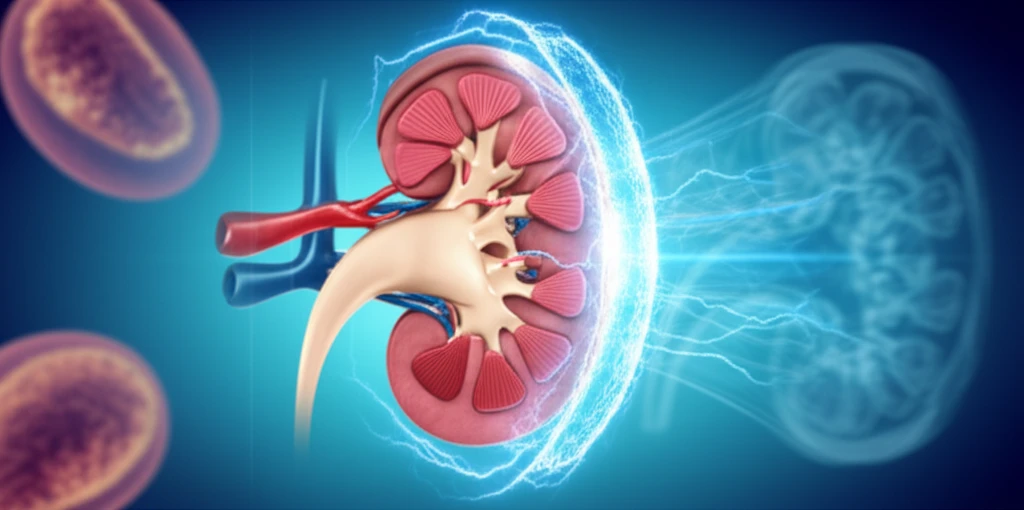
Kidney Protected by Serine Protease Inhibitors

Kidney Protection Breakthrough: How a Serine Protease Inhibitor Could Revolutionize Treatment for Kidney Disease

"New research highlights the potential of serine protease inhibitors in preventing podocyte injury, a key factor in kidney disease progression. Discover how this innovative approach could transform kidney disease treatment."


Kidney disease is a significant global health challenge, affecting millions worldwide. Among the various factors contributing to its progression, the dysfunction of podocytes—specialized cells in the kidney—plays a crucial role. These cells are essential for maintaining the kidney's filtration barrier, and their damage can lead to severe complications, including kidney failure.

A critical element in podocyte health is the integrity of the slit diaphragm, a structure vital for proper kidney function. When this structure breaks down, it can lead to glomerulosclerosis, a condition characterized by the scarring of the kidney's filtering units. Understanding the mechanisms that protect podocytes and maintain the slit diaphragm is crucial for developing effective treatments.

Recent research has shed light on a promising therapeutic avenue: serine protease inhibitors. These inhibitors have shown potential in protecting podocytes from damage in chronic kidney disease. This article explores a study investigating the role of serine proteases in Adriamycin (ADR) nephropathy, a model of kidney injury, and how serine protease inhibitors might offer a novel approach to prevent kidney damage.

The Science Behind Serine Proteases and Kidney Damage

Kidney Protected by Serine Protease Inhibitors

Serine proteases are enzymes that play a key role in various biological processes, including inflammation and tissue remodeling. However, their uncontrolled activity can contribute to disease development, particularly in the kidneys. In the context of kidney disease, excessive serine protease activity can damage podocytes, disrupting the filtration barrier and leading to protein leakage in the urine.

To investigate the effects of serine protease inhibition, researchers used Adriamycin (ADR) nephropathy in mice as a model. ADR is a chemotherapy drug known to cause kidney damage, making it useful for studying kidney disease mechanisms. The study involved injecting mice with ADR to induce kidney injury and then treating them with Nafamostat, a serine protease inhibitor.

  • Experimental Setup: Mice were injected with ADR to induce nephropathy.
  • Serine Protease Activity Measurement: Glomeruli were isolated, and serine protease activity was assessed using a specific fluorogenic peptide substrate.
  • Treatment with Nafamostat: ADR-induced mice were treated with Nafamostat, a serine protease inhibitor, three times a week for four weeks.
The results of the study revealed significant insights into the role of serine proteases in kidney disease. ADR administration led to increased urinary albumin excretion, indicating kidney damage. Additionally, the expression of key podocyte proteins, such as Podocin, Synaptopodin, and WT-1, was reduced, suggesting podocyte injury. The location of Podocin was also disturbed and the number of WT1-positive cells decreased in the glomeruli of ADR mice. Importantly, the researchers found that glomerular serine protease activity was enhanced by ADR administration.

Future Directions and Clinical Implications

This research highlights the potential of serine protease inhibitors, such as Nafamostat, in protecting against podocyte injury and reducing kidney damage. By understanding the underlying mechanisms and exploring new therapeutic strategies, researchers hope to develop more effective treatments to combat kidney disease and improve patient outcomes. Further studies are needed to translate these findings into clinical applications, but the potential benefits for kidney health are significant.

About this Article -

This article was crafted using a human-AI hybrid and collaborative approach. AI assisted our team with initial drafting, research insights, identifying key questions, and image generation. Our human editors guided topic selection, defined the angle, structured the content, ensured factual accuracy and relevance, refined the tone, and conducted thorough editing to deliver helpful, high-quality information.See our About page for more information.

Everything You Need To Know

1

What role do podocytes play in kidney health, and why is their damage a concern?

Podocytes are specialized cells in the kidney crucial for maintaining the kidney's filtration barrier. Their damage can lead to severe complications, including kidney failure, because they are essential for proper kidney function. The integrity of the slit diaphragm, a structure vital for this function, is compromised when podocytes are damaged, potentially leading to glomerulosclerosis, which involves scarring of the kidney's filtering units. Therefore, protecting podocytes is vital for preventing kidney disease progression.

2

How do serine protease inhibitors like Nafamostat potentially protect against kidney damage?

Serine protease inhibitors, such as Nafamostat, protect against kidney damage by inhibiting the activity of serine proteases. Excessive serine protease activity can damage podocytes, disrupting the filtration barrier and leading to protein leakage in the urine. By inhibiting serine proteases, Nafamostat helps maintain the integrity of podocytes and reduce kidney damage. Studies using Adriamycin nephropathy in mice have shown that Nafamostat can reduce urinary albumin excretion and protect podocyte proteins like Podocin, Synaptopodin, and WT-1.

3

What is Adriamycin (ADR) nephropathy, and why was it used in the study of kidney disease?

Adriamycin (ADR) nephropathy is a model of kidney injury induced by the chemotherapy drug Adriamycin (ADR). ADR is known to cause kidney damage, making it useful for studying kidney disease mechanisms. In research, mice are injected with ADR to induce kidney injury, allowing scientists to investigate the effects of potential treatments, such as serine protease inhibitors, on kidney damage and podocyte protection. The ADR model helps researchers understand how specific interventions can prevent or mitigate kidney disease progression.

4

What were the key findings regarding serine protease activity in the kidneys of mice treated with Adriamycin (ADR)?

The study found that Adriamycin (ADR) administration led to increased urinary albumin excretion, indicating kidney damage. Additionally, the expression of key podocyte proteins, such as Podocin, Synaptopodin, and WT-1, was reduced, suggesting podocyte injury. The location of Podocin was also disturbed and the number of WT1-positive cells decreased in the glomeruli. Importantly, the researchers found that glomerular serine protease activity was enhanced by ADR administration. This finding suggests that increased serine protease activity contributes to kidney damage in this model.

5

What are the potential clinical implications of research on serine protease inhibitors for kidney disease, and what further studies are needed?

The research suggests that serine protease inhibitors, like Nafamostat, could potentially be used to protect against podocyte injury and reduce kidney damage in humans. However, further studies are needed to translate these findings into clinical applications. This includes understanding the optimal dosage, treatment duration, and potential side effects of Nafamostat or other serine protease inhibitors in humans. Additionally, clinical trials are necessary to confirm the effectiveness of these inhibitors in preventing or slowing the progression of kidney disease in patients. If successful, this approach could revolutionize the treatment of kidney disease and improve patient outcomes.

Newsletter Subscribe

Subscribe to get the latest articles and insights directly in your inbox.