
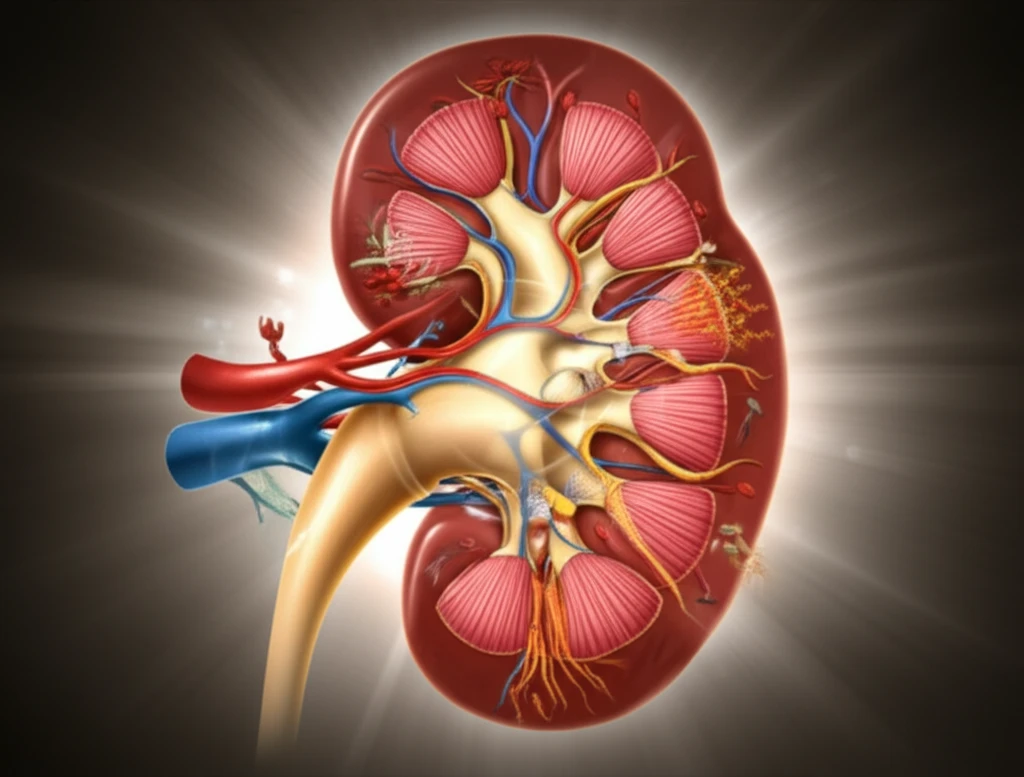
Illustration of a healthy kidney protected by Chinese herbs, symbolizing treatment for diabetic nephropathy.

Kidney Protection: Ancient Chinese Remedy Fights Diabetic Damage

"Discover how Xiao-Shen-Formula, a traditional Chinese medicine, offers new hope in combating diabetic nephropathy by targeting key inflammatory pathways."


Diabetic nephropathy (DN), a serious kidney complication arising from diabetes, presents a significant treatment challenge. While current treatments focus on managing blood sugar and blood pressure, they often fail to fully prevent the progressive kidney damage indicated by proteinuria. This has created an urgent need for new therapeutic approaches that target the underlying mechanisms of DN.

Emerging research points to heparanase and arginase as key players in the development of DN. Heparanase, an enzyme that breaks down heparin sulfate (a vital component of kidney filtration), and arginase, which affects nitric oxide production (essential for healthy blood vessels), have both been implicated in the progression of kidney damage in diabetic conditions. Understanding how to modulate these enzymes could unlock new strategies for preventing DN.

Now, a promising traditional Chinese medicine called Xiao-Shen-Formula (XSF) is emerging as a potential solution. With a history of use in treating DN, recent studies suggest that XSF can reduce proteinuria and improve kidney function. This article explores the latest research into how XSF interacts with the arginase and heparanase pathways to protect kidneys from diabetes-induced damage, offering new hope for those at risk.

How Xiao-Shen-Formula Protects Kidneys: Targeting Inflammation and Key Enzymes

Illustration of a healthy kidney protected by Chinese herbs, symbolizing treatment for diabetic nephropathy.

The study, published in Frontiers in Physiology, investigated the effects of XSF on mice with type 1 DN and on human glomerular endothelial cells (hGECs) in a high-glucose environment. The research focused on how XSF influences glomerular hyper-filtration, a condition where the kidneys filter blood too quickly, leading to damage.

The researchers divided diabetic mice into groups receiving either a low dose (LXSF) or a high dose (HXSF) of XSF for six weeks. They then assessed various markers of kidney function and inflammation. Additionally, hGECs were treated with serum from mice that had received HXSF (MS-HXSF) and an arginase inhibitor (ABH) to further investigate the mechanisms of action.

The study revealed that HXSF treatment: Restored renal hyper-filtration in STZ-induced mice. Reduced glomerulosclerosis (scarring of the glomeruli). Improved renal microvascular remodeling. Lowered levels of reactive oxidative species and inflammatory cytokines. Prevented decreased expression of glomerular heparin sulfate. Reduced levels of cortical heparanase and arginase 2 protein.
In hGECs, MS-HXSF was found to: Ameliorate the enhancement in arginase activity Suppress the protein/mRNA expression of heparanase Reduce mRNA levels of vascular cell adhesion molecule-1, intercellular adhesion molecule-1 and monocyte chemoattractant protein-1 Reduce permeability of hGECs monolayers Improve Nitric Oxide production

Implications for Diabetic Kidney Disease

This study suggests that Xiao-Shen-Formula offers a protective effect against diabetic nephropathy by targeting multiple pathways, including the arginase-heparanase signaling pathway in glomerular endothelial cells. By reducing inflammation, preventing vascular damage, and modulating key enzymes, XSF shows promise as a complementary treatment for DN.

While the study highlights the potential benefits of XSF, it's important to note that it did not affect metabolic parameters like blood glucose levels or the angiotensin-aldosterone system. This indicates that XSF may work best when combined with conventional treatments that manage these factors.

Further research is needed to fully understand the long-term effects and optimal use of XSF in treating diabetic nephropathy. However, these findings offer a promising new avenue for protecting kidney health in individuals with diabetes.

About this Article -

This article was crafted using a human-AI hybrid and collaborative approach. AI assisted our team with initial drafting, research insights, identifying key questions, and image generation. Our human editors guided topic selection, defined the angle, structured the content, ensured factual accuracy and relevance, refined the tone, and conducted thorough editing to deliver helpful, high-quality information.See our About page for more information.

This article is based on research published under:

DOI-LINK: 10.3389/fphys.2018.01195, Alternate LINK

Title: Xiao-Shen-Formula, A Traditional Chinese Medicine, Improves Glomerular Hyper-Filtration In Diabetic Nephropathy Via Inhibiting Arginase Activation And Heparanase Expression

Subject: Physiology (medical)

Journal: Frontiers in Physiology

Publisher: Frontiers Media SA

Authors: Xiaofei An, Maoxiang Zhang, Sisi Zhou, Tian Lu, Yongjun Chen, Lin Yao

Published: 2018-09-26

Everything You Need To Know

1

What is Xiao-Shen-Formula, and why is it important?

Xiao-Shen-Formula (XSF) is a traditional Chinese medicine showing promise in treating diabetic nephropathy (DN). Studies suggest that XSF can reduce proteinuria and improve kidney function in diabetic patients. This is significant because current treatments for DN primarily focus on managing blood sugar and blood pressure, often failing to fully prevent progressive kidney damage, highlighting the need for new therapeutic approaches. XSF's potential to address this gap is a major step.

2

What is diabetic nephropathy, and what makes it a major concern?

Diabetic nephropathy (DN) is a serious kidney complication arising from diabetes. It involves progressive kidney damage indicated by proteinuria. Heparanase, an enzyme that breaks down heparin sulfate, and arginase, which affects nitric oxide production, are key players in the development of DN. Current treatments often fall short in fully preventing the progression of kidney damage, creating a pressing need for new therapies that specifically target the underlying mechanisms of DN.

3

How do heparanase and arginase contribute to the progression of kidney damage in diabetes?

Heparanase is an enzyme that breaks down heparin sulfate, a vital component of kidney filtration. Arginase affects nitric oxide production, which is essential for healthy blood vessels. These two enzymes are central to the progression of diabetic nephropathy. The dysregulation of heparanase leads to damage of the kidney's filtration system, while arginase dysfunction impairs blood vessel health within the kidneys. This can cause damage and inflammation of the kidneys.

4

What methods did the study use to assess the effects of Xiao-Shen-Formula?

The study specifically investigated the effects of Xiao-Shen-Formula (XSF) on mice with type 1 diabetic nephropathy (DN) and human glomerular endothelial cells (hGECs) in a high-glucose environment. This involved assessing how XSF influences glomerular hyper-filtration and various markers of kidney function and inflammation. The results showed that XSF restored renal hyper-filtration, reduced glomerulosclerosis, improved renal microvascular remodeling, lowered inflammation, and modulated key enzymes like heparanase and arginase. These findings indicate XSF's protective effect against DN by targeting multiple pathways within the kidneys.

5

What does the study suggest about Xiao-Shen-Formula's potential for treating diabetic nephropathy?

The research suggests that Xiao-Shen-Formula (XSF) offers a protective effect against diabetic nephropathy (DN) by targeting the arginase-heparanase signaling pathway in glomerular endothelial cells. By reducing inflammation, preventing vascular damage, and modulating key enzymes, XSF shows promise as a complementary treatment for DN. This is significant because it provides a new potential avenue to combat the progression of DN, potentially improving outcomes for those at risk of kidney damage from diabetes.

Newsletter Subscribe

Subscribe to get the latest articles and insights directly in your inbox.