
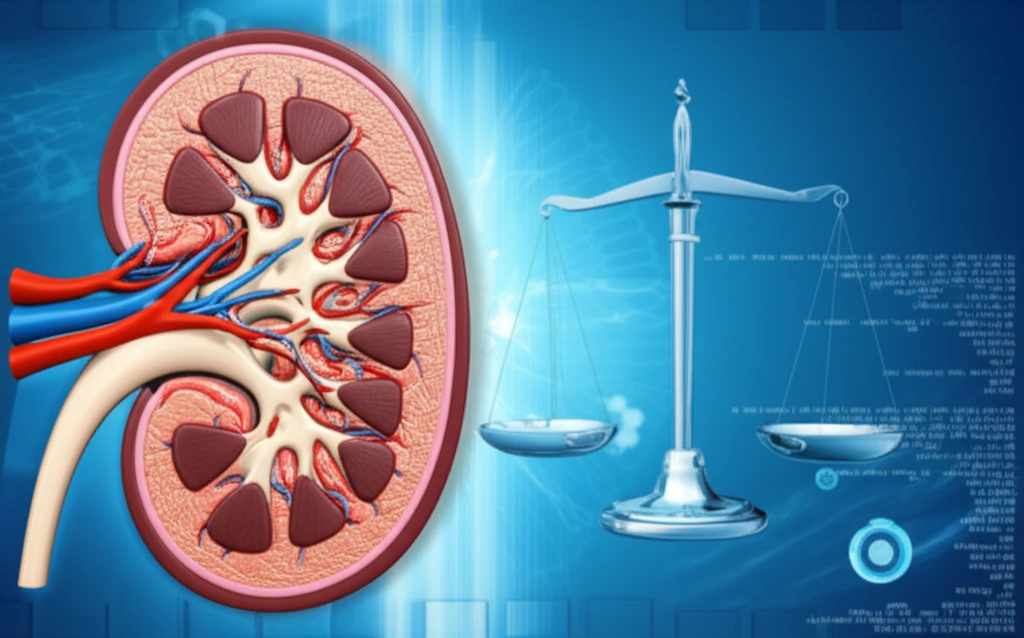
Kidney Health Check: How Basement Membrane Thickness Affects Your Donation

"A new study reveals the importance of glomerular basement membrane thickness (GBMT) in predicting post-donation kidney function, offering insights for potential living donors."
Donating a kidney is a generous act, but it's crucial to understand how it might affect your long-term health. One key area of research focuses on the glomerular basement membrane thickness (GBMT) and its impact on kidney function after donation. Several studies highlight GBMT's importance, prompting further investigation into its role for living donors.
This article explores a recent study investigating the clinical implications of GBMT on post-donation kidney function in living donors. The research aims to shed light on how GBMT affects both the donor's and recipient's health, providing valuable insights for those considering living kidney donation.
By understanding the impact of GBMT, potential donors can make more informed decisions and take proactive steps to safeguard their kidney health. This article translates complex research into practical knowledge, empowering you to understand the critical role of GBMT in living kidney donation.
Decoding GBMT: What the Study Reveals
The study, conducted at Hirosaki University Hospital, retrospectively analyzed data from 48 living kidney donors. Researchers evaluated GBMT using electron microscopy and investigated its relationship with post-donation estimated glomerular filtration rate (eGFR). The donors were divided into two groups based on the median GBMT to compare differences between marginal and non-marginal donors.
- GBMT-High Group: Individuals with a GBMT of ≥382 nm.
- GBMT-Low Group: Individuals with a GBMT of <382 nm.
- eGFR: Estimated glomerular filtration rate, a measure of kidney function.
Key Takeaways and Future Directions
This study underscores the importance of pre-transplant GBMT in predicting post-donation eGFR in living donors. While GBMT did not significantly differ between non-marginal and marginal donors, the research highlights potential risk factors like age, obesity, and pre-donation microalbuminuria for increased GBMT.
While this study provides valuable insights, it's important to acknowledge its limitations, including a small sample size, retrospective nature, and short follow-up period. Further research with larger sample sizes and longer follow-up periods is needed to confirm these findings and explore the long-term implications of GBMT on kidney health.
For potential living donors, understanding GBMT and its potential impact is crucial for making informed decisions. Consulting with healthcare professionals, undergoing thorough evaluations, and addressing modifiable risk factors can help ensure the safety and well-being of both the donor and the recipient.