
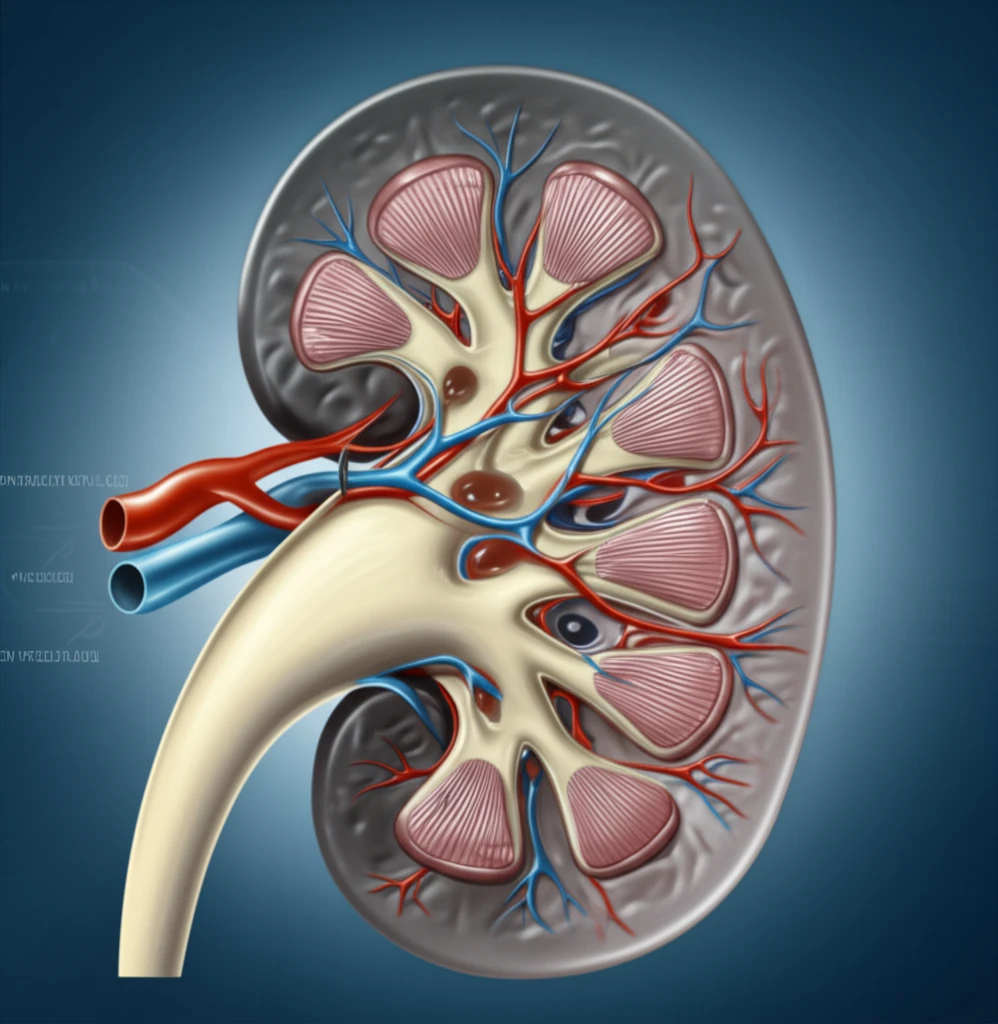
Illustration of a healthy kidney transitioning into a scarred kidney, symbolizing kidney damage after tumor removal.

Kidney Health Alert: Spotting Early Damage After Tumor Removal

"New research identifies key markers in kidney tissue that can predict future health risks after nephrectomy, empowering patients and doctors to take proactive steps."


Kidney cancer treatment often involves removing all or part of the affected kidney through a procedure called a nephrectomy. While this surgery can be life-saving, it also poses risks to long-term kidney function. Understanding how to identify patients at higher risk of developing chronic kidney disease (CKD) after surgery is essential for proactive care.

A recent study published in Pathology sheds light on this critical area. Researchers investigated the relationship between subtle signs of damage in kidney tissue (obtained during nephrectomy for kidney tumors) and future kidney health. The goal was to develop a system for grading kidney damage to identify those who might need closer monitoring or early interventions.

This article breaks down the study's key findings, explaining how doctors can now use tissue analysis to assess the risk of CKD after tumor removal. We'll explore the markers they identified, what they mean for your health, and how this research might change the future of kidney cancer care.

Decoding Kidney Damage: What the Study Revealed

Illustration of a healthy kidney transitioning into a scarred kidney, symbolizing kidney damage after tumor removal.

The study, led by researchers at the University of Queensland, Australia, examined kidney tissue samples from 150 patients who had undergone radical nephrectomy for suspected kidney cancer. They looked for specific signs of chronic damage, including:

These markers were carefully assessed and graded to create a comprehensive picture of kidney health. The researchers then analyzed how these tissue findings correlated with pre-operative kidney function (estimated glomerular filtration rate, or eGFR) and the amount of protein in the urine (albumin-creatinine ratio, or ACR).

  • Glomerulosclerosis: Scarring of the tiny filtering units in the kidney (glomeruli).
  • Arteriosclerosis: Narrowing and hardening of the small arteries in the kidney.
  • Interstitial Fibrosis: Scarring in the tissue surrounding the kidney tubules.
  • Tubular Atrophy: Damage and wasting away of the kidney tubules, which are responsible for reabsorbing essential substances back into the bloodstream.
The results revealed significant connections between these markers and kidney function. Here's a summary of the key findings:

A New Era of Personalized Kidney Cancer Care

This research marks an important step towards personalized kidney cancer care. By carefully examining kidney tissue after tumor removal, doctors can now gain a better understanding of a patient's risk for future kidney problems. This knowledge can empower both doctors and patients to make informed decisions about monitoring, lifestyle changes, and potential early interventions to protect kidney health and prevent the progression of CKD.

About this Article -

This article was crafted using a human-AI hybrid and collaborative approach. AI assisted our team with initial drafting, research insights, identifying key questions, and image generation. Our human editors guided topic selection, defined the angle, structured the content, ensured factual accuracy and relevance, refined the tone, and conducted thorough editing to deliver helpful, high-quality information.See our About page for more information.

Everything You Need To Know

1

What is a nephrectomy, and why is it relevant to kidney health?

A nephrectomy is a surgical procedure where all or part of a kidney is removed, often performed to treat kidney cancer. While this procedure can be life-saving, it impacts long-term kidney function. The study highlighted in *Pathology* investigates the impact on the remaining kidney and identifies markers in kidney tissue that correlate with future kidney health risks after a nephrectomy.

2

What specific markers did the study focus on to assess kidney damage?

The study examined kidney tissue for several markers of chronic damage: Glomerulosclerosis (scarring of the glomeruli), Arteriosclerosis (narrowing and hardening of kidney arteries), Interstitial Fibrosis (scarring around kidney tubules), and Tubular Atrophy (damage to the kidney tubules). These markers were graded to assess the overall health of the kidney and their correlation with the patient's kidney function after a nephrectomy.

3

How do the markers identified in the study relate to kidney function and potential health risks?

The researchers analyzed how the identified markers (Glomerulosclerosis, Arteriosclerosis, Interstitial Fibrosis, and Tubular Atrophy) in kidney tissue correlated with pre-operative kidney function, specifically the estimated glomerular filtration rate (eGFR), and the amount of protein in the urine (albumin-creatinine ratio or ACR). The presence and severity of these markers were significantly linked to changes in kidney function and the development of chronic kidney disease (CKD). This allows doctors to understand the risk for the patient.

4

What is the significance of understanding kidney damage markers after nephrectomy in the context of kidney cancer care?

Understanding these markers, such as Glomerulosclerosis, Arteriosclerosis, Interstitial Fibrosis, and Tubular Atrophy, allows doctors to gain a better understanding of a patient's risk for future kidney problems following a nephrectomy. This knowledge is crucial for personalized kidney cancer care, empowering doctors to make informed decisions about monitoring, lifestyle changes, and potential early interventions to protect kidney health and prevent the progression of CKD. It shifts care from a reactive to a proactive approach.

5

How might this research change the approach to kidney cancer care in the future?

This research, which examines markers such as Glomerulosclerosis, Arteriosclerosis, Interstitial Fibrosis, and Tubular Atrophy, marks a significant step toward personalized kidney cancer care. By analyzing kidney tissue after tumor removal, doctors can assess a patient's individual risk for developing CKD. This allows for proactive interventions. This approach will enable the tailoring of treatments and monitoring strategies, allowing for lifestyle changes and potential early interventions to protect kidney health, offering patients a better chance at managing and preventing CKD. It may help in earlier detection to begin interventions with medications and lifestyle modifications.

Newsletter Subscribe

Subscribe to get the latest articles and insights directly in your inbox.