
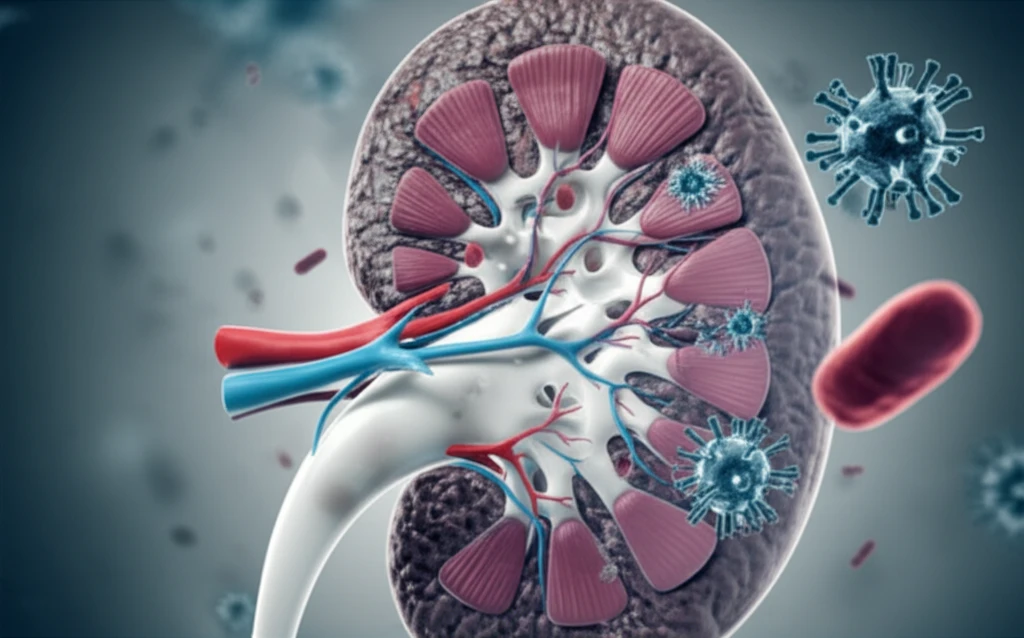
Symbolic representation of the link between kidney disease and infection risk.

Kidney Health Alert: How Reduced Function Increases Your Risk of Infections

"A new study reveals the critical link between declining kidney function and a heightened susceptibility to common infections. Discover how to protect yourself and stay healthy."


Chronic Kidney Disease (CKD) is a widespread health concern, affecting approximately 5% to 15% of adults in developed countries. Beyond the well-known risks of heart disease and other complications, a growing body of research highlights a significant connection between CKD and an increased vulnerability to infections. These infections not only diminish overall quality of life but also contribute to higher healthcare costs and potentially life-threatening situations.

A groundbreaking study, published in the Clinical Journal of the American Society of Nephrology, sheds light on this critical relationship. Researchers investigated a large population, examining the link between estimated glomerular filtration rate (eGFR) – a measure of kidney function – and the incidence of various community-acquired infections. The findings reveal a concerning trend: as kidney function declines, the risk of infections rises substantially.

This article breaks down the study's key findings, explaining what they mean for your health. We'll explore which types of infections are most common in individuals with reduced kidney function, and, more importantly, what steps you can take to protect yourself and maintain a healthy lifestyle. Whether you have CKD, know someone who does, or simply want to be proactive about your well-being, this information is vital.

The eGFR-Infection Connection: What the Research Shows

Symbolic representation of the link between kidney disease and infection risk.

The study analyzed data from over 1.1 million health care users in Stockholm, Sweden, tracked over a 12-month period. Researchers meticulously examined the relationship between eGFR levels and the occurrence of community-acquired infections, excluding hospital-acquired infections to ensure accurate results. The findings paint a clear picture: lower eGFR is significantly associated with a higher risk of infections.

Specifically, the study revealed a dramatic increase in infection rates as eGFR declined:

  • For individuals with an eGFR of 90-104 ml/min per 1.73 m² (considered a normal range), the incidence rate of infections was 74 per 1000 person-years.
  • However, for those with an eGFR below 30 ml/min per 1.73 m² (indicating severe kidney disease), the incidence rate soared to 419 per 1000 person-years.
  • This translates to a 1.53 times higher risk of community-acquired infections for individuals with severely reduced kidney function compared to those with normal kidney function.
It's important to note that the types of infections also varied with eGFR levels. While all infection types (except for upper respiratory and nervous system infections) generally increased with declining kidney function, some became disproportionately more common. Lower respiratory tract infections, urinary tract infections (UTIs), and sepsis emerged as major concerns for individuals with CKD. For example, lower respiratory tract infections accounted for a significantly larger percentage of infections in those with severely reduced kidney function compared to those with normal kidney function.

Taking Control: Protecting Your Health

The findings of this study underscore the importance of proactive kidney health management. While reduced kidney function can increase the risk of infections, there are steps you can take to mitigate this risk. Regular check-ups with your doctor, including eGFR monitoring, are essential for early detection and management of CKD. If you have CKD, work closely with your healthcare team to develop a personalized plan that includes strategies for preventing infections, such as vaccinations and lifestyle modifications.

About this Article -

This article was crafted using a human-AI hybrid and collaborative approach. AI assisted our team with initial drafting, research insights, identifying key questions, and image generation. Our human editors guided topic selection, defined the angle, structured the content, ensured factual accuracy and relevance, refined the tone, and conducted thorough editing to deliver helpful, high-quality information.See our About page for more information.

This article is based on research published under:

DOI-LINK: 10.2215/cjn.00250117, Alternate LINK

Title: Egfr And The Risk Of Community-Acquired Infections

Subject: Transplantation

Journal: Clinical Journal of the American Society of Nephrology

Publisher: American Society of Nephrology (ASN)

Authors: Hong Xu, Alessandro Gasparini, Junichi Ishigami, Khaled Mzayen, Guobin Su, Peter Barany, Johan Ärnlöv, Bengt Lindholm, Carl Gustaf Elinder, Kunihiro Matsushita, Juan Jesús Carrero

Published: 2017-08-17

Everything You Need To Know

1

What is eGFR, and why is it important?

The estimated glomerular filtration rate (eGFR) is a measure of how well your kidneys are filtering waste from your blood. It is a key indicator of kidney function. A normal eGFR is generally between 90-104 ml/min per 1.73 m². The lower the eGFR, the less effectively the kidneys are working. The article highlights that a decline in eGFR is directly linked to an increased risk of infections, particularly community-acquired infections. This is significant because reduced kidney function, as indicated by a lower eGFR, makes individuals more vulnerable to various infections, which can lead to diminished quality of life, increased healthcare costs, and potential life-threatening situations.

2

What is the significance of Chronic Kidney Disease (CKD)?

Chronic Kidney Disease (CKD) affects approximately 5% to 15% of adults in developed countries. It's a widespread health issue. The article emphasizes that CKD is associated with a higher risk of infections. This is important because it expands the understanding of the complications associated with CKD beyond heart disease and other established risks. The increased susceptibility to infections can significantly impact the health and well-being of those with CKD, making it crucial to monitor and manage kidney health proactively.

3

What are community-acquired infections, and why are they important in this context?

Community-acquired infections are infections contracted outside of a hospital setting. The study focused on these types of infections to get an accurate understanding of the impact of kidney function on infection risk. The study found that individuals with lower eGFR had a higher risk of these infections. Specifically, those with severely reduced kidney function (eGFR below 30 ml/min per 1.73 m²) experienced a significantly elevated risk compared to those with normal kidney function (eGFR of 90-104 ml/min per 1.73 m²). This is a critical point because it highlights the importance of preventative measures and early intervention for those with reduced kidney function.

4

What specific types of infections are more common with declining kidney function?

The types of infections that become more prevalent with declining kidney function include lower respiratory tract infections, urinary tract infections (UTIs), and sepsis. These infection types became disproportionately more common in individuals with CKD. For example, lower respiratory tract infections accounted for a significantly larger percentage of infections in those with severely reduced kidney function. This information is important because it can guide targeted prevention strategies and treatment approaches for individuals with CKD. It emphasizes the need for monitoring and interventions to protect against these specific types of infections.

5

How can individuals protect their health in light of these findings?

To protect your health, regular check-ups with your doctor, including eGFR monitoring, are essential for early detection and management of CKD. If you have CKD, a personalized plan that includes strategies for preventing infections, such as vaccinations and lifestyle modifications, should be developed with your healthcare team. These actions are critical because early detection and proactive management can help mitigate the increased risk of infections. This approach can improve quality of life and overall health outcomes for individuals with reduced kidney function.

Newsletter Subscribe

Subscribe to get the latest articles and insights directly in your inbox.