
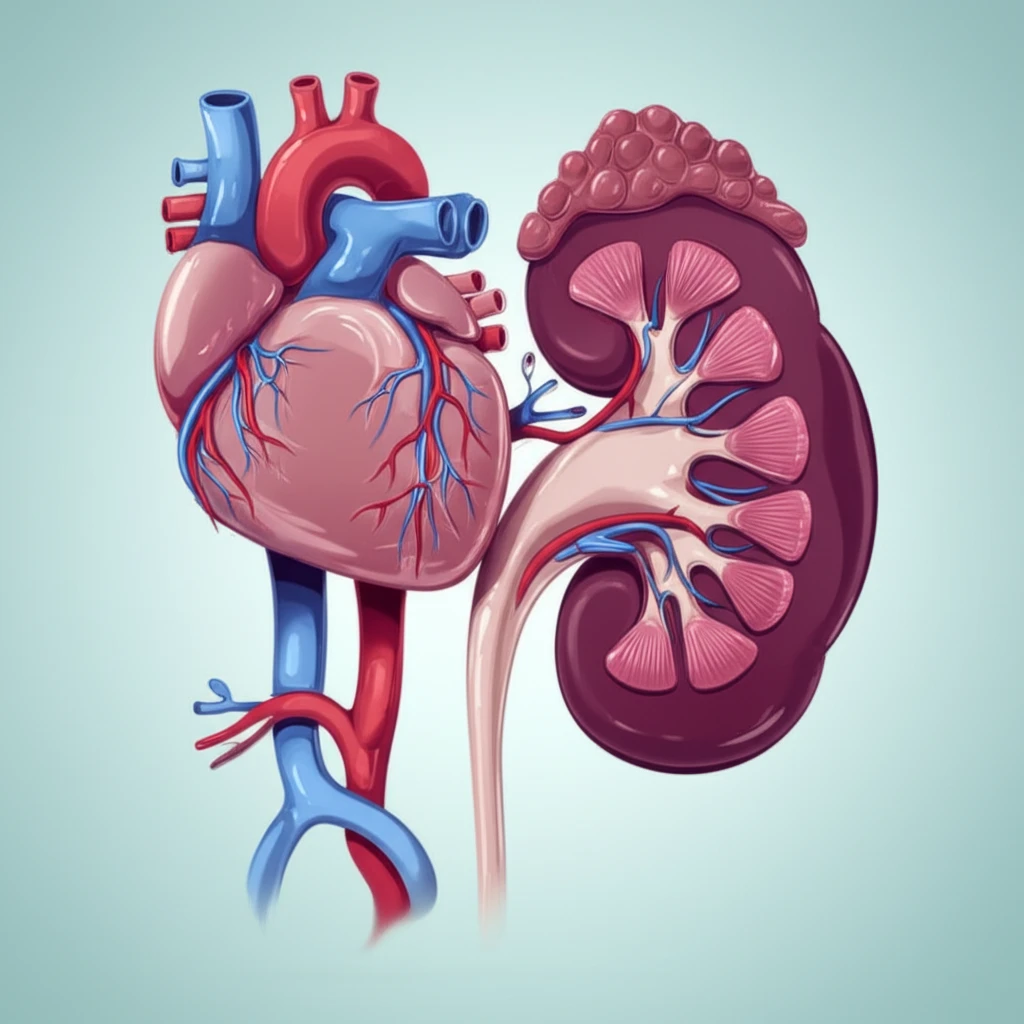
Illustration of a heart connected to a kidney, emphasizing the connection between heart health and kidney function.

Kidney Health After Heart Surgery: What You Need to Know

"Understanding the Link Between Heartmate II Implants, Renal Function, and Long-Term Health"


Heart disease is a major health concern, and for many, advanced heart failure requires innovative treatments. Left ventricular assist devices (LVADs), like the HeartMate II, are life-saving devices that help the heart pump blood. However, as with any major medical intervention, there are potential side effects and complications that patients and their families should be aware of.

One critical area of concern following LVAD implantation is kidney health. While these devices often lead to initial improvements in kidney function, research indicates that these gains may not always last. This article dives into the connection between LVADs and kidney health, providing essential information for patients, caregivers, and anyone interested in understanding this complex relationship.

This article aims to break down the findings of recent studies, explaining the potential risks and offering insights into how to manage kidney health after receiving a HeartMate II LVAD. We'll explore the science behind these changes, the factors that influence kidney function, and the steps you can take to promote long-term well-being.

The HeartMate II and Its Impact on Kidney Function: A Closer Look

Illustration of a heart connected to a kidney, emphasizing the connection between heart health and kidney function.

When a HeartMate II LVAD is implanted, it takes over the work of the left ventricle, the heart's main pumping chamber. This can lead to improved blood flow and reduced strain on the body, which may initially improve kidney function. The kidneys are responsible for filtering waste and excess fluids from the blood, and better blood flow can help them work more efficiently.

However, studies have shown that these early improvements in kidney function may not always persist. Over time, some patients experience a decline in kidney health. This decline can be due to a variety of factors, including complications from surgery, the body's response to the device, and other underlying health issues.

  • Initial Improvement: Many patients see an initial increase in kidney function after LVAD implantation.
  • Potential Decline: Research indicates that this improvement may not be sustained, with kidney function declining in some individuals.
  • Multiple Factors: The decline can be influenced by various factors, including surgical complications, the body's reaction to the device, and underlying health conditions.
A recent study examined 62 patients with HeartMate II implants. The study found that while kidney function improved shortly after surgery, it gradually declined over the following year. This decline highlights the importance of long-term monitoring and proactive management of kidney health in patients with LVADs.

Prioritizing Kidney Health After LVAD Implantation

Understanding the potential impact of a HeartMate II LVAD on kidney health is crucial for anyone undergoing this procedure. By staying informed, working closely with your healthcare team, and taking proactive steps to manage your health, you can help support your kidney function and improve your long-term well-being. Regular check-ups, a healthy lifestyle, and adherence to medical recommendations are key to navigating this journey successfully. Remember, you are not alone, and with the right care, you can live a fulfilling life with an LVAD.

About this Article -

This article was crafted using a human-AI hybrid and collaborative approach. AI assisted our team with initial drafting, research insights, identifying key questions, and image generation. Our human editors guided topic selection, defined the angle, structured the content, ensured factual accuracy and relevance, refined the tone, and conducted thorough editing to deliver helpful, high-quality information.See our About page for more information.

This article is based on research published under:

DOI-LINK: 10.1097/mat.0000000000000511, Alternate LINK

Title: Early Gains In Renal Function Following Implantation Of Heartmate Ii Left Ventricular Assist Devices May Not Persist To One Year

Subject: Biomedical Engineering

Journal: ASAIO Journal

Publisher: Ovid Technologies (Wolters Kluwer Health)

Authors: Tal Hasin, Avishay Grupper, John J. Dillon, Joseph J. Maleszewski, Zhuo Li, Yan Topilsky, Robert P. Frantz, Brooks S. Edwards, Naveen L. Pereira, Simon Maltais, John M. Stulak, Lyle Joyce, Richard Daly, Soon J. Park, Sudhir S. Kushwaha

Published: 2017-07-01

Everything You Need To Know

1

How does the HeartMate II LVAD initially affect kidney function after implantation?

The HeartMate II LVAD, by taking over the work of the left ventricle, often leads to improved blood flow throughout the body. This enhanced circulation can initially improve kidney function, as the kidneys, responsible for filtering waste and excess fluids, benefit from the increased blood supply. The improved blood flow helps them to operate more efficiently in the short term.

2

What are the potential long-term effects of the HeartMate II LVAD on kidney health?

While initial improvements in kidney function are often observed after HeartMate II LVAD implantation, these benefits may not always persist. Some patients experience a decline in kidney health over time. This decline can be attributed to factors such as surgical complications, the body's response to the device, and other pre-existing health conditions. Regular monitoring is essential to manage these potential long-term effects.

3

What factors contribute to the decline in kidney function after receiving a HeartMate II LVAD?

Several factors can contribute to the decline in kidney function following HeartMate II LVAD implantation. These include complications arising from the surgery itself, the body's individual reaction to the presence of the device, and any underlying health issues that the patient may have. Each of these elements can play a significant role in the long-term kidney health of LVAD patients, highlighting the need for comprehensive care and monitoring.

4

Why is it important to prioritize kidney health after HeartMate II LVAD implantation, and what steps can be taken?

Prioritizing kidney health after HeartMate II LVAD implantation is crucial because, while the device assists the heart, the kidneys can be vulnerable to long-term decline. By staying informed about potential risks, working closely with a healthcare team, and adhering to medical recommendations, patients can actively support their kidney function and improve their overall well-being. Regular check-ups, a healthy lifestyle, and diligent adherence to prescribed medical treatments are key components of successful long-term management.

5

How do HeartMate II LVADs impact blood flow and why is that significant for kidney health?

HeartMate II LVADs take over the function of the left ventricle, which leads to improved systemic blood flow. This enhanced blood flow is significant for kidney health because the kidneys rely on adequate perfusion to filter waste and regulate fluid balance effectively. Initially, the improved blood flow may enhance kidney function. However, factors like surgical complications or the body's response to the LVAD can disrupt this benefit over time, potentially leading to a decline in kidney function despite the improved blood flow provided by the HeartMate II LVAD.

Newsletter Subscribe

Subscribe to get the latest articles and insights directly in your inbox.