
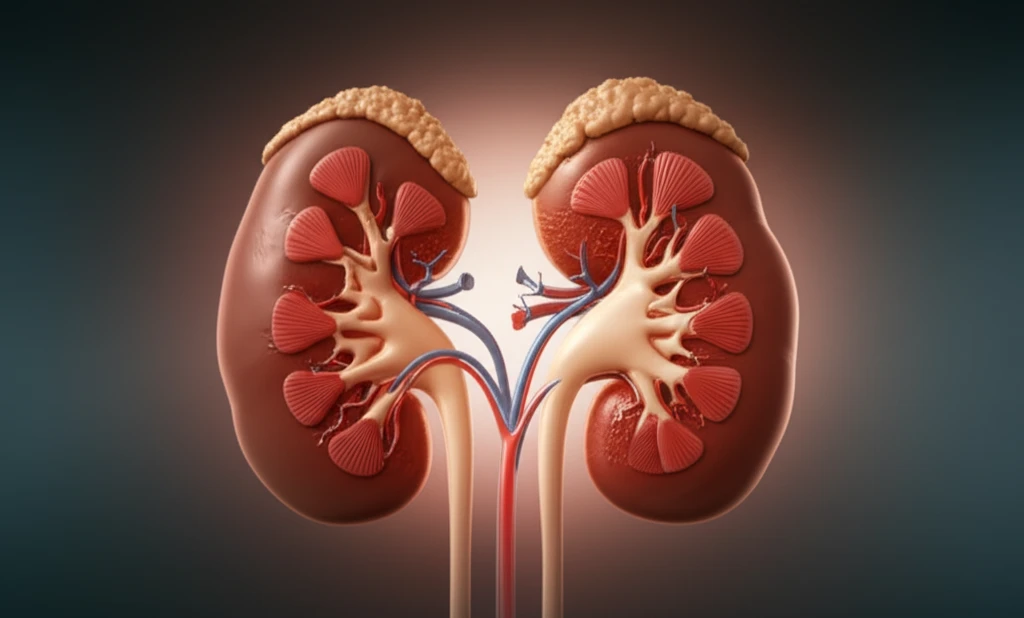
Interconnected heart and kidney symbolizing cardiorenal health

Kidney Function and Heart Health: What You Need to Know

"Discover how kidney function impacts heart failure outcomes and what this means for managing your health effectively."


Heart failure and kidney disease are often intertwined, creating a complex health challenge. When the kidneys don't function properly, it can significantly affect heart health, and vice versa. This connection, known as cardiorenal syndrome, requires careful management and awareness.

Studies have consistently shown that kidney dysfunction in patients with heart failure leads to poorer outcomes, including increased hospitalizations and higher mortality rates. Understanding this relationship is crucial for developing effective treatment strategies and improving the quality of life for those affected.

This article delves into a detailed study examining the impact of kidney function on heart failure patients, offering insights into prevalence, risk factors, and long-term effects. By understanding the key findings, patients and healthcare providers can work together to manage these conditions more effectively.

The Critical Connection: How Kidney Function Impacts Heart Failure

Interconnected heart and kidney symbolizing cardiorenal health

A recent study investigated the relationship between kidney function and heart failure outcomes, involving 1,100 patients admitted for decompensated heart failure across 14 Chilean hospitals between 2002 and 2009. The research focused on patients in moderate to severe heart failure (NYHA Class III or IV), excluding those whose primary reason for hospitalization was not heart-related.

The study meticulously tracked patient data, including demographic information, medical history, lab results, and treatment details. Kidney function was assessed by measuring serum creatinine levels upon admission and discharge. A significant deterioration in kidney function was defined as an increase in serum creatinine greater than 0.5 mg/dL during hospitalization.

  • Prevalence of Kidney Dysfunction: Approximately 9.6% of all patients experienced a decline in kidney function during their hospital stay.
  • Impact on Mortality: Patients with worsening kidney function had a significantly higher risk of both in-hospital and long-term mortality.
  • Key Risk Factors: The study identified several factors associated with kidney function decline, including older age, pre-existing kidney disease, and the need for intensive treatments during hospitalization.
The results highlighted that kidney function decline during hospitalization is a strong predictor of adverse outcomes in heart failure patients. Those who experienced a deterioration in kidney function were more likely to require intensive care interventions, such as mechanical ventilation and dialysis. Moreover, their long-term survival rates were significantly lower compared to patients whose kidney function remained stable.

Taking Control of Your Health: Practical Steps and Future Directions

Understanding the critical link between kidney function and heart failure empowers patients to take proactive steps in managing their health. Regular check-ups, close monitoring of kidney function, and adherence to prescribed medications are essential. Future research should focus on developing targeted therapies to protect kidney function in heart failure patients and improve overall outcomes. By staying informed and working closely with healthcare providers, individuals can navigate the complexities of cardiorenal syndrome and live healthier, fuller lives.

About this Article -

This article was crafted using a human-AI hybrid and collaborative approach. AI assisted our team with initial drafting, research insights, identifying key questions, and image generation. Our human editors guided topic selection, defined the angle, structured the content, ensured factual accuracy and relevance, refined the tone, and conducted thorough editing to deliver helpful, high-quality information.See our About page for more information.

Everything You Need To Know

1

What is the relationship between kidney function and heart failure, as discussed?

The relationship between kidney function and heart failure is significant, forming a complex health challenge often referred to as cardiorenal syndrome. When the kidneys do not function properly, it can significantly affect heart health, and vice versa. Studies show that kidney dysfunction in patients with heart failure leads to poorer outcomes, including increased hospitalizations and higher mortality rates. This connection highlights the importance of careful management and awareness of this relationship to improve patient outcomes.

2

How did the study define a significant deterioration in kidney function in heart failure patients?

The study defined a significant deterioration in kidney function as an increase in serum creatinine greater than 0.5 mg/dL during hospitalization. This measurement was a key indicator used to assess the impact of kidney function on heart failure outcomes. The study meticulously tracked patient data, including serum creatinine levels upon admission and discharge. This data was crucial in identifying patients whose kidney function worsened during their hospital stay and in assessing the consequences of this decline.

3

What were the key findings regarding the impact of kidney function on heart failure outcomes in the study?

The key findings of the study highlighted the critical impact of kidney function on heart failure patients. Approximately 9.6% of all patients experienced a decline in kidney function during their hospital stay. Patients with worsening kidney function had a significantly higher risk of both in-hospital and long-term mortality. Additionally, the study identified several risk factors associated with kidney function decline, including older age, pre-existing kidney disease, and the need for intensive treatments during hospitalization. These results underscore the importance of monitoring and managing kidney function in heart failure patients to improve their prognosis.

4

What practical steps can individuals take to manage cardiorenal syndrome effectively, based on the provided information?

Individuals can take several proactive steps to manage cardiorenal syndrome effectively. Regular check-ups and close monitoring of kidney function are essential. Patients should also adhere to prescribed medications and work closely with their healthcare providers. Understanding the critical link between kidney function and heart failure empowers patients to take control of their health. Future research should focus on developing targeted therapies to protect kidney function in heart failure patients, ultimately improving overall outcomes. By staying informed and proactive, individuals can navigate the complexities of cardiorenal syndrome and live healthier lives.

5

What were some of the risk factors associated with a decline in kidney function among heart failure patients, according to the study?

The study identified several key risk factors associated with kidney function decline in heart failure patients. These included older age, indicating that older individuals are more vulnerable to kidney dysfunction during heart failure treatment. Pre-existing kidney disease was another significant risk factor, as patients with prior kidney issues are at higher risk of further decline. Furthermore, the need for intensive treatments during hospitalization, such as mechanical ventilation and dialysis, was also associated with a higher likelihood of kidney function deterioration. Understanding these risk factors is critical for healthcare providers to identify and manage patients at increased risk.

Newsletter Subscribe

Subscribe to get the latest articles and insights directly in your inbox.