
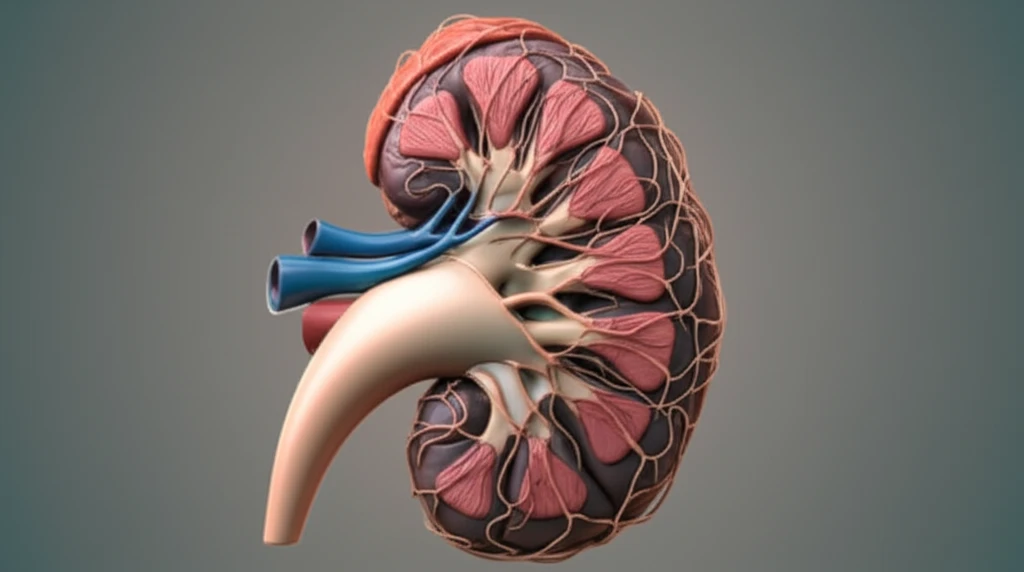
Kidney cancer spread uniformly, irrespective of tumor location.

Kidney Cancer and Lymph Node Invasion: What You Need to Know

"Debunking Myths About Tumor Location and Spread"


Kidney cancer is a formidable health challenge, and understanding its behavior is crucial for effective treatment. One of the critical aspects of managing kidney cancer involves determining if the cancer has spread to the lymph nodes, a process known as lymph node invasion (LNI). This information is vital for staging the cancer, planning treatment, and predicting outcomes.

Historically, there's been a decrease in performing lymph node dissections (LND) during kidney cancer surgery. This shift stems from a lack of definitive proof that LND improves cancer control, coupled with the rise of minimally invasive surgical techniques and stage migration—where cancers are detected earlier due to improved screening. However, accurate nodal staging remains essential for prognosis, follow-up schedules, and considering adjuvant therapies.

Adding to the complexity, past research using cadaveric dissections and sentinel-node studies has highlighted significant variability in how the lymphatic system drains from the kidneys. These studies have shown that the lymphatic vessels can reach retroperitoneal nodes or even connect directly to supraclavicular and mediastinal nodes, bypassing typical drainage routes. This unpredictability raises questions about whether the location of the primary tumor within the kidney affects the likelihood of lymph node involvement.

Does Tumor Location Really Matter?

Kidney cancer spread uniformly, irrespective of tumor location.

A recent study published in the World Journal of Urology sought to clarify the role of tumor location and side in predicting lymph node invasion in renal cell carcinoma (RCC). Researchers analyzed data from 2,485 patients with unilateral RCC who underwent surgery at a single tertiary care center. The study aimed to determine if the side of the RCC (left versus right) and its location within the kidney (upper, middle, hilar, lower area, or multiple areas) influenced the risk of LNI or nodal progression (NP) during follow-up.

The study revealed some interesting findings:

  • Overall LNI and NP Rates: At the time of surgery, 15% of patients had LNI. During follow-up, 2.2% experienced nodal progression.
  • Tumor Location and LNI/NP: Patients with tumors in more than one anatomical area of the kidney had higher rates of LNI and NP compared to those with tumors in a single area. Specifically, LNI rates were significantly higher in patients with tumors spanning multiple kidney areas (26%) compared to single areas (upper 11%, middle 10%, hilar 0%, lower 12%).
  • Independent Predictors: Advanced disease characteristics such as cM1 (distant metastasis), cN1 (clinical lymph node involvement), pT2/pT3/pT4 stage (larger or invasive tumors), and high Fuhrman grade (3/4) were independent predictors of LNI and NP.
  • Tumor Side and Location: Neither the side of the kidney with the tumor (left vs. right) nor the specific location of the tumor within the kidney independently predicted LNI or NP.
In essence, while tumor location does impact LNI, the side of the tumor does not.

What Does This Mean for Patients?

The study's findings offer valuable insights for patients and healthcare providers. The reassurance is that the side of the kidney affected by cancer doesn't seem to influence the risk of lymph node involvement. However, tumors involving multiple areas of the kidney are associated with higher rates of LNI and NP, suggesting a more aggressive disease pattern. These results underscore the importance of comprehensive staging and tailored treatment approaches based on individual patient and tumor characteristics. By focusing on known predictors and understanding the nuances of tumor behavior, healthcare teams can optimize outcomes and provide the best possible care for individuals facing kidney cancer.

About this Article -

This article was crafted using a human-AI hybrid and collaborative approach. AI assisted our team with initial drafting, research insights, identifying key questions, and image generation. Our human editors guided topic selection, defined the angle, structured the content, ensured factual accuracy and relevance, refined the tone, and conducted thorough editing to deliver helpful, high-quality information.See our About page for more information.

This article is based on research published under:

DOI-LINK: 10.1007/s00345-018-2573-3, Alternate LINK

Title: The Side And The Location Of The Primary Tumor Does Not Affect The Probability Of Lymph Node Invasion In Patients With Renal Cell Carcinoma

Subject: Urology

Journal: World Journal of Urology

Publisher: Springer Science and Business Media LLC

Authors: Alessandro Nini, Alessandro Larcher, Walter Cazzaniga, Paolo Dell’Oglio, Francesco Cianflone, Fabio Muttin, Francesco Ripa, Andrea Salonia, Alberto Briganti, Francesco Montorsi, Roberto Bertini, Umberto Capitanio

Published: 2018-11-24

Everything You Need To Know

1

What is lymph node invasion (LNI) in the context of kidney cancer and why is it important?

In kidney cancer, lymph node invasion (LNI) refers to the spread of cancer cells to the lymph nodes. Determining if this has occurred is crucial because it helps in staging the cancer, which in turn guides treatment decisions and helps predict patient outcomes. LNI information is also essential for planning treatment strategies, including whether to consider adjuvant therapies following surgery. Accurate nodal staging is vital for creating appropriate follow-up schedules.

2

Does the location of a kidney tumor within the kidney influence the chance of lymph node invasion (LNI)?

Yes, the recent study showed that the location of a kidney tumor within the kidney does impact the risk of lymph node invasion (LNI). Specifically, the study revealed that patients with tumors spanning multiple areas of the kidney had higher rates of LNI. Specifically, LNI rates were significantly higher in patients with tumors spanning multiple kidney areas (26%) compared to single areas (upper 11%, middle 10%, hilar 0%, lower 12%).

3

Does the side of the kidney (left vs. right) affected by renal cell carcinoma (RCC) impact the risk of lymph node invasion (LNI)?

No, the study found that the side of the kidney affected by the renal cell carcinoma (RCC) does not independently predict lymph node invasion (LNI) or nodal progression (NP). This offers reassurance to patients, as the side of the tumor does not appear to influence the risk of lymph node involvement. However, other factors, such as tumor location within the kidney (multiple areas) and advanced disease characteristics, are significant.

4

What other factors, besides tumor location, are associated with a higher risk of lymph node invasion (LNI) and nodal progression (NP) in kidney cancer?

The study highlighted several independent predictors of lymph node invasion (LNI) and nodal progression (NP) in kidney cancer, beyond the tumor location. These include advanced disease characteristics such as cM1 (distant metastasis), cN1 (clinical lymph node involvement), pT2/pT3/pT4 stage (larger or invasive tumors), and high Fuhrman grade (3/4). These factors suggest a more aggressive disease pattern, influencing both the risk of lymph node involvement and the potential for the cancer to spread.

5

How do these findings impact the treatment and care for individuals diagnosed with kidney cancer, specifically regarding lymph node invasion (LNI)?

The study's findings offer valuable insights for tailoring treatment approaches. The study underscores the importance of comprehensive staging and individualized treatment plans based on individual patient and tumor characteristics. The reassurance is that the side of the kidney affected doesn't seem to influence the risk of lymph node involvement. However, tumors involving multiple areas of the kidney are associated with higher rates of LNI and NP, suggesting a more aggressive disease pattern. By focusing on known predictors and understanding the nuances of tumor behavior, healthcare teams can optimize outcomes and provide the best possible care for individuals facing kidney cancer.

Newsletter Subscribe

Subscribe to get the latest articles and insights directly in your inbox.