
Kidney Breakthrough: Scientists Discover Key to Speedy Recovery From Injury

"New research illuminates how our kidneys mend themselves, offering hope for preventing chronic kidney disease."
Our kidneys, those bean-shaped powerhouses, work tirelessly to filter our blood, removing waste and maintaining our body's delicate balance. But what happens when they get injured? Recent discoveries have unlocked a critical understanding of how kidneys heal themselves, offering exciting new avenues for preventing chronic kidney disease (CKD).
The study, published in the esteemed journal 'Kidney International', dives deep into the cellular mechanisms of kidney recovery after injury. It pinpoints a specific signaling pathway, a sort of cellular 'repair crew', that plays a vital role in helping kidneys bounce back from damage. This discovery could lead to more effective treatments for acute kidney injury (AKI) and prevent its progression to the more serious CKD.
This article will unravel the intricate findings of this research, explaining the science in a way that's easy to grasp. We'll explore the key players, the signaling pathways, and the potential implications for the future of kidney health. Get ready to delve into a world where cellular communication holds the key to healing!
Decoding the Kidney's Recovery Playbook: The Role of BMP Signaling
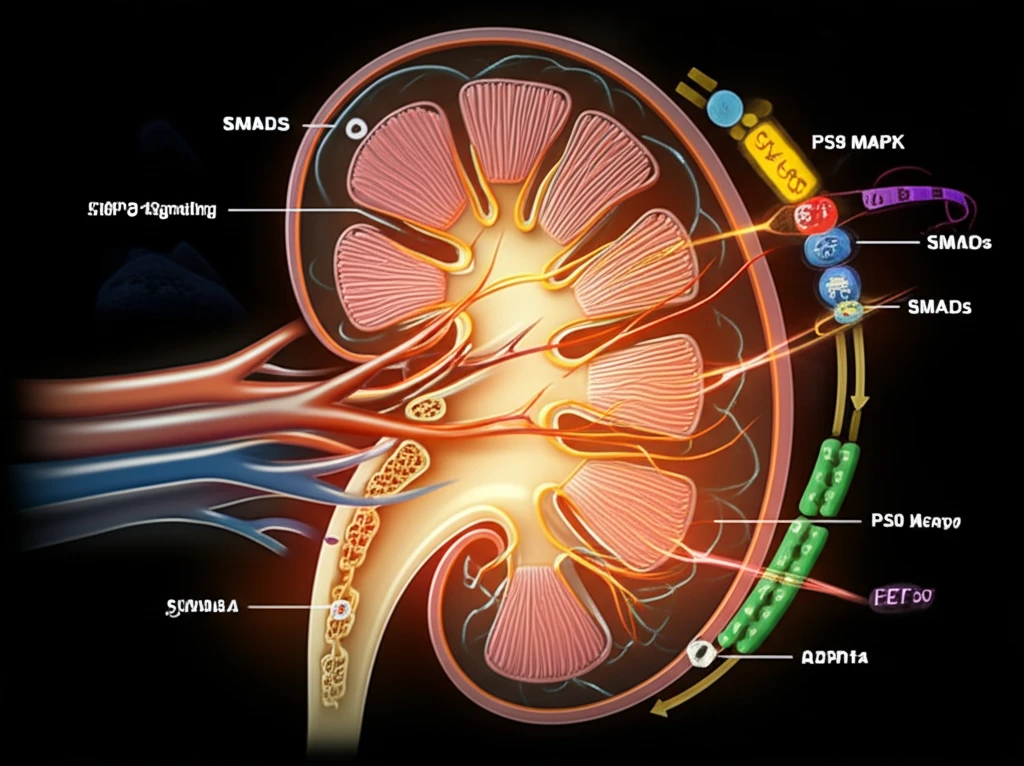
The research focuses on a signaling pathway known as the bone morphogenetic protein (BMP) pathway. Think of BMP as a cellular messenger that kickstarts the healing process. This pathway becomes active in healthy kidneys but gets temporarily shut down after an injury. As the kidney begins to repair itself, the BMP signaling pathway is reactivated, acting as the main driver in this process.
- BMP Signaling: Like a construction foreman, orchestrates the repair process within the kidney.
- Tubular Cells: The primary workers in the kidney. Repair requires the help of BMP signaling.
- BMPR1A: A receptor that, when active, sets the healing process in motion.
Looking Ahead: Implications for Kidney Health
The findings hold significant promise for developing new treatments for AKI and potentially preventing CKD. By understanding the role of the BMP signaling pathway, scientists can explore ways to boost this pathway, stimulating the kidney's natural repair mechanisms. This could lead to new therapies that not only speed up recovery from kidney injuries but also protect against long-term kidney damage, offering hope for millions worldwide affected by kidney disease. The path forward involves further research to identify the best ways to harness this knowledge and translate it into effective clinical applications.