
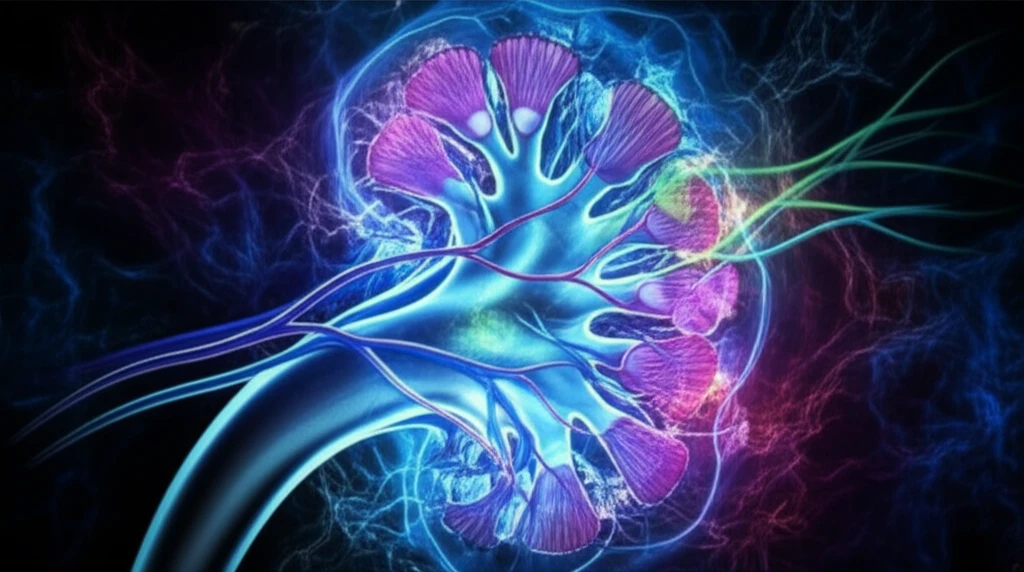
Illustration of a kidney organoid highlighting the CXCL12 signaling pathway.

Kidney Breakthrough: Could a New Treatment Revolutionize Kidney Disease?

"Scientists are making exciting progress in understanding and treating kidney diseases, with new research focusing on innovative approaches to kidney health."


Kidney disease affects millions worldwide, often silently damaging the body's crucial filtration system. For a long time, effective treatments have been limited, leaving many individuals with few options. But, a wave of groundbreaking research is now offering a new perspective on how we can combat these conditions. Scientists are exploring innovative methods, and their work could lead to major advances in treating kidney disease.

At the heart of this scientific revolution are kidney organoids, miniature, lab-grown versions of kidneys that allow researchers to study kidney function and disease in unprecedented detail. These organoids are not just models; they are vital tools that provide new insights into the inner workings of kidneys, enabling scientists to test potential therapies and understand diseases more effectively.

This article dives into the latest findings, highlighting the exciting potential of new treatments and approaches that may transform how we manage and treat kidney diseases. We'll explore how understanding cellular signaling, particularly the role of the CXCL12 pathway, could open up new avenues for therapy, offering a brighter future for kidney health.

Unlocking the Secrets of Kidney Health: The Power of Organoids and Cellular Signaling

Illustration of a kidney organoid highlighting the CXCL12 signaling pathway.

Recent breakthroughs in kidney research are shining a light on the intricate processes of kidney function and disease. Scientists are using advanced tools and techniques, especially kidney organoids, to understand what goes wrong in kidney diseases. These organoids, or mini-kidneys, are essentially simplified versions of real kidneys grown in the lab. They allow researchers to closely observe how kidney cells behave and interact under different conditions, including those related to disease.

One of the critical areas of focus is cellular signaling, the complex communication network within our cells. A particularly exciting area of research involves CXCL12, a signaling molecule that plays a significant role in kidney health. Researchers have found that CXCL12, along with its receptor CXCR4, is involved in regulating kidney cell behavior. When this signaling pathway malfunctions, it can contribute to the development and progression of kidney disease.

  • Kidney Organoids: Miniature, lab-grown kidneys offering detailed insights into kidney function and disease.
  • Cellular Signaling: Complex communication network within cells, critical for kidney health.
  • CXCL12: A key signaling molecule involved in kidney cell behavior.
  • CXCR4: The receptor for CXCL12, influencing kidney cell responses.
  • Therapeutic Potential: Targeting the CXCL12/CXCR4 pathway for new treatments.
Understanding the CXCL12 pathway and its implications for kidney health is crucial. This knowledge could lead to new treatments that target this pathway, potentially reversing or slowing the progression of kidney diseases. The research shows how cutting-edge science and new technologies can pave the way for more effective healthcare solutions. Researchers are working to create better treatments for kidney disease, improving the lives of those affected by these diseases.

Looking Ahead: The Future of Kidney Disease Treatment

The future of kidney disease treatment looks promising, thanks to the ongoing research and technological advancements. As scientists continue to explore the intricacies of kidney function and the role of cellular signaling, we can expect even more innovative therapies to emerge. These new approaches offer the potential to improve the lives of millions and could one day lead to effective cures for many forms of kidney disease. The work is not just about scientific progress; it's about providing hope and better health for everyone.

About this Article -

This article was crafted using a human-AI hybrid and collaborative approach. AI assisted our team with initial drafting, research insights, identifying key questions, and image generation. Our human editors guided topic selection, defined the angle, structured the content, ensured factual accuracy and relevance, refined the tone, and conducted thorough editing to deliver helpful, high-quality information.See our About page for more information.

This article is based on research published under:

DOI-LINK: 10.1016/j.kint.2018.09.011, Alternate LINK

Title: Awakening The Bowman: Inhibition Of Cxcl12 Signaling Activates Parietal Epithelial Cells

Subject: Nephrology

Journal: Kidney International

Publisher: Elsevier BV

Authors: Filippo Massa, Andreas Schedl

Published: 2018-12-01

Everything You Need To Know

1

What are kidney organoids, and how are they used in kidney disease research?

Kidney organoids are miniature, lab-grown versions of kidneys. Researchers use them to study kidney function and disease in a detailed way. They provide insights into the inner workings of kidneys, allowing scientists to test potential therapies and understand diseases more effectively. These organoids serve as models to observe how kidney cells behave and interact under different conditions, including those related to disease, offering a vital tool for developing new treatments.

2

What is cellular signaling, and why is it important in understanding kidney health?

Cellular signaling refers to the complex communication network within cells. It's crucial for kidney health because it regulates how kidney cells behave and function. Disruptions in cellular signaling can lead to the development and progression of kidney disease. Understanding these signaling pathways, like the CXCL12 pathway, can lead to new treatments targeting these specific issues.

3

What is the role of the CXCL12/CXCR4 pathway in kidney disease, and how might targeting it lead to new therapies?

The CXCL12 signaling molecule, along with its receptor CXCR4, plays a significant role in regulating kidney cell behavior. When this CXCL12/CXCR4 signaling pathway malfunctions, it can contribute to the development and progression of kidney diseases. Targeting the CXCL12/CXCR4 pathway could lead to treatments that reverse or slow the progression of kidney disease by correcting these signaling malfunctions.

4

Besides kidney organoids and the CXCL12/CXCR4 pathway, what other areas of research show promise for improving kidney disease treatment?

While kidney organoids and the CXCL12/CXCR4 pathway are highlighted, broader technological advancements and a deeper understanding of kidney function at a cellular level are also key. Innovations in cellular signaling research beyond CXCL12 and advancements in creating more complex and accurate kidney organoids that mimic human kidney function are also very relevant. Additionally, research into the genetic factors that predispose individuals to kidney disease is crucial. Combining these various approaches could lead to more effective and personalized treatments.

5

How could understanding cellular signaling pathways, specifically the CXCL12/CXCR4 pathway, revolutionize treatments and potentially lead to cures for various forms of kidney disease?

A comprehensive grasp of cellular signaling pathways, like the CXCL12/CXCR4 pathway, could revolutionize kidney disease treatments by allowing scientists to develop targeted therapies. By understanding how these pathways malfunction in different kidney diseases, treatments can be designed to specifically correct these issues, potentially preventing disease progression or even reversing damage. This targeted approach, combined with other advancements like kidney organoids, could lead to more effective cures for many forms of kidney disease and more personalized treatments. More sophisticated understanding of additional cellular pathways could yield additional pathways for exploration.

Newsletter Subscribe

Subscribe to get the latest articles and insights directly in your inbox.