
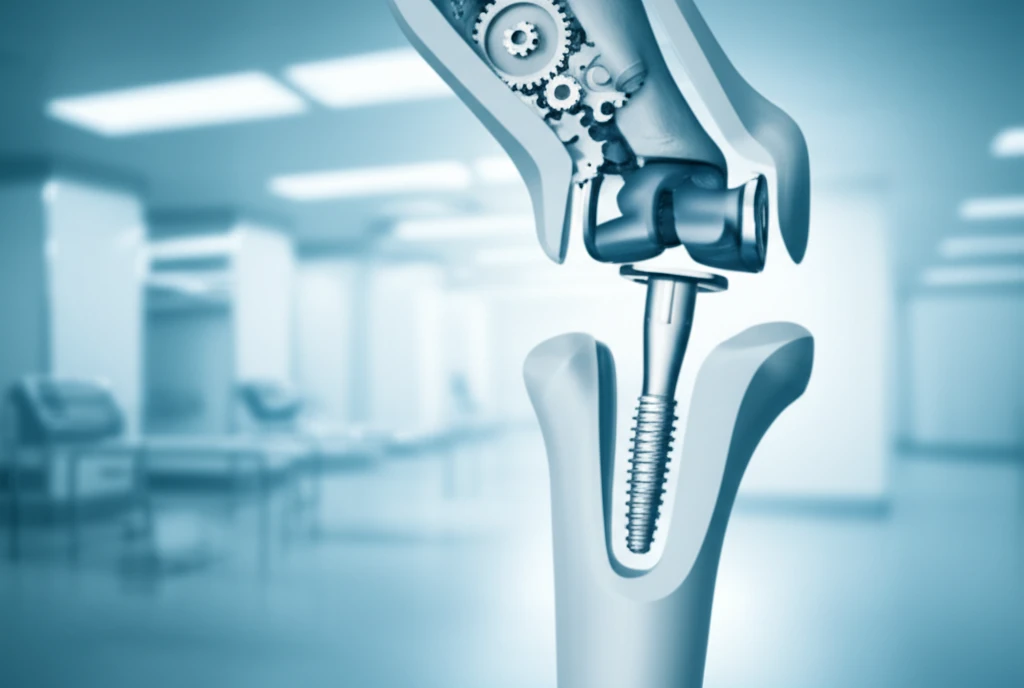
Joint Replacement Revision: Cemented vs. Cementless - Which is Right for You?

"A comprehensive look at cemented and cementless components in joint replacement revision surgeries, offering insights into infection treatment and implant success."
Joint replacement revision surgeries are becoming increasingly common, with a growing need to address issues like infection, loosening, and wear of the original implants. A critical decision in these revisions is whether to use cemented or cementless components. Each approach has distinct advantages and considerations, impacting the overall success of the procedure and the patient’s long-term outcome.
This article delves into the factors influencing the choice between cemented and cementless components during joint replacement revision, particularly focusing on hip and knee arthroplasties. We'll explore the impact of implant fixation methods on infection treatment, implant survivorship, and biomechanics. By examining the latest research and expert opinions, we aim to provide a clear understanding of the optimal strategies for successful joint replacement revision.
Whether you're a patient considering revision surgery or a healthcare professional seeking the best practices, this guide offers valuable insights into making informed decisions about cemented and cementless components. Understanding these nuances can lead to better outcomes, reduced complications, and improved quality of life.
Cemented vs. Cementless: Does it Impact Infection Treatment Success?
One of the primary questions in joint replacement revision is whether the choice between cemented and cementless components affects the success of treating chronic periprosthetic joint infections (PJIs). According to a consensus from experts in orthopedic infections, there's no direct evidence to suggest that either method inherently leads to a higher success rate in infection treatment.
- Cemented Fixation: Offers immediate stability, regardless of bone quality. It allows for the integration of antibiotics/antifungals, and securing impaction grafts or large allografts.
- Cementless Fixation: Provides long-term biologic fixation. It eases removal in case of acute reinfection and offers modularity to address implant fixation and biomechanics separately.
Making the Right Choice for Joint Replacement Revision
Choosing between cemented and cementless components in joint replacement revision requires a comprehensive evaluation of various factors. While there is no definitive evidence that one method is superior for infection treatment, the mode of fixation and patient-specific considerations play crucial roles in implant survivorship and overall success. Consulting with an experienced orthopedic surgeon and considering the latest research will help ensure the best possible outcome for each patient.