
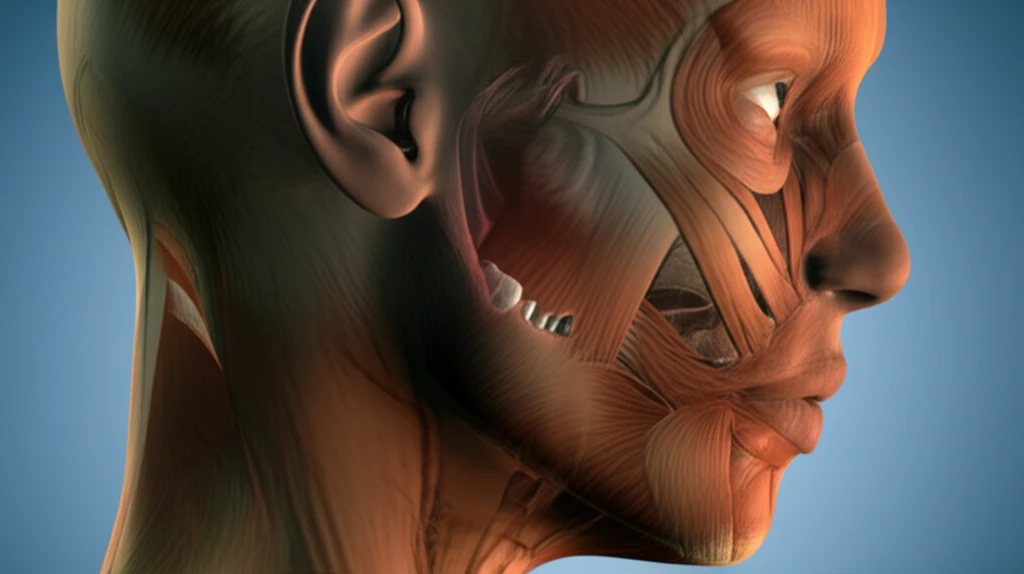
Illustration of a human jaw with a missing molar and the effects on TMJ

Jaw-Dropping Truths: How Missing Molars Could Be Messing With Your Smile and Beyond!

"Discover the surprising link between missing back teeth and issues like jaw pain, headaches, and more. Learn how to protect your oral health and overall well-being."


Have you ever stopped to think about the unsung heroes of your smile? We often focus on the front teeth, the ones that greet the world with a grin, but what about the molars tucked away in the back? These seemingly unassuming teeth play a crucial role, and when they go missing, it can set off a chain reaction of issues that extend far beyond a simple gap in your grin. This article dives deep into the surprising link between missing molars and temporomandibular joint (TMJ) dysfunction, revealing how these back teeth are more vital than you might think.

TMJ dysfunction, often characterized by jaw pain, clicking, and headaches, can significantly impact your quality of life. But what if the root of the problem lies in the back of your mouth? Recent research has unveiled a compelling connection between missing molars and TMJ issues, highlighting the importance of maintaining a complete and healthy set of teeth. This knowledge empowers you to take proactive steps towards better oral health and overall well-being.

Whether you've lost a molar due to decay, injury, or other reasons, understanding the potential consequences is the first step towards taking control. This article will explore the science behind this connection, providing practical tips and insights to help you protect your smile and your overall health. Get ready to uncover jaw-dropping truths about your molars and their surprising impact on your well-being!

The Molar-TMJ Connection: What the Research Reveals

Illustration of a human jaw with a missing molar and the effects on TMJ

The temporomandibular joint (TMJ) is a complex hinge that connects your jaw to your skull, enabling you to talk, chew, and yawn. It's a delicate system, and like any intricate mechanism, it can be disrupted by various factors. Research is increasingly demonstrating a link between missing molars and TMJ dysfunction, revealing that the absence of these teeth can throw off the balance of your entire jaw system.

Mandibular first molars, the large teeth at the back of your lower jaw, are key players in the overall alignment and function of your bite. They help to maintain the correct vertical dimension of your face and play a critical role in how your teeth come together. When these molars are missing, the surrounding teeth can shift, the bite can change, and the TMJ can suffer the consequences.

  • Changes in bite: Missing molars can lead to changes in your bite, causing the remaining teeth to shift and potentially leading to an uneven distribution of forces during chewing.
  • Muscle imbalances: When the bite is off, the muscles responsible for chewing can become strained, leading to pain and discomfort in the jaw and surrounding areas.
  • Condyle changes: The condyle is the part of the jaw that fits into the TMJ. Changes in the bite can cause changes in condylar position and even structural changes over time.
  • Increased risk of clicking and popping: Studies show a correlation between missing molars and the occurrence of clicking or popping sounds in the jaw, a common symptom of TMJ dysfunction.
The research highlights that the loss of molars can lead to a cascade of issues that directly impact the TMJ. Understanding these effects is crucial for preventing and managing TMJ dysfunction. The good news is that there are effective ways to address this problem and protect your oral health.

Taking Action: Protecting Your Smile and TMJ Health

The connection between missing molars and TMJ dysfunction underscores the importance of proactive oral health care. If you're missing molars, consult with your dentist about the best course of action. Options like dental implants, bridges, or partial dentures can restore your bite and prevent further complications. Regular dental check-ups, a healthy diet, and stress management techniques can also contribute to your overall oral health and well-being. By taking these steps, you can protect your smile, prevent TMJ issues, and enjoy a healthier, happier life. Remember, your molars are more than just teeth – they're key players in your overall health!

About this Article -

This article was crafted using a human-AI hybrid and collaborative approach. AI assisted our team with initial drafting, research insights, identifying key questions, and image generation. Our human editors guided topic selection, defined the angle, structured the content, ensured factual accuracy and relevance, refined the tone, and conducted thorough editing to deliver helpful, high-quality information.See our About page for more information.

This article is based on research published under:

DOI-LINK: 10.3126/njms.v3i1.10360, Alternate LINK

Title: Non-Replaced Mandibular First Molars And Temporomandibular Joint Dysfunction

Subject: Energy Engineering and Power Technology

Journal: Nepal Journal of Medical Sciences

Publisher: Nepal Journals Online (JOL)

Authors: Sk Gupta, Pk Pratibha, Km Bhat, S Mutalik, V Guddattu

Published: 2014-05-06

Everything You Need To Know

1

How does losing molars specifically impact the temporomandibular joint (TMJ)?

Missing molars, especially the mandibular first molars, can disrupt the balance of the jaw system. This can cause changes in bite, leading to uneven force distribution during chewing. The muscles responsible for chewing become strained, potentially resulting in pain and discomfort around the jaw. Furthermore, changes in bite can affect the condyle's position within the TMJ, potentially causing structural changes over time. These shifts contribute to an increased risk of clicking and popping sounds in the jaw, which are common symptoms of TMJ dysfunction.

2

What are the initial signs that missing molars are contributing to temporomandibular joint (TMJ) problems?

The initial signs can include jaw pain, especially when chewing, as well as clicking or popping sounds when you open or close your mouth. You may also experience headaches, particularly those that seem to originate in the temples or neck. Muscle imbalances due to the changed bite from missing molars can also cause discomfort and stiffness in the jaw and surrounding areas.

3

Besides the temporomandibular joint (TMJ), what other aspects of oral health are affected by missing molars?

Missing molars can cause the surrounding teeth to shift, leading to changes in bite alignment. This shift can create difficulties in cleaning teeth, increasing the risk of decay and gum disease. The changes in bite can also affect the overall vertical dimension of the face. While not directly mentioned, altered bite patterns can also impact speech and potentially contribute to bruxism (teeth grinding).

4

What actions can be taken to protect the temporomandibular joint (TMJ) and overall smile health when molars are missing?

Consulting with a dentist about restorative options is essential. Dental implants, bridges, or partial dentures can help restore the bite and prevent further complications. Maintaining regular dental check-ups, adopting a healthy diet, and incorporating stress management techniques also play a crucial role. Stress management can minimize potential issues with bruxism, as well.

5

If missing mandibular first molars lead to condyle changes within the temporomandibular joint (TMJ) what are the long-term implications, and what treatments address these structural changes?

Long-term condyle changes within the temporomandibular joint (TMJ) stemming from missing mandibular first molars can lead to chronic pain, limited jaw mobility, and potentially the development of osteoarthritis in the TMJ. While not explicitly detailed, treatment options might involve physical therapy to restore muscle balance and improve joint function, pain management strategies, or in severe cases, surgical interventions to repair or replace the damaged joint components. Restoring the missing molars with implants or other prosthetic replacements is crucial to stabilize the bite and prevent further degradation of the TMJ. Addressing structural damage often requires a multi-faceted approach involving dental and medical professionals.

Newsletter Subscribe

Subscribe to get the latest articles and insights directly in your inbox.