
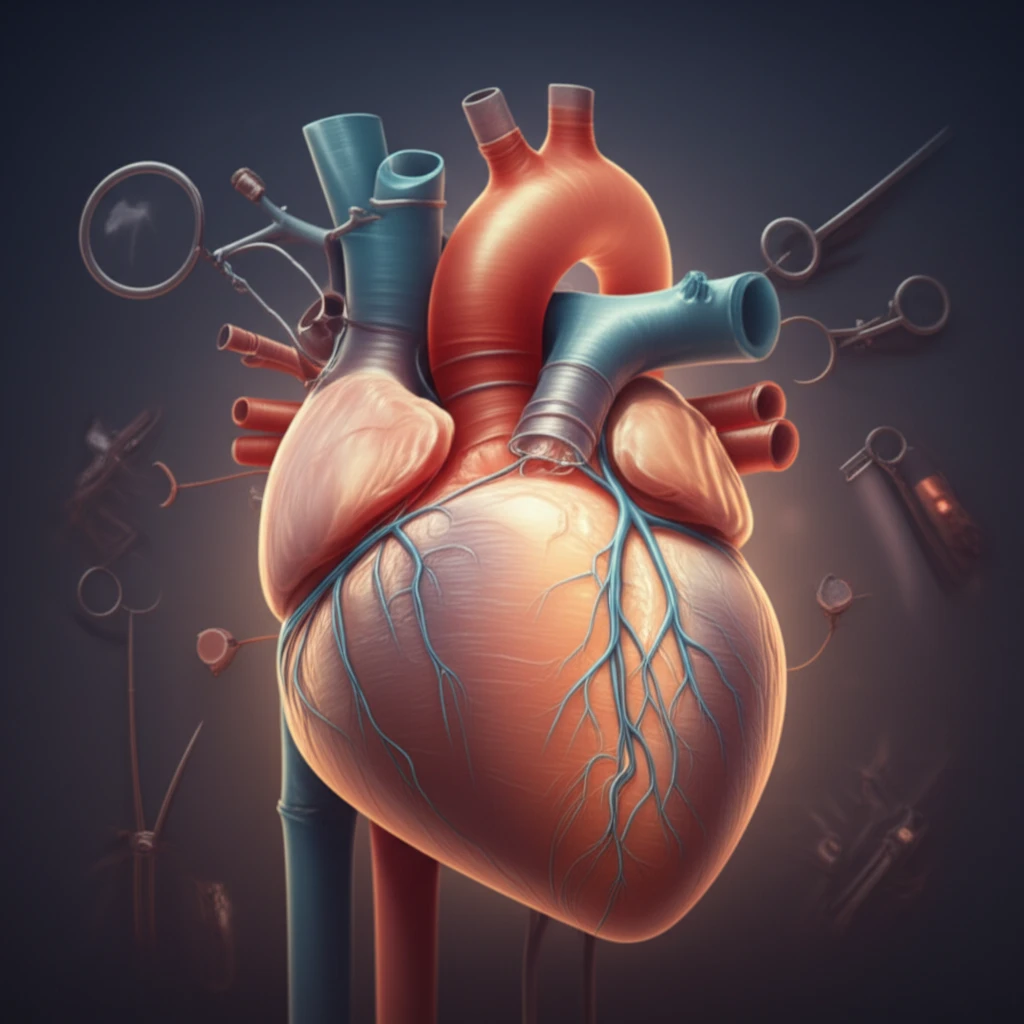
IVC Cannula Placement: How Precision Can Improve Pediatric Heart Surgery

"A Closer Look at Optimizing Inferior Vena Cava Cannula Positioning for Better Outcomes in Children's Cardiac Procedures"
In the intricate world of pediatric cardiac surgery, maintaining optimal perfusion during cardiopulmonary bypass (CPB) is paramount. Ensuring stable circulation dynamics can significantly impact patient outcomes, reducing the risk of organ dysfunction and improving recovery times. Perfusion, the process of delivering oxygenated blood to the body's tissues, depends on several factors, including blood flow and pressure.
One critical aspect of CPB is the placement of the inferior vena cava (IVC) cannula, a tube inserted to drain blood from the lower body. Proper positioning of this cannula is essential for effective venous drainage and, consequently, optimal perfusion. When the IVC cannula is misplaced, it can lead to insufficient venous drainage, hindering the effectiveness of the CPB and increasing the risk of complications.
A recent study published in the Journal of Cardiothoracic and Vascular Anesthesia sheds light on the optimal placement of the IVC cannula in pediatric cardiac surgery. Researchers Yutaka Seino, Nobuko Ohashi, Hidekazu Imai, and Hiroshi Baba conducted a prospective, randomized, controlled, double-blind study to determine whether the location of the IVC cannula tip affects venous drainage and perfusion flow. Their findings offer valuable insights for surgeons and anesthesiologists seeking to improve outcomes in pediatric cardiac procedures.
Why IVC Cannula Position Matters in Pediatric CPB
The inferior vena cava (IVC) cannula plays a vital role in cardiopulmonary bypass (CPB) by draining blood from the lower body. However, its position can significantly affect how well it functions. One common issue is unintentional misplacement into the hepatic veins, particularly the right hepatic vein (RHV), which is the largest and enters the IVC at an angle. Studies show that a significant percentage of IVC cannulas end up in the RHV, leading to insufficient drainage.
- Increased Risk of Organ Dysfunction: Poor perfusion during CPB can lead to inadequate tissue perfusion, increasing the risk of post-operative organ dysfunction.
- Neurological and Renal Issues: Suboptimal perfusion is linked to post-operative neurological issues and renal failure, highlighting the importance of maintaining stable circulation dynamics.
- Higher Perfusion Needs in Children: Children require higher perfusion flows due to their smaller blood volumes, higher oxygen consumption rates, and immature organ systems.
- Venous Drainage is Key: Effective venous drainage from the IVC cannula is essential for maintaining optimal perfusion flow during CPB.
The Takeaway
The study's findings suggest that placing the IVC cannula tip proximal to the RHV orifice may be clinically superior in achieving higher perfusion flow in children undergoing cardiac surgery with CPB. While further research is always valuable, this study offers practical guidance for surgeons and anesthesiologists striving to optimize perfusion and improve patient outcomes in pediatric cardiac procedures. By prioritizing precise IVC cannula placement, medical professionals can contribute to safer and more effective surgeries, ultimately enhancing the well-being of young patients.