
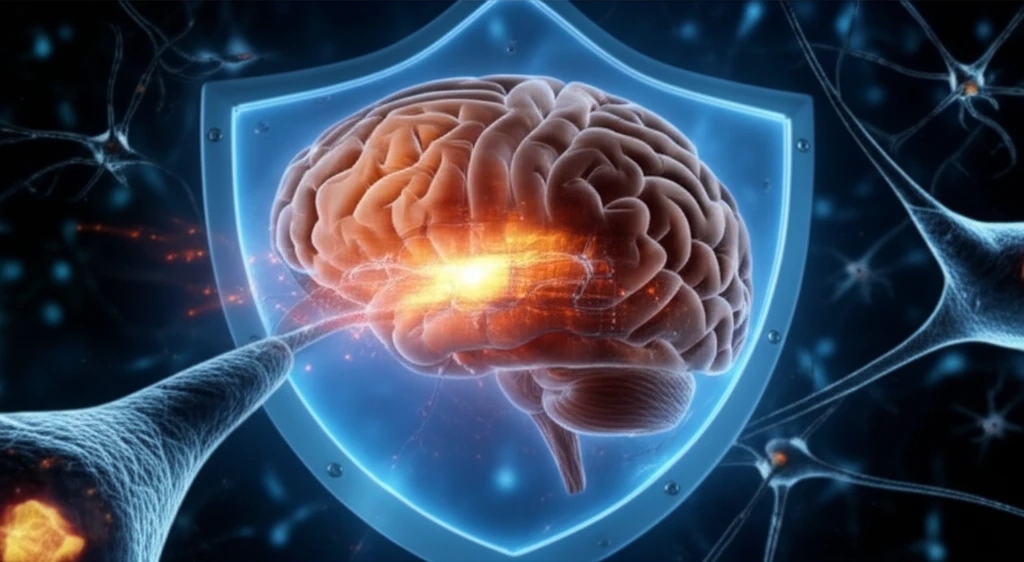
Neurons protected by shield from stroke

Ischemic Stroke Breakthrough: Can Inhibitors Offer New Hope?

"Explore how prolyl hydroxylase domain (PHD) inhibitors could revolutionize ischemic stroke treatment by leveraging multiple protective mechanisms."


Stroke remains a leading cause of death and disability worldwide, underscoring the urgent need for innovative therapies. Current treatments have limitations, prompting researchers to explore new avenues for neuroprotection.

Recent studies have focused on prolyl hydroxylase domain (PHD) inhibitors, which show promise in activating the body's endogenous protective mechanisms against ischemic damage. These inhibitors have the potential to revolutionize stroke treatment by addressing the complex physiological changes that occur during and after a stroke.

This article delves into the potential of PHD inhibitors as a novel therapeutic approach for ischemic stroke, examining their mechanisms of action, preclinical and clinical evidence, and future directions for research and development. By understanding how these inhibitors work, we can pave the way for more effective stroke interventions and improved patient outcomes.

Unlocking Neuroprotection: How PHD Inhibitors Work

Neurons protected by shield from stroke

During an ischemic stroke, the brain's oxygen supply is disrupted, leading to a cascade of damaging events. Neurons respond by stabilizing hypoxia-inducible factors (HIFs), proteins that regulate the expression of genes involved in cell survival and adaptation to low oxygen conditions.

PHD inhibitors enhance this protective response by blocking the activity of prolyl hydroxylase domain enzymes. These enzymes normally degrade HIFs under normal oxygen levels, but when inhibited, HIFs accumulate and trigger the expression of neuroprotective genes. This activation can lead to multiple benefits, including reduced inflammation, improved energy metabolism, and enhanced antioxidant defense.

  • HIF Stabilization: PHD inhibitors prevent the degradation of HIFs, leading to increased expression of protective genes.
  • Reduced Inflammation: These inhibitors can suppress inflammatory responses that contribute to stroke damage.
  • Improved Metabolism: PHD inhibitors support neuronal survival by optimizing energy production under hypoxic conditions.
  • Antioxidant Defense: By activating antioxidant pathways, PHD inhibitors help mitigate oxidative stress, a major cause of neuronal injury.
Research has shown that PHD inhibitors can provide both preconditioning and post-conditioning effects. Preconditioning involves administering the inhibitor before a stroke to prime the brain's defenses, while post-conditioning involves administering the inhibitor after a stroke to promote recovery and reduce damage. Both approaches have demonstrated promising results in preclinical studies.

The Future of Stroke Therapy: PHD Inhibitors and Beyond

While PHD inhibitors hold significant promise, several challenges remain before they can be widely adopted in clinical practice. One major obstacle is the lack of specificity, as many current inhibitors target multiple enzymes and may cause off-target effects. Future research should focus on developing more selective inhibitors that specifically target PHDs involved in neuroprotection.

Another key area of investigation is the optimal timing and dosage of PHD inhibitor administration. Clinical trials are needed to determine whether preconditioning or post-conditioning strategies are more effective and to identify the ideal therapeutic window for intervention.

Despite these challenges, the potential benefits of PHD inhibitors in stroke therapy are undeniable. By harnessing the body's own protective mechanisms, these inhibitors could offer a new and effective approach to reducing stroke damage and improving patient outcomes. As research progresses, we can look forward to a future where PHD inhibitors play a key role in the fight against stroke.

About this Article -

This article was crafted using a human-AI hybrid and collaborative approach. AI assisted our team with initial drafting, research insights, identifying key questions, and image generation. Our human editors guided topic selection, defined the angle, structured the content, ensured factual accuracy and relevance, refined the tone, and conducted thorough editing to deliver helpful, high-quality information.See our About page for more information.

Everything You Need To Know

1

What is an ischemic stroke and how do PHD inhibitors relate to it?

Ischemic stroke is a condition where blood supply to the brain is blocked, leading to oxygen deprivation and potential brain damage. This is where the potential of Prolyl hydroxylase domain (PHD) inhibitors come into play. PHD inhibitors are designed to address the complex physiological changes during and after a stroke by activating the body's defenses. They work by preventing the degradation of Hypoxia-inducible factors (HIFs), which in turn trigger the expression of neuroprotective genes. The goal is to reduce the damage caused by the stroke and improve patient outcomes.

2

Why are PHD inhibitors important in the context of stroke treatment?

PHD inhibitors are significant because they offer a novel therapeutic approach to address the limitations of current stroke treatments. The current treatments have limitations, prompting researchers to explore new avenues for neuroprotection. PHD inhibitors work by blocking the activity of Prolyl hydroxylase domain (PHD) enzymes. These enzymes normally degrade Hypoxia-inducible factors (HIFs) under normal oxygen levels. By inhibiting PHD enzymes, HIFs accumulate and trigger the expression of neuroprotective genes, leading to multiple benefits, including reduced inflammation, improved energy metabolism, and enhanced antioxidant defense. This mechanism could potentially revolutionize stroke treatment.

3

What are the implications of using PHD inhibitors to treat strokes?

The implication of using Prolyl hydroxylase domain (PHD) inhibitors is that they can potentially revolutionize how ischemic strokes are treated. PHD inhibitors have multiple mechanisms of action. One is HIF Stabilization, where PHD inhibitors prevent the degradation of Hypoxia-inducible factors (HIFs), leading to increased expression of protective genes. This in turn leads to reduced inflammation, improved energy metabolism, and enhanced antioxidant defense. These actions can provide both preconditioning and post-conditioning effects, potentially improving outcomes for stroke patients.

4

How are PHD inhibitors used in stroke treatment?

Prolyl hydroxylase domain (PHD) inhibitors are administered either before a stroke (preconditioning) or after a stroke (post-conditioning). In preconditioning, the inhibitor primes the brain's defenses, preparing it for a potential ischemic event. Post-conditioning involves administering the inhibitor after a stroke to promote recovery and reduce the extent of damage. Both methods have shown promising results in preclinical studies by leveraging the protective mechanisms activated by the inhibitors.

5

What are the challenges in using PHD inhibitors for stroke treatment?

While Prolyl hydroxylase domain (PHD) inhibitors are promising, challenges remain. The lack of specificity of current inhibitors is a major obstacle, as many of them target multiple enzymes, which could cause off-target effects. Future research needs to focus on developing more selective inhibitors to specifically target PHDs involved in neuroprotection, which is essential for translating the potential of PHD inhibitors into effective clinical treatments. Overcoming these challenges is crucial for the widespread adoption of PHD inhibitors in stroke therapy and improving patient outcomes.

Newsletter Subscribe

Subscribe to get the latest articles and insights directly in your inbox.