
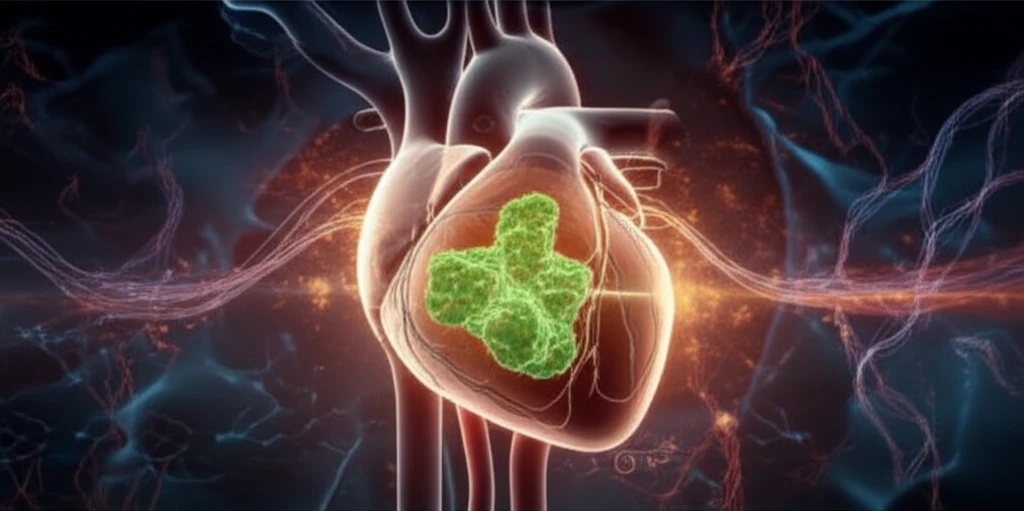
Ischemic Heart Disease: Can SERP1 Protein Offer New Hope for Recovery?

"New research explores the potential of SERP1 in protecting heart cells during ischemia-reperfusion injury, offering a beacon of hope for improved treatment strategies."
Ischemic heart disease remains a leading cause of mortality and disability worldwide, despite advances in treatment. The paradox lies in reperfusion therapy, intended to restore blood flow to the heart but inadvertently causing further damage known as ischemia/reperfusion (MI/R) injury. Developing effective strategies to mitigate this injury is critical.
The endoplasmic reticulum (ER), a key cellular organelle responsible for protein folding and calcium homeostasis, plays a significant role in MI/R injury. During MI/R, the accumulation of unfolded proteins in the ER triggers an unfolded protein response (UPR), which, if unresolved, can lead to cell death. Therefore, targeting ER stress is emerging as a promising therapeutic approach.
SERP1, also known as stress-associated endoplasmic reticulum protein 1, is involved in regulating the ER stress response. Recent research has begun to explore its role in the context of MI/R injury, potentially uncovering new pathways for cardioprotection.
SERP1's Protective Role: Reducing Cell Death and ER Stress
A study published in Biochemical and Biophysical Research Communications sheds light on the role of SERP1 in protecting heart cells during hypoxia-reoxygenation (H/R), a condition mimicking ischemia-reperfusion injury. The research team investigated whether SERP1 could mitigate the damaging effects of H/R in H9c2 cardiomyocytes, a commonly used cell model for heart studies.
- SERP1 Induction: Both in a mouse model of MI/R injury and in H9c2 cells subjected to H/R, SERP1 expression was significantly increased, suggesting a protective response.
- Reduced Apoptosis: Overexpression of SERP1 in H9c2 cells reduced H/R-induced apoptosis, indicating that SERP1 promotes cell survival.
- ER Stress Suppression: SERP1 overexpression mitigated H/R-induced ER stress, as evidenced by decreased levels of key ER stress markers such as p-PERK, p-eIF2a, ATF4, and CHOP.
- JAK2/STAT3 Activation: SERP1 overexpression activated the JAK2/STAT3 signaling pathway, a known cardioprotective pathway.
- Causal Link: Inhibiting JAK2/STAT3 diminished the protective effects of SERP1, confirming that SERP1's cardioprotective action is mediated through JAK2/STAT3-dependent attenuation of ER stress.
Future Directions: Exploring SERP1 as a Therapeutic Target
The study opens new avenues for research into the therapeutic potential of SERP1 in treating ischemic heart disease. Further studies are needed to investigate the precise mechanisms by which SERP1 activates the JAK2/STAT3 pathway and reduces ER stress. Additionally, future research should focus on developing strategies to enhance SERP1 expression or activity in patients at risk of MI/R injury, potentially leading to novel cardioprotective therapies.