
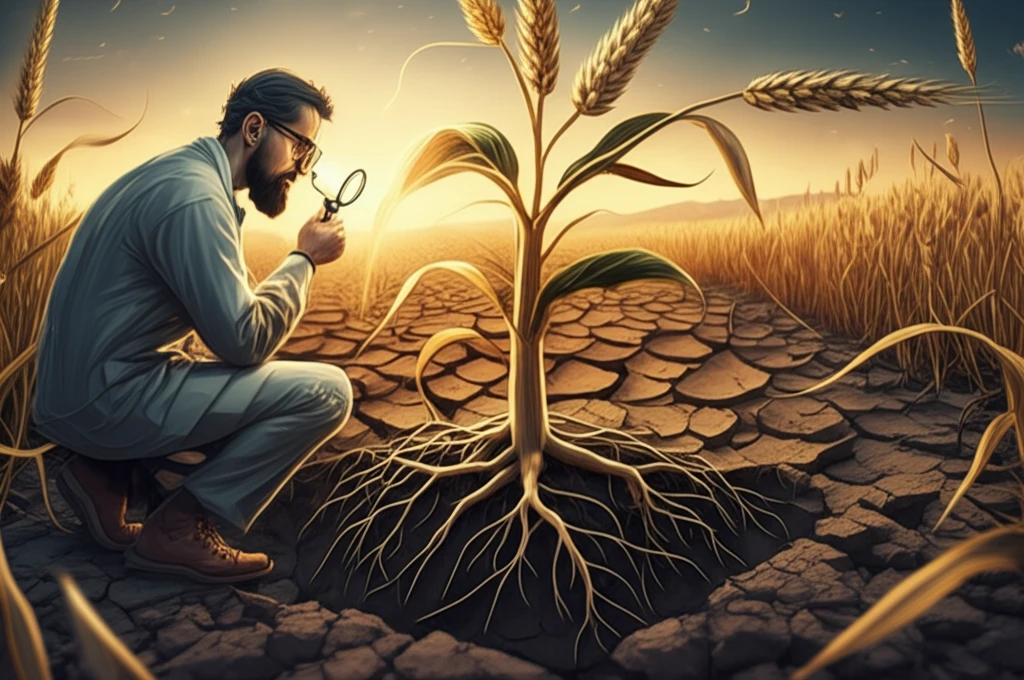
Is Your Wheat Stressed? How to Boost Drought Tolerance for Better Yields

"Unlocking the secrets to drought-resistant wheat: Innovative stress-inducing techniques for selecting superior genotypes and securing your harvest."
Wheat stands as a global dietary cornerstone, feeding billions worldwide. Yet, with climate change intensifying, drought poses an ever-greater threat to wheat production, jeopardizing food security and farmer livelihoods. Developing wheat varieties that can withstand water scarcity is no longer just an advantage, it's a necessity.
Traditional breeding methods are time-consuming. Scientists are exploring innovative ways to identify and cultivate drought-resistant wheat faster. One promising approach involves exposing wheat genotypes to controlled stress environments early in the selection process. This helps reveal their inherent resilience, allowing researchers to pinpoint the most promising candidates for further development.
This article delves into a study that investigates the use of stress-inducing agents to screen wheat genotypes for drought tolerance. By understanding the methods and results of this research, growers and agricultural professionals can gain valuable insights into bolstering wheat production in water-limited environments.
The Science of Stress: How Osmotic Agents Help Identify Drought-Tolerant Wheat
The core of this research lies in simulating drought conditions using osmotic agents. These substances, such as polyethylene glycol (PEG) and mannitol, create a water deficit around the plant, mimicking the effects of drought. By carefully controlling the concentration of these agents, scientists can create varying levels of stress and observe how different wheat genotypes respond.
- Shoot Length: Measuring the growth of the above-ground portion of the plant.
- Root Length: Assessing the development of the primary root system.
- Total Biomass Production: Determining the overall growth and vigor of the plant.
Key Findings: Identifying the Champions of Drought Resistance
The study revealed significant differences in drought tolerance among the tested wheat genotypes. Key findings include: Water stress affected all tested genotypes, but the degree of impact varied significantly. Genotypes BH 1146 and Ocepar 14 consistently showed higher tolerance to drought conditions. These genotypes experienced a lower reduction in growth when exposed to stress-inducing agents, demonstrating their resilience. In contrast, the Aliança genotype proved to be the most sensitive, experiencing a dramatic reduction in growth under stress. The type of osmotic agent also played a role, with PEG 6000 generally having a more pronounced negative effect than mannitol. These findings underscore the complexity of drought tolerance and highlight the importance of genotype-specific responses to different stress factors.