
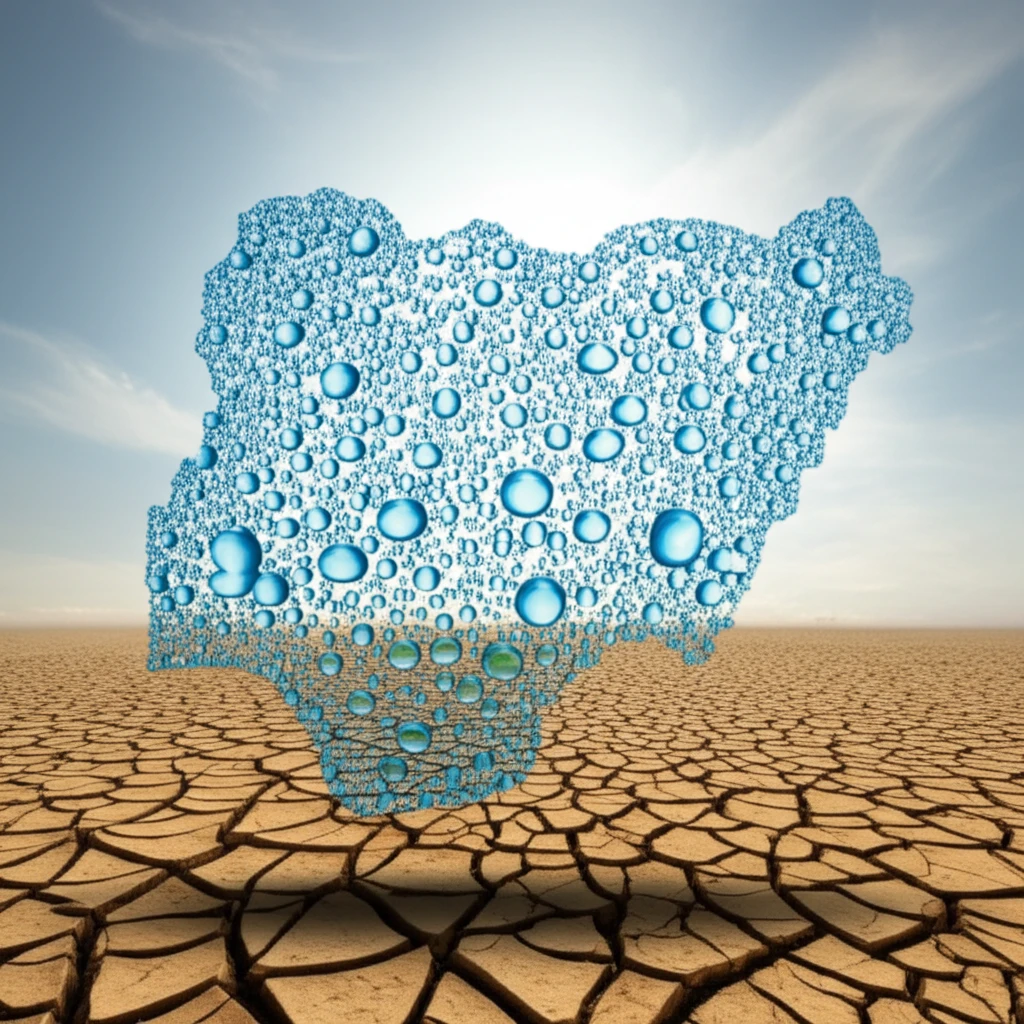
Is Your Water Safe? Unveiling the Secrets of Ibadan's Groundwater

"Dive into an investigative look at the hydrogeochemistry of Ibadan's groundwater, revealing potential risks and ensuring access to safe drinking water."
Access to clean and safe water is a fundamental human right, crucial for maintaining health, supporting economic activities, and ensuring sustainable development. Water is essential for everything from daily household use to fueling industrial processes and irrigating agricultural lands. Recognizing its importance, governments worldwide are working towards providing reliable sources of potable water, often through initiatives like solar-powered boreholes.
However, relying solely on surface water sources isn't always sufficient. Take Ibadan, Nigeria, for example. Its residents have historically depended on water from the Asejire and Eleyele waterworks. With increasing population and growing demand, these sources are proving inadequate, leading individuals and communities to seek alternative solutions such as motorized boreholes and hand-dug wells.
But accessing groundwater isn't enough. The quality of this water is paramount. Groundwater chemistry is influenced by the interaction between water and the surrounding subsurface materials, making it vital to understand the composition and potential contaminants present. This article delves into a recent study examining the hydrogeochemistry of groundwater in Ibadan, Nigeria, revealing valuable insights into its portability and overall quality.
Decoding Ibadan's Groundwater: What the Science Reveals
A recent study investigated groundwater within the lateritic profiles—weathered layers of soil and rock—over migmatite and pegmatised schist formations in Ibadan. Researchers collected water samples from various locations to analyze their physical and chemical properties. This analysis aimed to determine the water's suitability for various uses, including drinking, domestic purposes, industrial applications, and irrigation.
- Temperature: Water temperatures ranged from 23.9 to 32.7°C.
- Electrical Conductivity: Measured between 60 to 580 µS/cm, indicating the water's ability to conduct electrical current due to dissolved salts.
- pH Levels: Ranging from 5.5 to 7.3, indicating slightly acidic to neutral conditions.
- Total Dissolved Solids (TDS): Concentrations varied from 55 to 422 mg/L, reflecting the amount of minerals and salts dissolved in the water.
- Cations: Major cations like Calcium (Ca2+), Magnesium (Mg2+), Sodium (Na+), and Potassium (K+) were present within specific concentration ranges.
- Anions: Anions such as Bicarbonate (HCO3-), Sulfate (SO42-), Chloride (Cl-), and Nitrate (NO3-) were also measured.
Protecting Our Water: Ensuring a Sustainable Future
The study provides valuable insights into the groundwater quality in Ibadan, Nigeria, highlighting its suitability for various uses. However, continuous monitoring and proactive measures are crucial to safeguard this precious resource. By understanding the hydrogeochemistry of our water, we can make informed decisions, implement effective protection strategies, and ensure a sustainable water supply for future generations. Let's work together to protect our water, protect our health, and protect our future.