
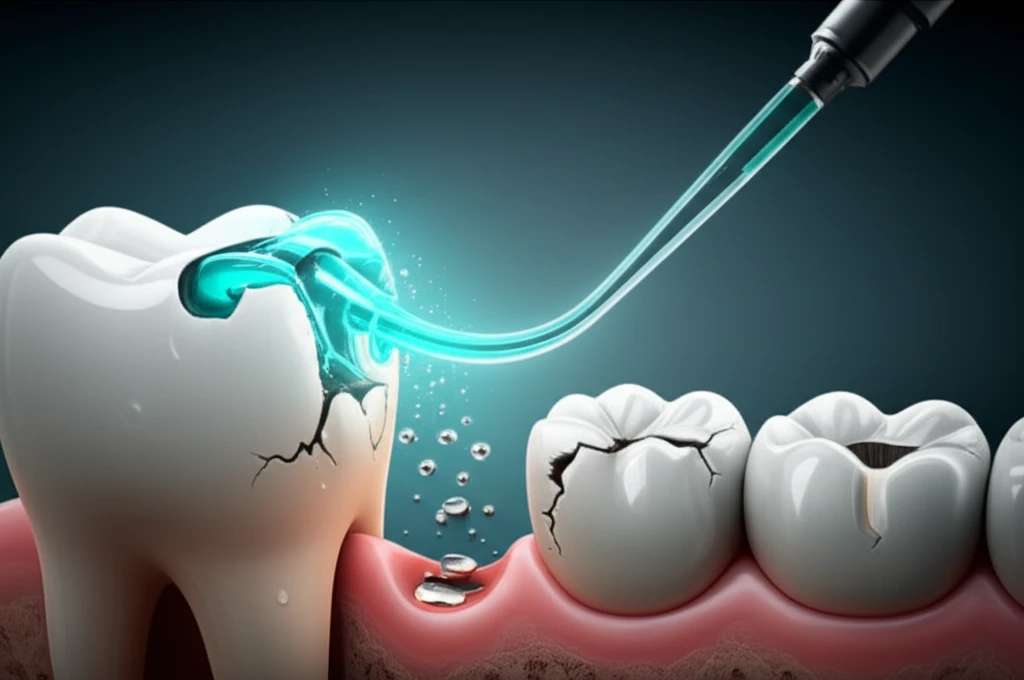
Dental fillings cracking due to cleaning fluid.

Is Your Toothpaste Undermining Your Dental Work? The Truth About Sodium Hypochlorite & Dental Adhesives

"Discover how a common dental treatment ingredient could be weakening your fillings and what you can do about it."


Maintaining strong bonds between dental restorations and your natural teeth is essential for long-term oral health. When fillings, crowns, or other materials don't properly adhere, it can lead to microleakage, bacterial contamination, and ultimately, the failure of the dental work. This is why dentists use adhesive systems to create a tight seal.

However, the success of these adhesives can be influenced by various factors, including procedures like root canal treatments. During a root canal, a dentist uses sodium hypochlorite (NaOCl) to disinfect and clean the inside of the tooth. While NaOCl is effective at removing bacteria and debris, research suggests it might also affect the bonding strength of dental adhesives used to restore the tooth afterward.

A study published in the African Journal of Biotechnology investigated the impact of sodium hypochlorite on the shear bond strength of fifth- and seventh-generation adhesives – two common types used in dentistry. The findings shed light on a potential challenge in maintaining durable dental restorations after root canal treatments.

The Sodium Hypochlorite Dilemma: Benefits vs. Bonding Strength

Dental fillings cracking due to cleaning fluid.

Sodium hypochlorite is a powerful disinfectant prized for its ability to dissolve organic tissues and eliminate bacteria within the root canal system. This is crucial for preventing infection and ensuring the long-term success of the root canal treatment. It works by breaking down proteins and disrupting the cellular metabolism of bacteria.

However, NaOCl isn't without its drawbacks. The study highlights a significant concern: NaOCl can compromise the bond strength of dental adhesives. This means that fillings and other restorations might not adhere as strongly to the tooth after NaOCl is used, potentially leading to complications down the line.

Here’s a breakdown of how NaOCl affects dental adhesives:
  • Oxidation: NaOCl breaks down into sodium chloride and oxygen. The released oxygen can interfere with the polymerization process of dental adhesives, which is essential for them to harden and bond properly.
  • Collagen Damage: Dentin, the main tissue of the tooth, contains collagen fibers that are crucial for bonding. NaOCl can react with these fibers, breaking them down and weakening the structure that adhesives need to latch onto.
  • Chloramine Formation: NaOCl can react with amino acids in collagen to produce chloramine, a potent oxidizing agent that can further hinder the polymerization of adhesives.
The study revealed that both fifth- and seventh-generation adhesives exhibited significantly reduced shear bond strength when NaOCl was used. This suggests that the negative impact of NaOCl isn't limited to a specific type of adhesive.

Protecting Your Smile: Counteracting the Effects of Sodium Hypochlorite

While the study highlights a potential issue, it's important to remember that root canal treatments are often necessary to save teeth and prevent further complications. The key is for dentists to be aware of the potential impact of NaOCl on dental adhesives and take steps to mitigate these effects. Some strategies include using antioxidants like sodium ascorbate to neutralize the oxidizing effects of NaOCl, modifying the concentration or application time of NaOCl, and exploring alternative disinfection methods. Further research is needed to determine the most effective ways to minimize the negative impact of NaOCl while still ensuring effective disinfection during root canal procedures. If you're concerned about the strength of your dental work after a root canal, talk to your dentist about the adhesives they use and any precautions they take to ensure a strong, lasting bond.

About this Article -

This article was crafted using a human-AI hybrid and collaborative approach. AI assisted our team with initial drafting, research insights, identifying key questions, and image generation. Our human editors guided topic selection, defined the angle, structured the content, ensured factual accuracy and relevance, refined the tone, and conducted thorough editing to deliver helpful, high-quality information.See our About page for more information.

This article is based on research published under:

DOI-LINK: 10.5897/ajb11.164, Alternate LINK

Title: Effect Of Sodium Hypochlorite On The Shear Bond Strength Of Fifth- And Seventh-Generation Adhesives To Coronal Dentin

Subject: Agronomy and Crop Science

Journal: African Journal of Biotechnology

Publisher: Academic Journals

Authors: Esmaeel Ebrahimi Chaharom Mohammad, Abed Kahnamoii Mehdi, Kimyai Soodabeh, Hajirahiminejad Moghaddam Mohammadreza

Published: 2011-10-03

Everything You Need To Know

1

What is Sodium hypochlorite and what role does it play in dental procedures?

Sodium hypochlorite (NaOCl) is a chemical used in root canal treatments to disinfect and clean the inside of a tooth. It's a powerful disinfectant that eliminates bacteria and dissolves organic tissues. This is crucial for preventing infection and ensuring the success of the treatment. However, its use can impact the bonding strength of dental adhesives, which is essential for the long-term success of dental restorations like fillings.

2

Why are dental adhesives important, and how do they relate to this topic?

Dental adhesives are used by dentists to create a strong bond between dental restorations, such as fillings and crowns, and the natural tooth structure. This bond is essential for preventing microleakage, bacterial contamination, and ultimately, the failure of the dental work. The success of these adhesives is influenced by various factors, and in the context described, the use of Sodium hypochlorite is one of those factors. Therefore understanding their relationship is important.

3

How does Sodium hypochlorite affect the effectiveness of dental adhesives?

The use of Sodium hypochlorite can weaken the bond strength of dental adhesives through several mechanisms. Firstly, NaOCl can release oxygen that interferes with the polymerization process of adhesives. Secondly, it can damage the collagen fibers in dentin, which are crucial for adhesive bonding. Thirdly, it can produce chloramine, which further hinders the polymerization of adhesives. These effects can lead to weaker bonds, increasing the risk of restoration failure.

4

What does this mean for the longevity of my dental work if I've had a root canal?

If you've had a root canal, you might wonder about the long-term integrity of your dental work. The study referenced investigated the impact of Sodium hypochlorite on dental adhesives. The findings revealed that both fifth- and seventh-generation adhesives exhibited reduced shear bond strength when Sodium hypochlorite was used. This means that the fillings and restorations may not adhere as strongly to the tooth after Sodium hypochlorite is used during root canal treatments.

5

Are there ways to address the potential problems caused by Sodium hypochlorite?

To mitigate the negative impact of Sodium hypochlorite, dentists can employ several strategies. These include using antioxidants like sodium ascorbate to neutralize the oxidizing effects of Sodium hypochlorite, modifying the concentration or application time of Sodium hypochlorite, and exploring alternative disinfection methods. Further research is needed to identify the most effective ways to minimize the negative impact of Sodium hypochlorite while still ensuring effective disinfection during root canal procedures. If you are concerned you should discuss the adhesives and procedures with your dentist.

Newsletter Subscribe

Subscribe to get the latest articles and insights directly in your inbox.