
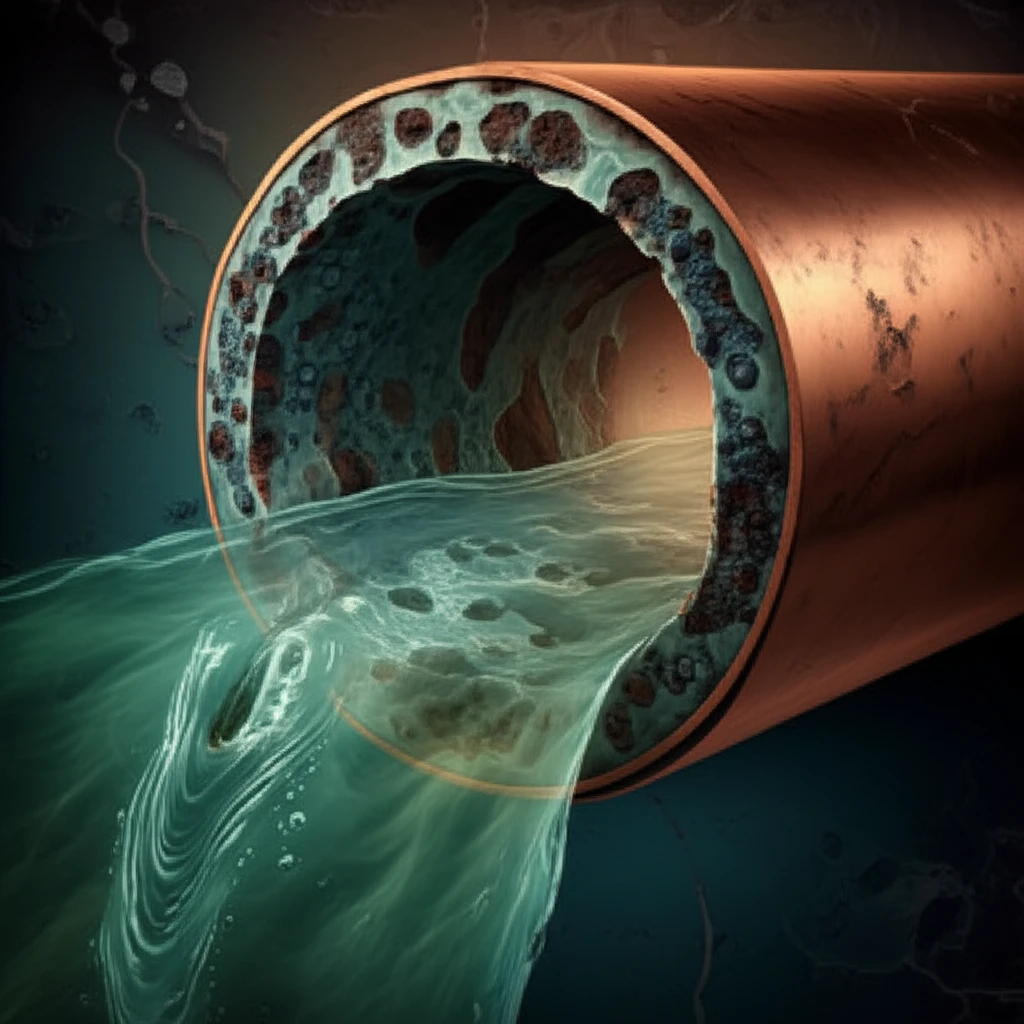
Is Your Tap Water Safe? How Silicate Films in Copper Pipes Could Be Putting Your Health at Risk

"Unveiling the Silent Threat: Understanding the Link Between Silicate Films, Copper Pipes, and Your Drinking Water"
We often take clean water for granted, but the pipes that deliver it to our homes can sometimes pose hidden dangers. Recent research highlights a concerning issue: the formation of silicate films inside copper pipes, which can trigger a process called pitting corrosion. This corrosion can compromise the integrity of your pipes and potentially leach harmful substances into your drinking water.
This article dives into the science behind this problem, explaining how silicate films develop and the impact they have on copper pipes. We'll break down the research findings, discuss the risks to your health, and explore practical steps you can take to safeguard your water supply. Whether you're a homeowner, a renter, or simply someone who cares about their well-being, this information is crucial.
Understanding the potential threats in our everyday lives is essential, and this article aims to provide you with the knowledge you need to make informed decisions about the safety of your drinking water. We'll uncover the complexities of corrosion, and empower you with the information to protect yourself and your loved ones.
The Science of Silicate Films and Pitting Corrosion: What You Need to Know
Copper pipes, a common choice for water installations, are generally considered safe. However, under certain conditions, they can be vulnerable to corrosion. The formation of silicate films on the inner surface of these pipes can significantly accelerate this process. These films, composed of silicate, alter the way copper interacts with water, making it more susceptible to damage.
- Silicate Film Formation: Silicate films develop when silicates, naturally present in water, react with the copper surface.
- Anode and Cathode Formation: The presence of the silicate film creates local anodes (areas where corrosion occurs) and cathodes (areas where electrons are received), accelerating the corrosion process.
- Copper Dissolution: The corrosion process leads to the dissolution of copper ions into the water, potentially increasing copper levels in your drinking water.
Protecting Your Water: Steps You Can Take
The information presented here underscores the importance of understanding the potential risks in your drinking water. By staying informed and taking appropriate measures, you can protect your health and ensure the safety of your water supply. Regular testing, proper maintenance, and considering alternative piping materials can all contribute to a safer and healthier home environment.