
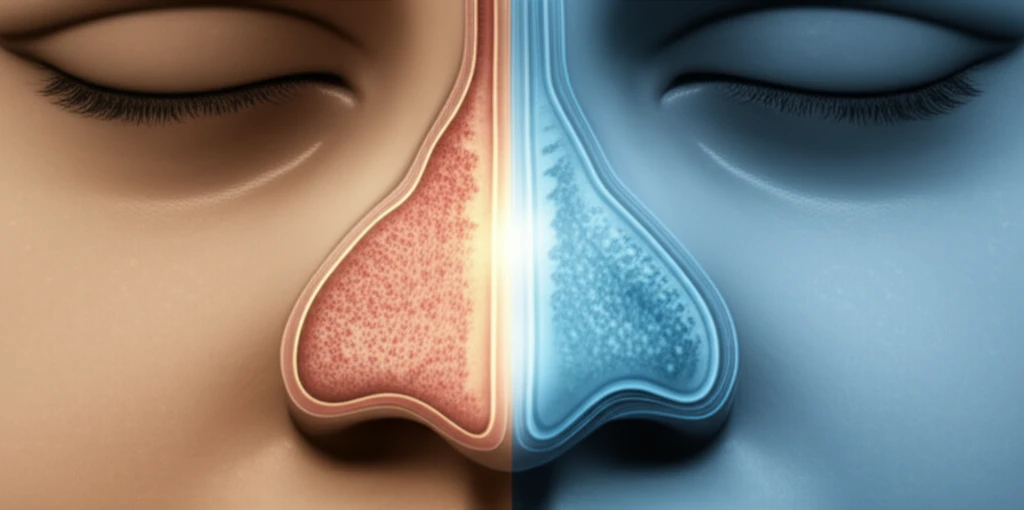
Is Your Nose Job Harming Your Nasal Health? The Hidden Risks of Septoplasty

"Uncover the potential long-term effects of septoplasty on your nasal mucosa and how to protect your nasal health post-surgery."
Nasal septum deviations are a widespread issue, frequently leading to nasal obstruction and breathing difficulties. Surgical intervention, known as septoplasty, aims to correct these deviations, enhance nasal function, and improve overall quality of life. However, it's essential to consider the potential long-term effects of this procedure on the delicate nasal mucosa.
While septoplasty is designed to alleviate nasal obstruction, some patients experience persistent issues such as nasal dryness, crusting, or even the feeling of continued blockage. These lingering symptoms prompt a deeper look into how septoplasty affects the nasal environment at a microscopic level.
A recent experimental study delved into these microscopic changes, evaluating the histopathological effects of different septoplasty techniques on the nasal septal mucosa. By examining tissue samples under light and electron microscopes, researchers gained valuable insights into how these procedures impact nasal health.
What Happens to Your Nasal Tissue During Septoplasty?
The study, conducted on 21 rabbits, compared three groups: one undergoing traditional septoplasty with cartilage resection, another with cartilage crushed and replaced, and a control group with no surgical intervention. Postoperative tissue samples were analyzed for changes in septum morphology, perichondrial thickness, and the presence of cilia and goblet cells.
- Cilia: Essential for clearing mucus and debris, their reduction can lead to impaired nasal hygiene.
- Goblet Cells: These cells produce mucus, which keeps the nasal passages moist and traps irritants. A decrease can cause dryness and discomfort.
- Serous Glands: Contributing to mucus production, their loss can further exacerbate dryness.
- Collagen Fibers: An increase indicates fibrosis, which can stiffen the nasal tissues and affect their normal function.
Protecting Your Nasal Health After Septoplasty
The study underscores the importance of cartilage presence in maintaining mucosal health. However, it also highlights that even with cartilage preservation, changes can occur. Further long-term studies are necessary to fully understand the progression of these changes and identify strategies to minimize them. If you're considering septoplasty, discuss these potential risks with your surgeon and explore proactive measures to support your nasal health post-surgery.