
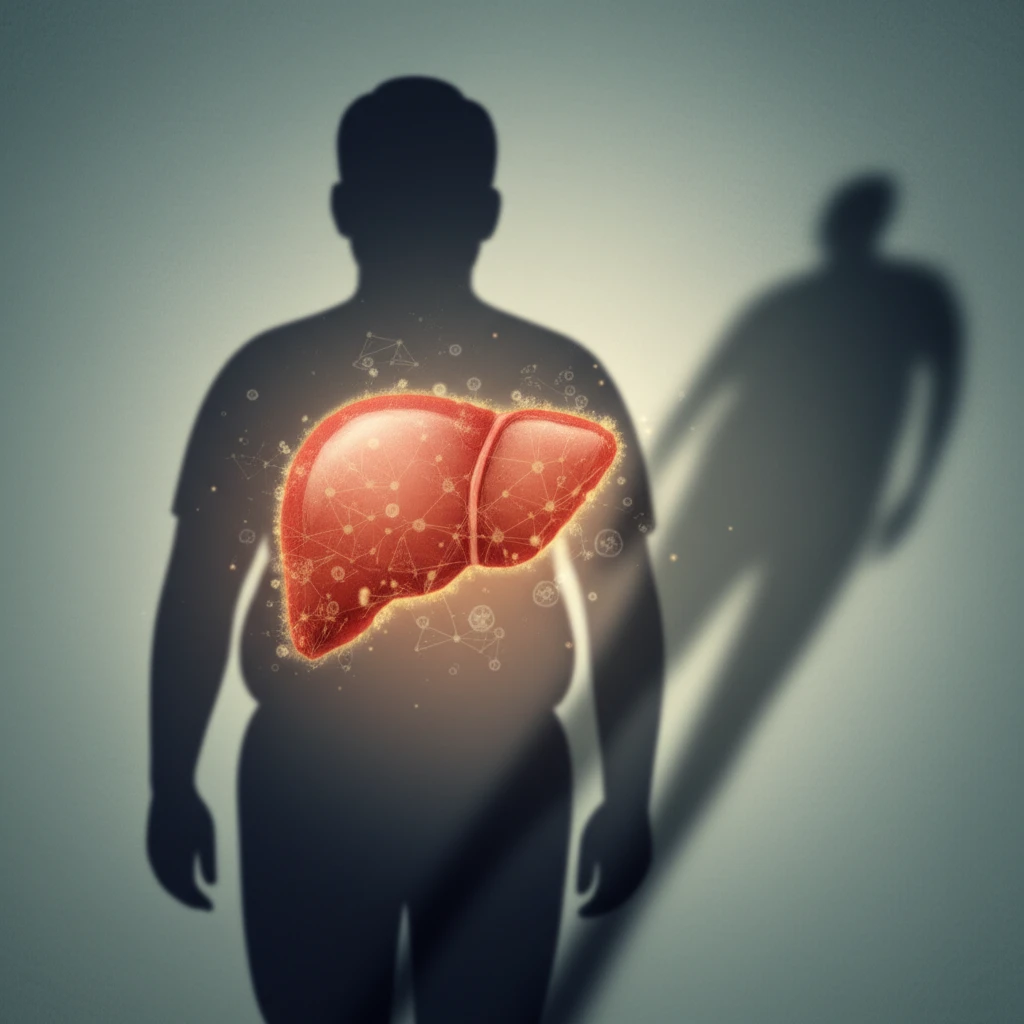
Is Your Liver at Risk? The Hidden Danger of Fatty Liver Disease in Plain Sight

"New research reveals a surprisingly high prevalence of hepatic steatosis (fatty liver) in people with common metabolic risk factors – and how it's easily missed."
Non-alcoholic fatty liver disease (NAFLD) has emerged as a significant health concern worldwide, affecting approximately 25% of the global population. Fuelled by the rising rates of obesity, type 2 diabetes, and metabolic syndrome, NAFLD often progresses silently, increasing the risk of cirrhosis, liver cancer, and cardiovascular complications.
Primary care physicians are at the frontline of identifying individuals at risk. However, diagnosis often relies on methods like ultrasound, which can be limited in sensitivity and accuracy, especially in individuals who are overweight. This makes early detection and intervention challenging, potentially leading to underestimation of the true burden of the disease.
Now, a new population-based study published in PLOS One sheds light on the prevalence of hepatic steatosis (fatty liver) in individuals with metabolic risk factors within the primary care setting. Using Controlled Attenuation Parameter (CAP), a non-invasive method for measuring liver fat, researchers uncovered alarming rates of previously undiagnosed liver disease. This article will explore the key findings of this study, highlighting the importance of proactive liver health monitoring and early intervention.
The Silent Epidemic: Fatty Liver Prevalence Revealed
The study, conducted in a primary care center, involved 215 participants with metabolic risk factors (obesity, type 2 diabetes, dyslipidemia, and metabolic syndrome) and a control group of 80 individuals without these risk factors. All participants underwent CAP and liver stiffness (LS) measurements using FibroScan.
- Subjects with metabolic risk factors had significantly higher CAP values compared to the control group (268±64 dB/m vs 243±49 dB/m, p<0.001), indicating a higher degree of liver fat.
- A staggering 43% of subjects with risk factors had severe steatosis (CAP > 280 dB/m).
- Increased liver stiffness, suggestive of liver fibrosis, was found in 12.6% of the risk group, while none of the control group exhibited increased stiffness (p<0.001).
- Fatty Liver Index (FLI) and HOMA (Homeostatic Model Assessment for Insulin Resistance) were identified as independent predictive factors of severe steatosis.
Take Control of Your Liver Health: What You Need to Know
The study emphasizes the importance of proactive liver health monitoring, especially for individuals with metabolic risk factors. While CAP is a valuable tool, it may not be readily available in all primary care settings. The Fatty Liver Index (FLI), a simple calculation based on readily available clinical data, could serve as a surrogate marker for identifying individuals at high risk of steatosis.
Individuals concerned about their liver health should:
<ul> <li>Consult their primary care physician to discuss their risk factors and potential screening options.</li> <li>Consider lifestyle modifications, such as weight loss, a healthy diet, and regular exercise, to reduce their risk of NAFLD and improve their overall metabolic health.</li> <li>Be aware that normal transaminase levels (liver enzymes) do not always indicate the absence of liver disease. In this study, a significant proportion of individuals with moderate to severe steatosis had normal liver enzyme levels.</li> </ul>