
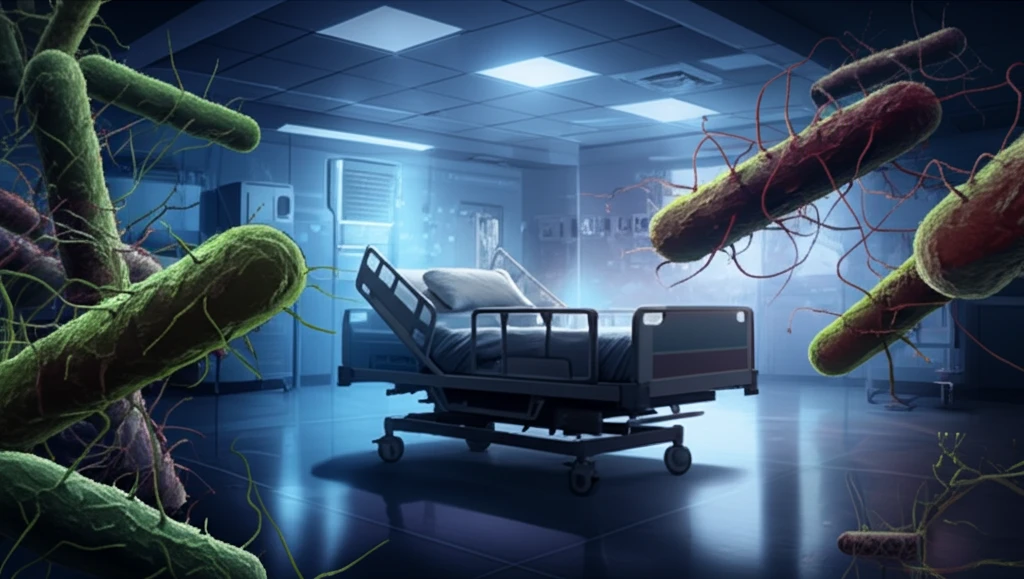
Is Your Hospital Breeding Superbugs? Understanding Coagulase-Negative Staph Infections

"Uncover the hidden dangers of antibiotic resistance in hospitals and how these infections are evolving."
In today's hospitals, where life-saving implants and devices are increasingly common, a hidden threat lurks: Coagulase-Negative Staphylococci, or CNS. Once considered harmless, these bacteria are now emerging as significant pathogens, causing difficult-to-treat infections that can prolong hospital stays and increase healthcare costs. Understanding the rise of CNS infections and their resistance to antibiotics is crucial for protecting patient health.
CNS infections often target individuals with weakened immune systems or those who have undergone invasive procedures. These infections can manifest in various ways, from minor skin irritations to severe bloodstream infections. What makes CNS particularly concerning is its ability to form biofilms on medical devices, making it difficult for antibiotics to penetrate and eradicate the bacteria.
The growing resistance of CNS to common antibiotics, such as macrolides and clindamycin, further complicates treatment. This resistance is driven by the overuse of these drugs, creating an environment where resistant strains thrive. Hospitals are now grappling with the challenge of managing these 'superbugs' and preventing their spread.
What Makes CNS So Hard to Treat?
CNS has become increasingly resistant to multiple antibiotics, including those commonly used to treat staph infections. This resistance arises through several mechanisms, notably the acquisition of resistance genes such as erm(A), erm(B), erm(C), and erm(TR). These genes confer resistance to macrolides, lincosamides, and streptogramin B (MLSB) antibiotics, a group widely used to combat staphylococcal infections.
- Biofilm Formation: CNS can form biofilms on medical devices, acting like a fortress against antibiotics.
- Antibiotic Resistance Genes: CNS readily acquires genes that make them resistant to multiple antibiotics.
- Inducible Resistance: Some CNS strains develop resistance mid-treatment, making infections harder to clear.
What Can Be Done?
Combating the rise of antibiotic-resistant CNS infections requires a multi-pronged approach. Hospitals must implement strict infection control measures, including enhanced hand hygiene, rigorous sterilization of medical equipment, and judicious use of antibiotics. Surveillance programs to monitor the prevalence and resistance patterns of CNS are also essential for guiding treatment strategies and preventing outbreaks. Furthermore, research into new antimicrobial agents and alternative therapies is crucial for staying ahead of these evolving superbugs. By understanding the threat and taking proactive steps, healthcare facilities can protect their patients and prevent the spread of these dangerous infections.