
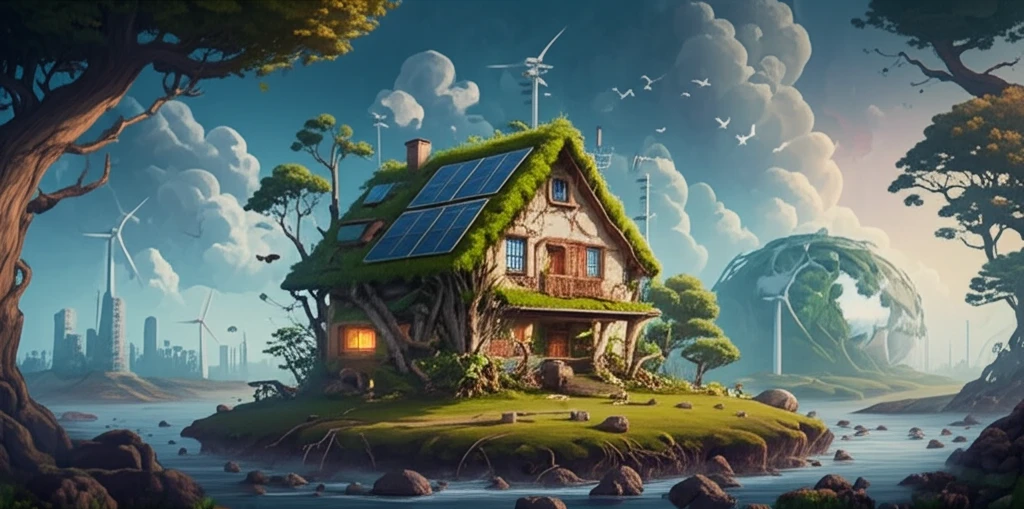
House transforming into a green ecosystem, symbolizing energy efficiency and sustainability.

Is Your Home a Hidden Climate Risk? How the Energy Efficiency of Buildings Impacts Real Estate Prices

"Discover how climate change and the transition to a low-carbon economy are reshaping the real estate market, and what homeowners can do to protect their investments."


The real estate market is undergoing a significant transformation, driven by increasing awareness of climate change and the urgent need for sustainable practices. Properties are no longer just evaluated on location and size; their energy efficiency is now a critical factor influencing market value.

Across the globe, governments and consumers are pushing for greener buildings, leading to policies and preferences that favor energy-efficient homes. This shift presents both challenges and opportunities for homeowners. Properties with low energy efficiency ratings may face depreciation, while those with high ratings are likely to appreciate in value.

Understanding the impact of climate transition on real estate is essential for making informed decisions. Whether you're a homeowner, investor, or policymaker, it's crucial to grasp how energy efficiency affects property values and what steps can be taken to navigate this evolving landscape. This article explores the key aspects of this transition, offering insights into how you can adapt and thrive in a green-conscious market.

Why Energy Efficiency Matters: The Financial Impact of Climate Transition on Your Property

House transforming into a green ecosystem, symbolizing energy efficiency and sustainability.

Climate change is reshaping economies and societies, and the real estate sector is at the forefront of this transformation. Transition risk, the economic and financial losses associated with adjusting to a low-carbon economy, is becoming increasingly relevant to property values. Residential and commercial buildings are major contributors to greenhouse gas (GHG) emissions, making them prime targets for climate policies.

Several factors contribute to the growing importance of energy efficiency in real estate:

  • Regulatory Pressure: Governments worldwide are implementing stricter energy performance standards for buildings. For example, the Energy Performance of Buildings Directive (EPBD) in the European Union sets targets for improving energy efficiency across the EU, incentivizing renovations and higher standards for new constructions.
  • Consumer Demand: Buyers and renters are increasingly prioritizing energy-efficient homes. They recognize the long-term cost savings from reduced utility bills and the environmental benefits of lower energy consumption.
  • Market Capitalization: Energy efficiency ratings are now being capitalized into home prices. Studies in the Netherlands and Spain have shown that homes with high energy efficiency labels (A, B, or C) command significantly higher prices compared to those with lower ratings (D, E, F, or G).
These factors collectively drive the need for homeowners and investors to focus on improving the energy efficiency of their properties. Ignoring this trend could lead to significant depreciation in property values, while proactive measures can enhance long-term financial returns.

Future-Proofing Your Home: Strategies for Enhancing Energy Efficiency and Value

The transition to a sustainable real estate market is underway, presenting both challenges and opportunities for homeowners and investors. By understanding the financial implications of energy efficiency and taking proactive steps to improve their properties, stakeholders can navigate this evolving landscape and secure long-term value. As climate change continues to shape our world, energy-efficient homes will not only contribute to a greener future but also stand as resilient, valuable assets in the market.

About this Article -

This article was crafted using a human-AI hybrid and collaborative approach. AI assisted our team with initial drafting, research insights, identifying key questions, and image generation. Our human editors guided topic selection, defined the angle, structured the content, ensured factual accuracy and relevance, refined the tone, and conducted thorough editing to deliver helpful, high-quality information.See our About page for more information.

This article is based on research published under:

DOI-LINK: https://doi.org/10.48550/arXiv.2408.02339,

Title: Modeling The Impact Of Climate Transition On Real Estate Prices

Subject: q-fin.rm econ.gn q-fin.ec q-fin.gn

Authors: Lionel Sopgoui

Published: 05-08-2024

Everything You Need To Know

1

How does climate change affect real estate prices?

Climate change and the move towards a low-carbon economy are significantly impacting the real estate market. Properties are increasingly evaluated based on their energy efficiency, making it a critical factor in determining market value. Homes with low energy efficiency ratings may depreciate in value, while those with high ratings are likely to appreciate. This shift is driven by factors like regulatory pressure from governments worldwide, consumer demand for greener buildings, and market capitalization of energy efficiency ratings into home prices.

2

Why is energy efficiency becoming so important in the real estate market?

Energy efficiency is becoming crucial due to a confluence of factors. Governments are implementing stricter energy performance standards, like the Energy Performance of Buildings Directive (EPBD) in the European Union, which pushes for better energy efficiency in buildings. Consumers are also increasingly prioritizing energy-efficient homes, seeking lower utility bills and environmental benefits. Furthermore, market capitalization is recognizing energy efficiency; homes with high ratings like A, B, or C are commanding higher prices than those with lower ratings such as D, E, F, or G.

3

What is 'transition risk' in the context of real estate?

Transition risk refers to the economic and financial losses associated with the shift to a low-carbon economy. In real estate, this means that properties may lose value if they are not energy efficient because they may not meet new standards and may incur higher operating costs. Residential and commercial buildings are major contributors to greenhouse gas emissions, making them primary targets for climate policies. This risk underscores the financial implications of climate change on real estate investments, highlighting the importance of energy efficiency.

4

How can homeowners protect their investments in a changing climate?

Homeowners can protect their investments by focusing on improving their home's energy efficiency. This includes understanding the financial implications of energy efficiency and taking proactive steps to upgrade their properties. By increasing energy efficiency, homeowners can prevent potential depreciation and increase the long-term value of their homes. This also involves staying informed about government regulations, such as the Energy Performance of Buildings Directive (EPBD), and consumer preferences for sustainable homes. Future-proofing your home involves making it resilient and valuable in a market increasingly focused on environmental sustainability.

5

What are some real-world examples of the impact of energy efficiency on property values?

Studies in the Netherlands and Spain have demonstrated the tangible impact of energy efficiency on property values. Homes with high energy efficiency labels, such as A, B, or C ratings, have been shown to sell for significantly higher prices compared to those with lower ratings like D, E, F, or G. This market capitalization illustrates how energy efficiency is directly translated into financial returns, making it a key consideration for both buyers and sellers in the evolving real estate landscape. These examples highlight the importance of understanding and addressing energy efficiency to maximize property value.

Newsletter Subscribe

Subscribe to get the latest articles and insights directly in your inbox.