
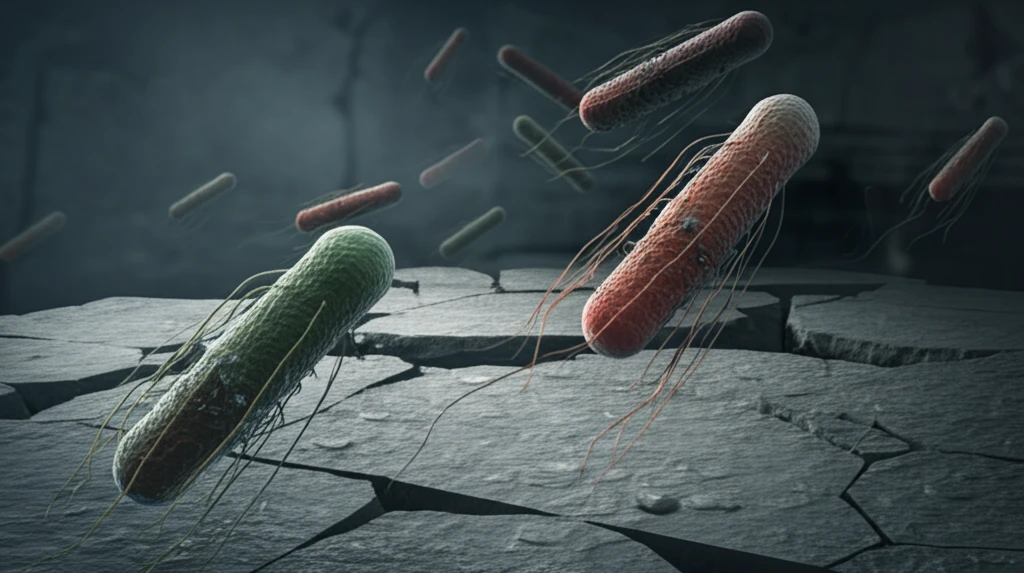
Microscopic view of bacteria corroding concrete.

Is Your Foundation Crumbling? How Biodeterioration Impacts Concrete and What You Can Do About It

"Uncover the hidden threat to concrete structures: biodeterioration. Learn how microbes cause concrete decay and explore innovative solutions to protect your investments."


Concrete, the unsung hero of modern construction, provides the foundation for our homes, bridges, and infrastructure. Yet, this seemingly indestructible material faces a subtle but significant threat: biodeterioration. While we often think of physical forces or chemical attacks as the primary culprits behind concrete degradation, the impact of microorganisms can be equally devastating.

Biodeterioration is the breakdown of materials caused by living organisms, primarily bacteria and fungi. These tiny invaders can colonize concrete surfaces, creating a complex web of destructive processes that lead to cracking, weakening, and eventual structural failure. Understanding this process is crucial for anyone involved in construction, maintenance, or property management.

In this article, we'll delve into the world of biodeterioration, exploring the mechanisms by which microbes attack concrete and highlighting innovative strategies to combat this growing problem. Whether you're a homeowner, contractor, or civil engineer, this information will empower you to protect your concrete investments and ensure long-term durability.

The Microbial Assault: How Biodeterioration Works

Microscopic view of bacteria corroding concrete.

The process of biodeterioration is a complex interplay between microorganisms and the concrete environment. Several types of bacteria, particularly sulfur-oxidizing bacteria like Acidithiobacillus thiooxidans, play a central role. These bacteria thrive in moist conditions and feed on sulfur compounds present in the concrete or surrounding environment. As they metabolize these compounds, they produce sulfuric acid, a highly corrosive substance that attacks the concrete matrix.

The sulfuric acid reacts with calcium hydroxide, a key component of hardened concrete, forming gypsum. This gypsum weakens the concrete structure and makes it more susceptible to cracking and further degradation. In addition, the sulfuric acid can also react with calcium aluminate hydrates, leading to the formation of ettringite, an expansive mineral that causes internal stress and cracking.

Here are the main steps in the biodeterioration process:
  • Colonization: Microorganisms colonize the concrete surface, often in areas with high moisture and nutrient availability.
  • Acid Production: Sulfur-oxidizing bacteria metabolize sulfur compounds and produce sulfuric acid.
  • Gypsum Formation: The sulfuric acid reacts with calcium hydroxide, forming gypsum, which weakens the concrete.
  • Ettringite Formation: The sulfuric acid reacts with calcium aluminate hydrates, forming ettringite, which causes expansion and cracking.
  • Structural Damage: The combined effects of gypsum and ettringite formation lead to cracking, weakening, and eventual structural failure.
Fungi also contribute to biodeterioration. They can penetrate concrete surfaces, physically weakening the material as they grow. Some fungi also produce organic acids that attack the concrete matrix. The presence of both bacteria and fungi can create a synergistic effect, accelerating the rate of biodeterioration.

Protecting Your Concrete: Strategies for Prevention and Repair

While biodeterioration poses a significant threat to concrete structures, several strategies can be employed to prevent and mitigate its effects. Using supplementary cementing materials like zeolite can improve concrete's resistance to acid attack. Zeolite acts as a buffer, neutralizing the acid and reducing the rate of degradation. Proper design and construction practices, such as ensuring adequate drainage and minimizing moisture accumulation, can also help prevent microbial colonization.

About this Article -

This article was crafted using a human-AI hybrid and collaborative approach. AI assisted our team with initial drafting, research insights, identifying key questions, and image generation. Our human editors guided topic selection, defined the angle, structured the content, ensured factual accuracy and relevance, refined the tone, and conducted thorough editing to deliver helpful, high-quality information.See our About page for more information.

Everything You Need To Know

1

What exactly is biodeterioration and why should I be concerned about it regarding my concrete structures?

Biodeterioration is the breakdown of materials, like concrete, caused by living organisms, primarily bacteria and fungi. You should be concerned because these microorganisms can colonize concrete surfaces and initiate destructive processes. These processes lead to cracking, weakening, and, if unaddressed, structural failure. Unlike physical or chemical attacks, biodeterioration represents a subtle yet significant threat that can compromise the integrity and longevity of concrete-based investments.

2

How does Acidithiobacillus thiooxidans contribute to the biodeterioration of concrete?

Acidithiobacillus thiooxidans is a type of sulfur-oxidizing bacteria that plays a central role in the biodeterioration of concrete. These bacteria thrive in moist environments and feed on sulfur compounds found in the concrete or surrounding environment. As they metabolize these compounds, they produce sulfuric acid. This sulfuric acid then attacks the concrete matrix, leading to the formation of gypsum and ettringite, both of which weaken the concrete structure and cause cracking.

3

Besides bacteria, what other organisms contribute to concrete biodeterioration?

Fungi also significantly contribute to the biodeterioration of concrete. They can penetrate the concrete surface, physically weakening the material as they grow. Certain fungi produce organic acids that further attack the concrete matrix. The combined presence of both bacteria and fungi can create a synergistic effect, accelerating the overall rate of biodeterioration. This dual attack mechanism underscores the complexity of managing biodeterioration in concrete structures.

4

What are gypsum and ettringite, and how do they lead to structural damage in concrete?

Gypsum and ettringite are both products of chemical reactions that occur during biodeterioration. Sulfuric acid, produced by sulfur-oxidizing bacteria, reacts with calcium hydroxide in the hardened concrete to form gypsum. This weakens the concrete structure. The same sulfuric acid can also react with calcium aluminate hydrates, forming ettringite. Ettringite is an expansive mineral, meaning it increases in volume as it forms, causing internal stress and cracking within the concrete. The combined effects of gypsum formation (weakening) and ettringite formation (expansion and cracking) lead to significant structural damage and eventual failure.

5

How can supplementary cementing materials, such as zeolite, protect concrete from biodeterioration?

Supplementary cementing materials, like zeolite, can improve concrete's resistance to acid attacks associated with biodeterioration. Zeolite acts as a buffer, neutralizing the sulfuric acid produced by sulfur-oxidizing bacteria, reducing the rate of degradation. By neutralizing the acid, zeolite minimizes the formation of gypsum and ettringite, thus preserving the concrete's structural integrity. Combining zeolite with proper drainage techniques is very effective.

Newsletter Subscribe

Subscribe to get the latest articles and insights directly in your inbox.