
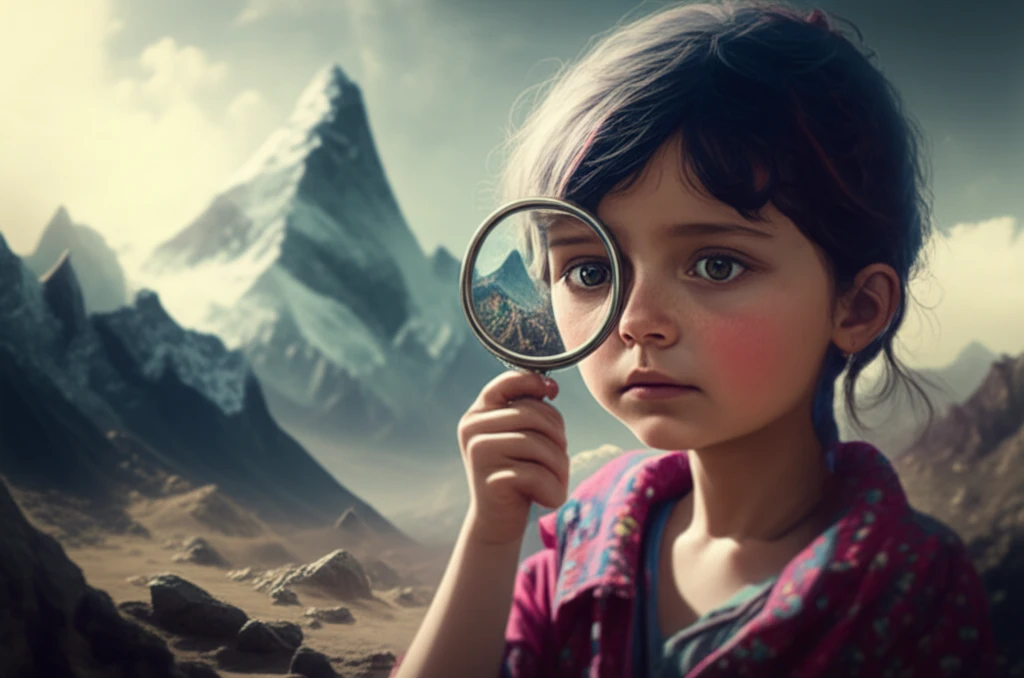
A child in the Himalayas peers through a blurry lens, symbolizing myopia.

Is Your Child's Vision at Risk? Unveiling the Myopia Epidemic in High Mountain Regions

"Discover the alarming prevalence of nearsightedness among children in remote areas of Nepal and what it means for global eye health."


Myopia, commonly known as nearsightedness, is rapidly becoming a global health concern, particularly among school-aged children. Once considered a minor inconvenience, this refractive error is now recognized as a significant public health issue with far-reaching implications for education, employment, and overall quality of life. The World Health Organization (WHO) has even highlighted myopia as a leading cause of preventable vision impairment worldwide.

While myopia is increasing globally, its prevalence varies significantly across different geographical locations, ethnic groups, and socioeconomic backgrounds. Studies have consistently shown higher rates of myopia in Asian countries compared to Western nations. However, within Asia, specific populations face unique challenges due to their remote locations and limited access to healthcare. One such population is the children residing in the high mountain regions of Nepal.

A recent study conducted in the Snowland School, located in the outskirts of Kathmandu, Nepal, sheds light on the prevalence of myopia among children from these remote Himalayan villages. This boarding school serves children from regions such as Solukhumbu, Mustang, and Mugu, many of whom are orphans or come from underprivileged families with limited access to education and healthcare. The findings of this study reveal a surprisingly high rate of myopia in this population, raising concerns about the potential impact on their future.

Why is Myopia More Common in High Mountain Regions?

A child in the Himalayas peers through a blurry lens, symbolizing myopia.

The study, led by Dr. Srijana Adhikari at the Tilganga Institute of Ophthalmology, Kathmandu, Nepal, involved a cross-sectional descriptive analysis of 140 children attending the Snowland School. The children underwent vision screening using standard Snellen charts, followed by comprehensive ophthalmological examinations by a pediatric ophthalmologist for those who failed the initial screening. The results were striking: 28.5% of the children had vision less than 6/9 in at least one eye. Further examination revealed that myopia was present in all of the children with reduced vision, resulting in an overall myopia prevalence of 27% within the school population.

Several factors may contribute to the high prevalence of myopia observed in this study. These include:

  • Genetics: The study notes that the children in the high mountain region are mainly of Mongolian descent, similar to populations in China, where high rates of myopia have also been reported. Genetic predisposition may play a role in the development of myopia.
  • Environmental Factors: Limited access to education and healthcare in these remote regions may contribute to delayed diagnosis and management of vision problems. Additionally, lifestyle factors such as reduced outdoor time and increased near work activities (e.g., reading and studying) may also play a role.
  • Socioeconomic Factors: Children from orphanages or poor families may not have access to proper nutrition or eye care, which could increase their risk of developing myopia.
It is important to note that this study had some limitations, including a relatively small sample size. However, the findings provide valuable insights into the prevalence of myopia in this understudied population and highlight the need for further research and intervention.

Protecting Your Child's Vision: What You Can Do

The study's conclusion underscores the urgent need for proactive measures to address the high prevalence of myopia among children in the high mountain regions of Nepal. By focusing on early detection, access to corrective measures, and promoting healthy vision habits, we can empower these children to achieve their full potential and improve their quality of life.

About this Article -

This article was crafted using a human-AI hybrid and collaborative approach. AI assisted our team with initial drafting, research insights, identifying key questions, and image generation. Our human editors guided topic selection, defined the angle, structured the content, ensured factual accuracy and relevance, refined the tone, and conducted thorough editing to deliver helpful, high-quality information.See our About page for more information.

This article is based on research published under:

DOI-LINK: 10.3126/nepjoph.v5i2.8737, Alternate LINK

Title: Myopia In School Children From High Mountain Region Of Nepal

Subject: General Medicine

Journal: Nepalese Journal of Ophthalmology

Publisher: Nepal Journals Online (JOL)

Authors: Sirjana Adhikari

Published: 2013-09-25

Everything You Need To Know

1

What is Myopia and why is it considered a public health issue?

Myopia, commonly known as nearsightedness, is a refractive error that is rapidly becoming a global health concern, particularly among school-aged children. It's now recognized as a significant public health issue because it has far-reaching implications for education, employment, and overall quality of life. The World Health Organization (WHO) has even highlighted Myopia as a leading cause of preventable vision impairment worldwide. Addressing Myopia is essential to ensure individuals can fully participate in society and reach their potential. Furthermore, uncorrected Myopia can lead to other eye-related problems later in life, increasing the burden on healthcare systems.

2

What factors contribute to the higher prevalence of Myopia in the high mountain regions of Nepal, as seen in the Snowland School study?

Several factors may contribute to the high prevalence of Myopia in the high mountain regions of Nepal. Genetics play a role, as the children are mainly of Mongolian descent, similar to populations in China where high rates of Myopia have been reported. Environmental factors such as limited access to education and healthcare in these remote regions may contribute to delayed diagnosis and management of vision problems. Socioeconomic factors, where children from orphanages or poor families may not have access to proper nutrition or eye care, also increase the risk of developing Myopia. Lifestyle factors such as reduced outdoor time and increased near work activities also play a role.

3

What did the study at the Snowland School reveal about Myopia among children from remote Himalayan villages?

The study conducted at the Snowland School, located in the outskirts of Kathmandu, Nepal, revealed a surprisingly high rate of Myopia among children from remote Himalayan villages. The study found that 28.5% of the children had vision less than 6/9 in at least one eye. Further examination revealed that Myopia was present in all of the children with reduced vision, resulting in an overall Myopia prevalence of 27% within the school population. This is important because these children come from regions such as Solukhumbu, Mustang, and Mugu, and many are orphans or come from underprivileged families with limited access to education and healthcare.

4

How was the study conducted by Dr. Srijana Adhikari at the Tilganga Institute of Ophthalmology?

The study, led by Dr. Srijana Adhikari at the Tilganga Institute of Ophthalmology, Kathmandu, Nepal, involved a cross-sectional descriptive analysis of 140 children attending the Snowland School. The children underwent vision screening using standard Snellen charts, followed by comprehensive ophthalmological examinations by a pediatric ophthalmologist for those who failed the initial screening. This rigorous approach allowed for accurate diagnosis and prevalence assessment of Myopia within the study population.

5

What steps can be taken to protect children's vision and address the high prevalence of Myopia in regions like the high mountain areas of Nepal?

To protect children's vision and address the high prevalence of Myopia, proactive measures are crucial. Early detection through regular vision screenings is essential. Providing access to corrective measures, such as eyeglasses, can significantly improve visual acuity. Promoting healthy vision habits, including increased outdoor time and reduced near work, can help mitigate the environmental factors contributing to Myopia. These efforts are important as they can empower children to achieve their full potential and improve their quality of life.

Newsletter Subscribe

Subscribe to get the latest articles and insights directly in your inbox.