
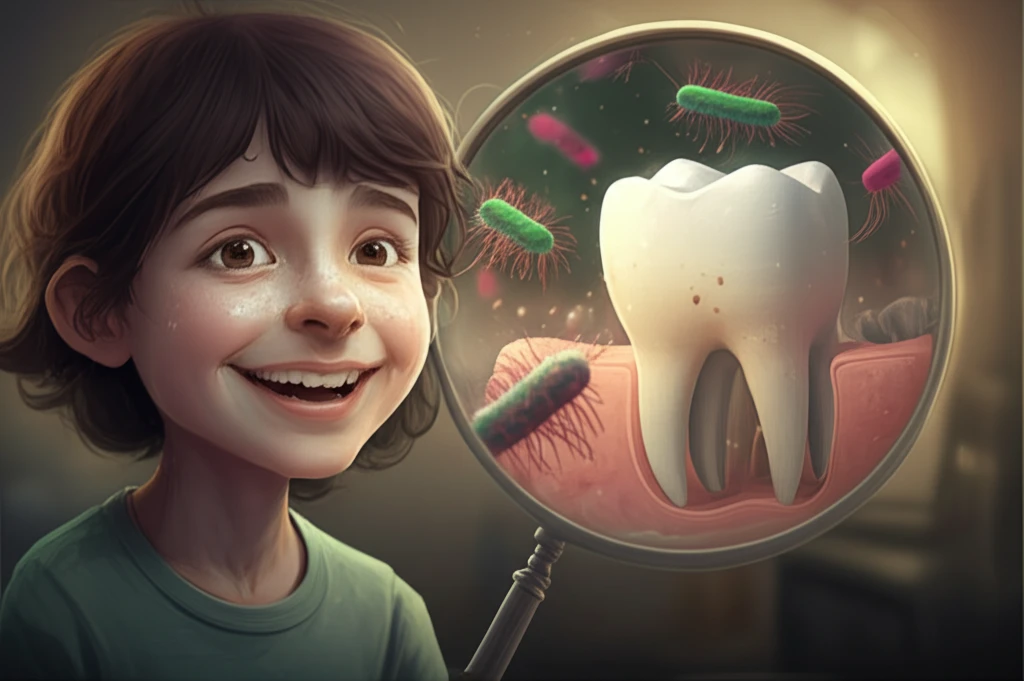
Child's smile with dental fluorosis and bacteria attacking enamel.

Is Your Child at Risk? Unveiling the Connection Between Dental Fluorosis and Cavities

"New research highlights the surprising link between dental fluorosis and an increased susceptibility to dental caries. Learn how to protect your child's oral health."


For years, fluoride has been hailed as a champion in the fight against tooth decay. From fluoridated water to toothpaste, it's a common ingredient in oral hygiene routines aimed at strengthening enamel and preventing cavities. However, emerging research suggests that too much of a good thing can have unintended consequences, particularly for children.

A recent study conducted in Huila, Colombia, has shed light on a surprising connection between dental fluorosis – a condition caused by overexposure to fluoride during tooth development – and an increased risk of dental caries (cavities) in children aged 5 to 14. This finding challenges conventional wisdom and raises important questions about optimal fluoride levels and their impact on long-term oral health.

Dental fluorosis, characterized by white spots or discoloration on the enamel, is a visible sign of fluoride overexposure. While often considered a cosmetic issue, the new research indicates that it might also be a marker for weakened enamel that is more susceptible to acid attacks from bacteria, ultimately leading to cavity formation. Understanding this link is crucial for parents and caregivers to make informed decisions about their children's fluoride intake.

Decoding the Dental Fluorosis-Cavities Connection: What the Research Reveals

Child's smile with dental fluorosis and bacteria attacking enamel.

The study, conducted across several public educative institutions in Huila, Colombia, examined the oral health of 482 children. Researchers meticulously assessed the presence of both dental fluorosis and dental caries using standardized diagnostic criteria (ICDAS for caries and DEAN index for fluorosis).

The results indicated a statistically significant association between dental fluorosis and dental caries. Children with dental fluorosis were found to be more likely to have cavities compared to their peers without the condition. This association remained even after accounting for other factors known to influence cavity development, such as age and oral hygiene habits.

  • Increased Risk: The study revealed that children with dental fluorosis had a significantly higher probability of developing dental caries.
  • Age Matters: Younger children (5-9 years old) were more susceptible to both dental fluorosis and cavities.
  • Hygiene Habits: Infrequent tooth brushing, especially after meals, compounded the risk of cavity development.
The researchers concluded that dental fluorosis should be recognized as a potential risk factor for dental caries development. This highlights the importance of carefully monitoring fluoride intake in children to minimize the risk of overexposure while still ensuring adequate protection against tooth decay. While fluoride is beneficial, finding the right balance is key.

Protecting Your Child's Smile: Practical Steps for Parents

The findings of this study serve as a reminder that a balanced approach to fluoride is essential for optimal oral health. By understanding the potential risks of overexposure and taking proactive steps to manage fluoride intake, parents can help their children achieve a healthy, cavity-free smile for years to come. Always consult with your dentist or pediatrician for personalized advice on fluoride supplementation and oral hygiene practices.

About this Article -

This article was crafted using a human-AI hybrid and collaborative approach. AI assisted our team with initial drafting, research insights, identifying key questions, and image generation. Our human editors guided topic selection, defined the angle, structured the content, ensured factual accuracy and relevance, refined the tone, and conducted thorough editing to deliver helpful, high-quality information.See our About page for more information.

This article is based on research published under:

DOI-LINK: 10.12988/ces.2018.8230, Alternate LINK

Title: Association Between Dental Fluorosis With Dental Caries In Children From 5 To 14 Years Old In Huila'S Public Educative Institutions In Colombia

Subject: Health, Toxicology and Mutagenesis

Journal: Contemporary Engineering Sciences

Publisher: Hikari, Ltd.

Authors: Claudia Lorena Garcia Rojas, Armando Roa Navarro, Walter Losada Farfan, Ruthber Rodriguez Serrezuela

Published: 2018-01-01

Everything You Need To Know

1

What exactly is dental fluorosis, and how is it related to tooth enamel?

Dental fluorosis is a condition that results from overexposure to fluoride during the tooth development years. It's visibly characterized by white spots or discoloration on the enamel of the teeth. A study has indicated it might be a marker for weakened enamel and more susceptible to dental caries.

2

What specific evidence links dental fluorosis to an increased risk of cavities, according to the Huila, Colombia study?

The Huila, Colombia study, involving 482 children aged 5 to 14, found a statistically significant association between dental fluorosis and dental caries. Children with dental fluorosis were more likely to have cavities, even after considering factors like age and oral hygiene habits. The study used standardized diagnostic criteria (ICDAS for caries and DEAN index for fluorosis) to assess the presence of both conditions.

3

Does age play a role in the relationship between dental fluorosis and cavities?

Yes, younger children, specifically those between 5 and 9 years old, were found to be more susceptible to both dental fluorosis and dental caries in the Huila, Colombia study. This is likely because their teeth are still developing, making them more vulnerable to the effects of excessive fluoride and the acids that cause tooth decay.

4

What practical steps can parents take to protect their children from dental fluorosis and cavities?

Parents can take several steps. Firstly, they should monitor their child's fluoride intake from all sources, including toothpaste, fluoridated water, and supplements. Consulting with a dentist or pediatrician for personalized advice on fluoride supplementation is also essential. Additionally, encouraging frequent tooth brushing, especially after meals, can help minimize the risk of cavity development, as infrequent brushing habits compound the risk.

5

How does the discovery that dental fluorosis might increase the risk of dental caries challenge existing beliefs about fluoride's impact on dental health?

The finding that dental fluorosis may increase the risk of dental caries challenges the long-held belief that fluoride is solely beneficial for dental health. It suggests that there is a need to find a better balance. While fluoride is essential for preventing tooth decay, excessive exposure, especially during tooth development, can have unintended consequences, such as weakened enamel and increased susceptibility to acid attacks from bacteria. Therefore, it emphasizes the importance of personalized advice and monitoring of fluoride intake, particularly for children.

Newsletter Subscribe

Subscribe to get the latest articles and insights directly in your inbox.