
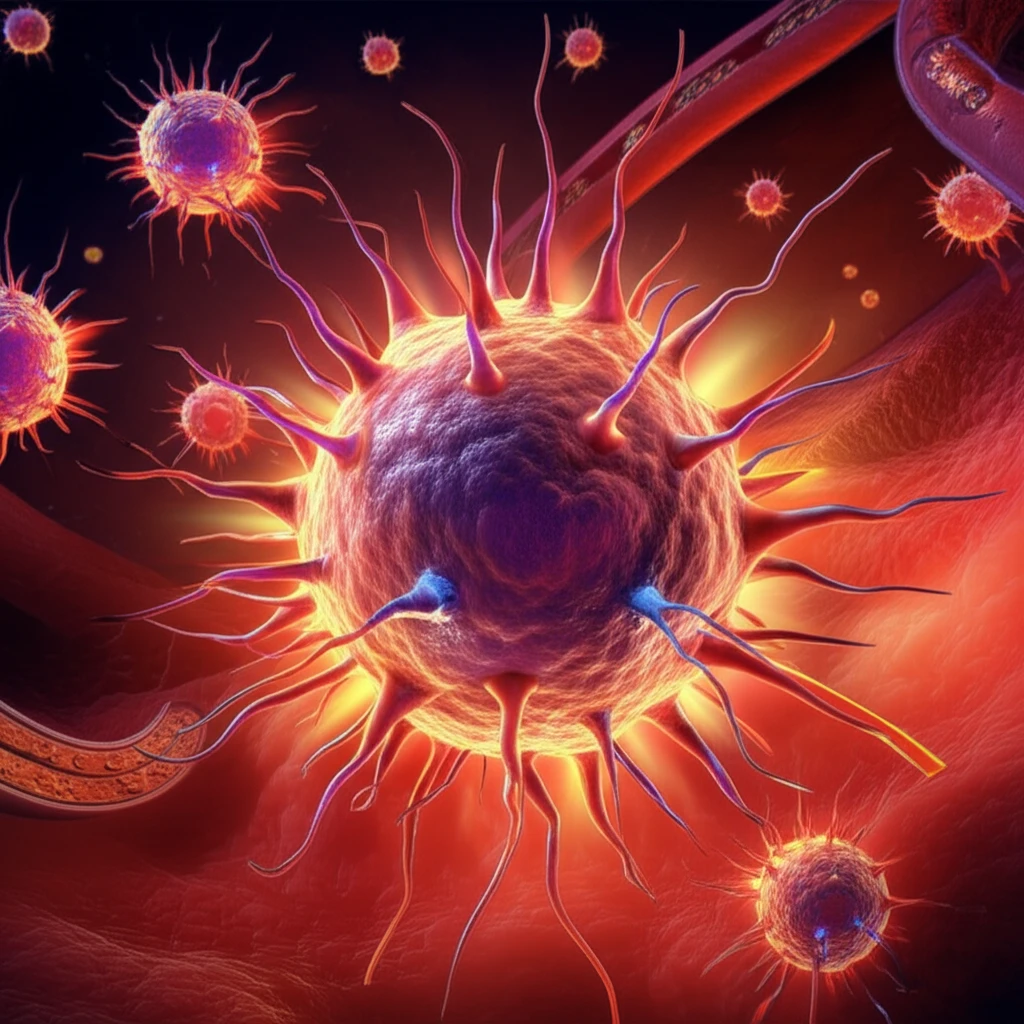
Macrophage cell under stress with heat shock proteins radiating outwards, symbolizing protection against atherosclerosis

Is TMAO the Missing Link in Heart Disease? New Study Highlights Cellular Stress

"Research uncovers how TMAO, a gut-related compound, may trigger stress in immune cells, potentially worsening atherosclerosis."


Heart disease remains a leading cause of death worldwide, driven by factors ranging from genetics and lifestyle to the newly appreciated role of our gut microbiome. Among the molecules produced by gut bacteria, trimethylamine-N-oxide (TMAO) has emerged as a significant player in cardiovascular health.

TMAO is produced when gut bacteria break down certain nutrients in food, particularly choline, lecithin, and carnitine, which are abundant in red meat and eggs. High levels of TMAO in the blood have been linked to an increased risk of atherosclerosis, a condition where plaque builds up inside the arteries, leading to heart attacks and strokes.

Now, a new study published in Advances in Medical Sciences sheds light on how TMAO might exert its harmful effects at a cellular level. Researchers focused on macrophages, a type of immune cell that plays a critical role in the development of atherosclerosis. The study reveals that TMAO can induce stress within these cells, potentially exacerbating the disease process.

TMAO's Impact on Macrophages: What the Study Revealed

Macrophage cell under stress with heat shock proteins radiating outwards, symbolizing protection against atherosclerosis

The researchers at Kerman University of Medical Sciences, Iran, investigated the effects of TMAO on J774A.1 murine macrophages, a commonly used cell line in research. They exposed these cells to varying concentrations of TMAO and then examined the expression of two key proteins: GRP94 and HSP70. These proteins are known as heat shock proteins, which are produced by cells under stress to help them survive.

Here's a breakdown of what they discovered:

  • GRP94 Increase: TMAO exposure led to a notable increase in GRP94 protein levels. GRP94, found in the endoplasmic reticulum (ER), is crucial for protein folding and quality control. Elevated GRP94 typically signals ER stress, indicating cellular disruption.
  • HSP70 Activation: Higher doses of TMAO significantly boosted HSP70 levels, particularly after longer exposure. HSP70 helps stabilize proteins and prevent damage from stressors, confirming TMAO's role in inducing cellular stress.
  • PBA Ineffectiveness: 4-phenylbutyric acid (PBA), a chemical chaperone known to reduce ER stress, did not alter GRP94 or HSP70 levels, suggesting that TMAO's effects might involve distinct stress pathways.
  • Comparison with Tunicamycin: Tunicamycin, a potent ER stress inducer, greatly increased GRP94 levels, establishing a benchmark for TMAO's stress-inducing capability.
These findings suggest that TMAO causes stress within macrophages, prompting them to produce protective proteins like GRP94 and HSP70. However, this stress response, if prolonged, could contribute to the inflammation and dysfunction that characterize atherosclerosis.

What Does This Mean for Your Heart Health?

This research provides a deeper understanding of how TMAO contributes to heart disease. By inducing stress in macrophages, TMAO may promote the formation of foam cells, a key component of atherosclerotic plaques. While further research is needed, these findings highlight the potential benefits of strategies aimed at reducing TMAO levels or mitigating its effects on immune cells. This includes dietary changes, such as reducing red meat and egg consumption, and exploring novel therapies that target the gut microbiome.

About this Article -

This article was crafted using a human-AI hybrid and collaborative approach. AI assisted our team with initial drafting, research insights, identifying key questions, and image generation. Our human editors guided topic selection, defined the angle, structured the content, ensured factual accuracy and relevance, refined the tone, and conducted thorough editing to deliver helpful, high-quality information.See our About page for more information.

This article is based on research published under:

DOI-LINK: 10.1016/j.advms.2017.06.006, Alternate LINK

Title: Trimethylamine-N-Oxide, As A Risk Factor For Atherosclerosis, Induces Stress In J774A.1 Murine Macrophages

Subject: General Medicine

Journal: Advances in Medical Sciences

Publisher: Elsevier BV

Authors: Abbas Mohammadi, Zakaria Vahabzadeh, Soran Jamalzadeh, Tahereh Khalili

Published: 2018-03-01

Everything You Need To Know

1

What is Trimethylamine-N-oxide (TMAO), and why is it important in the context of heart disease?

Trimethylamine-N-oxide, or TMAO, is a compound produced by gut bacteria when they break down certain nutrients, particularly choline, lecithin, and carnitine, which are found in foods like red meat and eggs. TMAO is significant because high levels of it in the blood have been linked to an increased risk of atherosclerosis, a condition where plaque builds up inside the arteries, potentially leading to heart attacks and strokes. TMAO's role goes beyond just being a marker; it actively contributes to the disease process.

2

What are macrophages, and how are they related to atherosclerosis and Trimethylamine-N-oxide (TMAO)?

Macrophages are a type of immune cell that plays a critical role in the development of atherosclerosis. They are significant because they can accumulate cholesterol and turn into foam cells, which are a key component of atherosclerotic plaques. The study revealed that Trimethylamine-N-oxide (TMAO) can induce stress within these macrophages, potentially exacerbating the disease process. Understanding how TMAO affects macrophages is crucial for developing strategies to prevent or treat atherosclerosis.

3

What are GRP94 and HSP70, and what do they indicate about the effects of Trimethylamine-N-oxide (TMAO) on cells?

GRP94 and HSP70 are proteins known as heat shock proteins, which are produced by cells under stress to help them survive. In the study, TMAO exposure led to an increase in GRP94 protein levels, which is found in the endoplasmic reticulum (ER) and is crucial for protein folding and quality control, and higher doses of TMAO significantly boosted HSP70 levels, which helps stabilize proteins and prevent damage from stressors. These proteins are significant because their increased expression indicates that TMAO is inducing stress within the cells. However, this stress response, if prolonged, could contribute to the inflammation and dysfunction that characterize atherosclerosis.

4

What does the study reveal about the effectiveness of 4-phenylbutyric acid (PBA) in reducing the effects of Trimethylamine-N-oxide (TMAO)?

The study found that 4-phenylbutyric acid (PBA), a chemical chaperone known to reduce ER stress, did not alter GRP94 or HSP70 levels in macrophages exposed to Trimethylamine-N-oxide (TMAO). This is important because it suggests that TMAO's effects might involve distinct stress pathways that are not effectively mitigated by PBA. This finding highlights the complexity of TMAO's impact on cells and suggests that targeting these specific pathways might be more effective in reducing Trimethylamine-N-oxide (TMAO)-induced stress.

5

Based on the research, what steps can be taken to improve heart health in relation to Trimethylamine-N-oxide (TMAO)?

Reducing Trimethylamine-N-oxide (TMAO) levels or mitigating its effects on immune cells could potentially improve heart health. Dietary changes, such as reducing red meat and egg consumption, and exploring novel therapies that target the gut microbiome could be considered. Such strategies might reduce Trimethylamine-N-oxide (TMAO)-induced stress in macrophages and prevent the formation of foam cells, thereby slowing or preventing the progression of atherosclerosis. Further research is needed to fully understand the potential benefits and risks of these strategies.

Newsletter Subscribe

Subscribe to get the latest articles and insights directly in your inbox.