
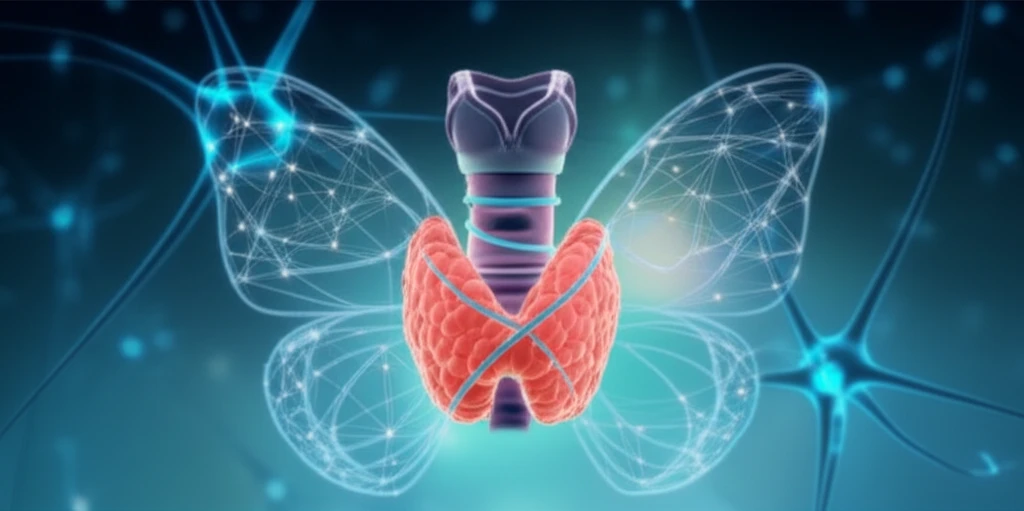
Thyroid gland intertwined with neurons, symbolizing the connection between physical and mental health.

Is There a Link Between Thyroid Issues and Mental Health? What the Latest Research Says

"Exploring the Connection Between Autoimmune Thyroiditis, Depression, and Anxiety"


Feeling anxious or down? While many factors can influence our mental well-being, emerging research suggests a possible link between physical health and mental health, specifically autoimmune thyroiditis (an inflammation of the thyroid gland) and mood disorders like depression and anxiety. But what exactly is the connection, and what does it mean for you?

The thyroid, a small butterfly-shaped gland in your neck, plays a vital role in regulating metabolism by producing hormones that influence nearly every organ in your body. Autoimmune thyroiditis, where the immune system mistakenly attacks the thyroid, can lead to hypothyroidism (underactive thyroid) or, less commonly, hyperthyroidism (overactive thyroid).

Recent studies, including a meta-analysis published in "JAMA Psychiatry," have explored the relationship between autoimmune thyroiditis and mental health. This article unpacks these findings, providing a clear understanding of the potential connection, its implications, and what you can do to protect your mental and physical health.

Unpacking the Research: How Are Thyroid Issues and Mental Health Connected?

Thyroid gland intertwined with neurons, symbolizing the connection between physical and mental health.

A systematic review and meta-analysis published in "JAMA Psychiatry" delved into the connection between depression/anxiety disorders and autoimmune thyroiditis. This research analyzed multiple studies to determine the strength of the association. Meta-analysis combines the results of multiple scientific studies to develop a single conclusion that has more statistical power than each of the individual studies.

The analysis revealed a significant association between autoimmune thyroiditis and an increased risk of both depression and anxiety disorders. While the exact mechanisms are still being investigated, several potential factors may contribute to this link:

  • Hormonal Imbalance: Thyroid hormones directly impact brain function, influencing neurotransmitter activity (like serotonin and dopamine) that play a crucial role in mood regulation.
  • Inflammation: Autoimmune diseases like thyroiditis involve chronic inflammation, which has been linked to mental health disorders. Inflammation can disrupt brain function and neurotransmitter systems.
  • Immune System Dysregulation: The immune system's role in autoimmune thyroiditis may also affect the brain. Cytokines, molecules released by the immune system, can influence mood and behavior.
  • Shared Genetic Vulnerability: Some individuals may have a genetic predisposition to both autoimmune disorders and mental health conditions.
It's important to remember that correlation doesn't equal causation. While the research suggests a link, it doesn't definitively prove that thyroiditis directly causes depression or anxiety. Other factors, such as genetics, lifestyle, and environmental influences, also play a significant role.

What Does This Mean for You? Taking Charge of Your Well-being

If you're experiencing symptoms of depression or anxiety and have a history of thyroid issues (or vice versa), it's crucial to consult with your healthcare provider. They can assess your thyroid function through blood tests and evaluate your mental health to determine the best course of action.

Early diagnosis and treatment of both thyroid disorders and mental health conditions are essential. Treatment for hypothyroidism typically involves thyroid hormone replacement therapy, which can help restore hormonal balance and improve mood. Mental health treatment may include therapy, medication, or a combination of both.

Beyond medical treatment, adopting a healthy lifestyle can also support both your thyroid and mental health. This includes a balanced diet, regular exercise, stress management techniques, and sufficient sleep. Addressing both your physical and mental well-being is key to living a happier, healthier life.

About this Article -

This article was crafted using a human-AI hybrid and collaborative approach. AI assisted our team with initial drafting, research insights, identifying key questions, and image generation. Our human editors guided topic selection, defined the angle, structured the content, ensured factual accuracy and relevance, refined the tone, and conducted thorough editing to deliver helpful, high-quality information.See our About page for more information.

Everything You Need To Know

1

What is autoimmune thyroiditis, and how might it be related to mental health?

Autoimmune thyroiditis, where the immune system mistakenly attacks the thyroid gland, can lead to hypothyroidism (underactive thyroid) or, less commonly, hyperthyroidism (overactive thyroid). These thyroid conditions have been associated with an increased risk of depression and anxiety disorders. It's important to understand that while there's an association, it doesn't definitively prove that autoimmune thyroiditis directly causes these mental health conditions.

2

What are the possible mechanisms that explain the connection between autoimmune thyroiditis and conditions like depression and anxiety?

Research suggests several potential factors contribute to the connection between autoimmune thyroiditis and mental health. Hormonal imbalance, due to the thyroid's role in producing hormones that influence neurotransmitter activity like serotonin and dopamine, can affect mood regulation. Chronic inflammation associated with autoimmune diseases, as well as immune system dysregulation involving cytokines, can also disrupt brain function. Shared genetic vulnerability might also predispose individuals to both autoimmune disorders and mental health conditions.

3

What did the "JAMA Psychiatry" study reveal about the link between autoimmune thyroiditis and mental health disorders?

The meta-analysis published in "JAMA Psychiatry" revealed a significant association between autoimmune thyroiditis and an increased risk of depression and anxiety disorders. Meta-analysis combines the results of multiple scientific studies to develop a single conclusion that has more statistical power than each of the individual studies. While the study demonstrates a link, it's important to remember that correlation doesn't equal causation, and other factors also play a role.

4

What should I do if I suspect a connection between my thyroid issues and my mental health?

If you're experiencing symptoms of depression or anxiety and have a history of thyroid issues, or vice versa, consulting with your healthcare provider is crucial. They can assess your thyroid function through blood tests and evaluate your mental health to determine the best course of action. Addressing both physical and mental health concerns is essential for overall well-being.

5

Are there any aspects of the relationship between thyroid issues and mental health that the current research hasn't fully explored yet?

While the research highlights the connections between autoimmune thyroiditis, depression, and anxiety, it doesn't specifically delve into the impact of other thyroid conditions or mental health disorders. For example, the role of specific autoantibodies in thyroiditis or the effectiveness of various treatments for co-occurring thyroid and mental health issues requires further exploration. Understanding these nuances could provide more targeted interventions and personalized treatment plans.

Newsletter Subscribe

Subscribe to get the latest articles and insights directly in your inbox.