
Is the Climate Changing Our Art? How Rising Temperatures Influence Creativity

"Discover the surprising link between global temperature trends and the lightness of paintings throughout history."
For centuries, we've understood that major social shifts—political upheavals, economic booms, and cultural transformations—are deeply intertwined with the human experience. But what drives these changes? Increasingly, research points to the subtle yet powerful influence of climate on our collective psychology and cultural expression. Recognizing how deeply climate change influences human societies, shaping everything from agriculture and migration to conflict, opens new perspectives on historical and contemporary issues.
While the profound effect of climate on culture may seem intuitive, quantifying this impact has long posed a challenge. Traditional methods often rely on textual analysis, which can be limited by data availability and may not fully capture the nuances of human emotion and cultural values. But there's another way of understanding and measuring human minds and cultures and that's through Art.
Now, imagine a world where art serves as a barometer of human sentiment, reflecting our deepest anxieties and aspirations in response to environmental shifts. A recent study does just that, by analyzing a vast collection of paintings across centuries to reveal the intricate relationship between climate and artistic expression. This innovative approach offers new insights into how climate change shapes human culture.
Centuries of Art: A Reflection of Temperature Trends
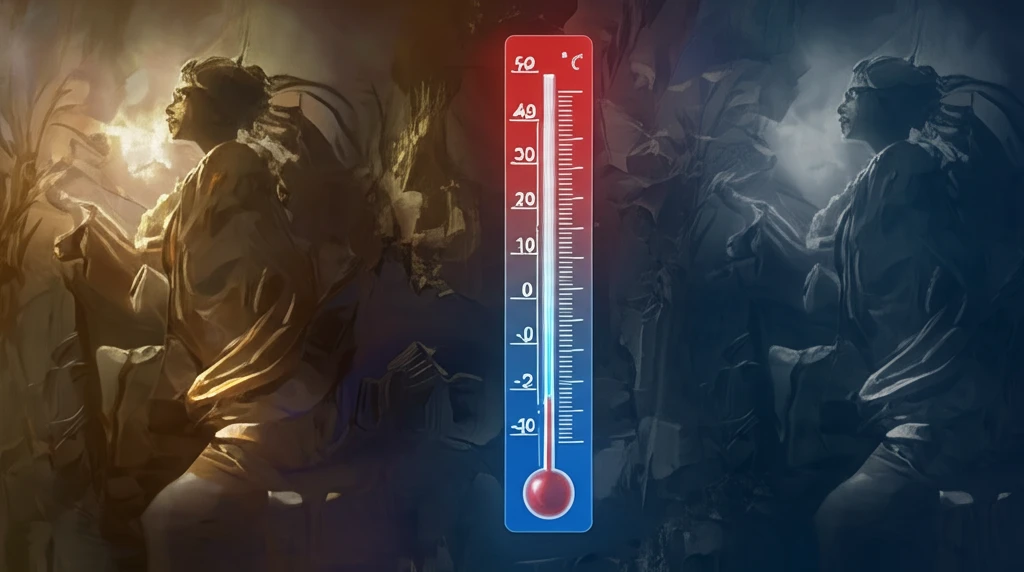
In a groundbreaking study, researchers analyzed a collection of 100,000 paintings created by 2,000 artists from the 13th to the 21st centuries. This extensive dataset allowed them to examine the lightness of paintings over time and correlate it with global temperature trends. The findings revealed a fascinating U-shaped pattern: paintings were initially brighter, became darker during colder periods, and then brightened again with rising temperatures.
- Medieval Warm Period: Characterized by warmer temperatures and brighter, more vibrant artwork.
- Little Ice Age: A period of colder temperatures reflected in darker, more subdued paintings.
- Recent Global Warming: Marked by a return to brighter and more vibrant artistic styles.
Art as a Tool for Understanding Our World
This study underscores the enduring impact of climate on the human mind and culture, positioning art as a valuable tool for understanding people's minds and cultures. By revealing the relationship between climate and artistic expression, this research offers a fresh perspective on the complex interplay between our environment and our creative spirit. As we continue to grapple with the challenges of climate change, understanding its wide-ranging effects—even on seemingly intangible aspects of human culture—is more critical than ever.