
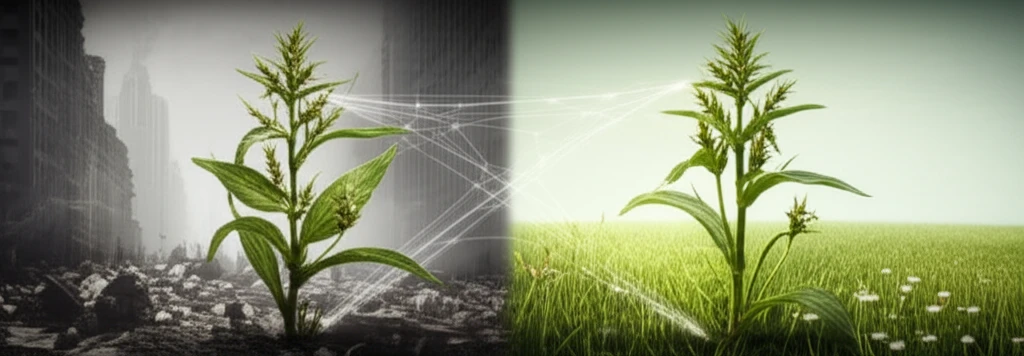
Is That "Healthy" Wild Plant Really Safe? The Hidden Dangers in Your Herbal Remedies

"Discover the potential risks of trace elements in wild plants like Plantago lanceolata, and how it could impact your health."
For centuries, humans have turned to nature's bounty for sustenance and healing. Wild plants, packed with nutrients and purported medicinal properties, hold a special appeal. But in an increasingly industrialized world, are these natural remedies truly as safe as we believe? The presence of trace elements in our environment—air, water, and soil—is a growing concern, and these elements can find their way into the plants we consume.
Plantago lanceolata L., also known as ribwort plantain, is a common plant found in grasslands and along roadsides. It's widely used in herbal preparations and even as a food source in many countries. However, a recent study sheds light on a potential dark side: the accumulation of trace elements in this seemingly harmless plant.
This article explores the findings of this study, which investigated the levels of various trace elements in Plantago lanceolata samples collected from different environments—rural, suburban/urban, and industrial. We'll delve into the potential health risks, compare the results with existing literature, and provide practical advice on how to safely forage and use wild plants.
What Lurks Beneath the Surface? Understanding Trace Elements in Wild Plants
Trace elements, such as arsenic, cadmium, lead, and zinc, are naturally present in the soil. However, human activities like mining, smelting, industrial processes, and agriculture can significantly increase their concentration. These elements can then be absorbed by plants through their roots, potentially accumulating in the leaves and other edible parts.
- Bioaccumulation Factor (BF): Indicates the plant's ability to absorb elements from the soil into its roots.
- Translocation Factor (TF): Shows how efficiently the plant moves elements from its roots to its leaves.
Making Informed Choices: Protecting Yourself from Potential Risks
While the study's findings might seem alarming, it's important to remember that not all wild plants are inherently dangerous. In many cases, the metal content in the Plantago lanceolata samples did not pose significant health risks. However, the research underscores the need for caution and informed decision-making when foraging for wild plants. By understanding the potential risks and taking appropriate precautions, you can continue to enjoy the benefits of nature's bounty while safeguarding your health.