
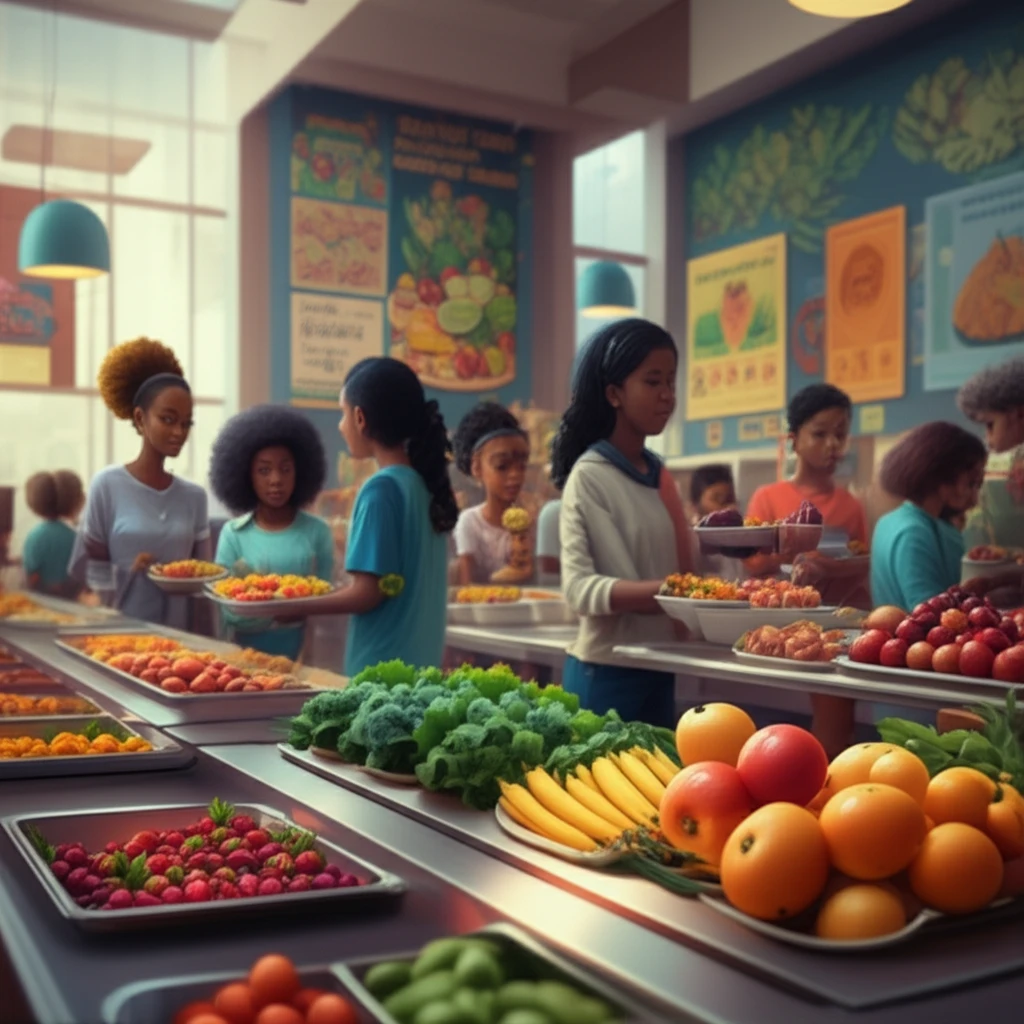
Is Organic Food in Schools the Key to Healthier Students? A Deep Dive

"Explore how integrating organic meals and educational programs in schools can transform student health and foster lifelong healthy habits."
The National School Food Program (PNAE), managed by the National Fund for Educational Development (FNDE), aims to enhance nutritional conditions, contribute to student learning and performance, and foster healthy eating habits. This initiative is crucial in reshaping school activities, offering strategic opportunities to transform students' eating practices and promote health and nutrition education within a broader context of citizenship.
Several Brazilian initiatives have been solidifying within schools, based on the Health Promoting Schools initiative, with the support of the Pan American Health Organization (PAHO). These programs promote healthy human development through constructive relationships and positive health attitudes. They also significantly expand the role of school meals in promoting health and nutrition education.
In Santa Catarina, a partnership between the State Department of Education, Science and Technology (SED) and the Association of Ecological Farmers of the Encosta da Serra Geral (AGRECO) has operationalized the Sabor Saber Project, benefiting schools by providing organic school meals. This project aims to gradually implement the School Project of Organic Food (PEAO) within the pedagogical framework of each state school, promoting good eating habits and improving meal quality through organic foods.
The Taste and Awareness Project: A Closer Look
A study was conducted in a state school in Florianópolis, Brazil, to diagnose the educational activities and use of organic food within the Taste and Awareness Project (PSS). The research employed a qualitative approach, using semi-structured interviews, document analysis, and focus groups to gather data from school meal managers, the principal, students, and teachers.
- Combining Organic Foods and Education: PSS effectively integrates organic food with educational activities.
- Lack of Formal Evaluation: The program needs structured assessments to measure its impact.
- Integration with Curriculum: Food and nutrition topics are discussed but not systematically integrated into the curriculum.
Moving Forward: Integrating Organic and Education
To fully realize the benefits of organic food in schools, it is essential to integrate it into the pedagogical project, ensuring that health and nutrition education are systematically incorporated into the curriculum. This includes providing teachers with adequate training and resources, fostering partnerships with local organic producers, and continuously evaluating the program’s impact on student health and learning. By doing so, schools can play a pivotal role in shaping healthier, more informed generations.