
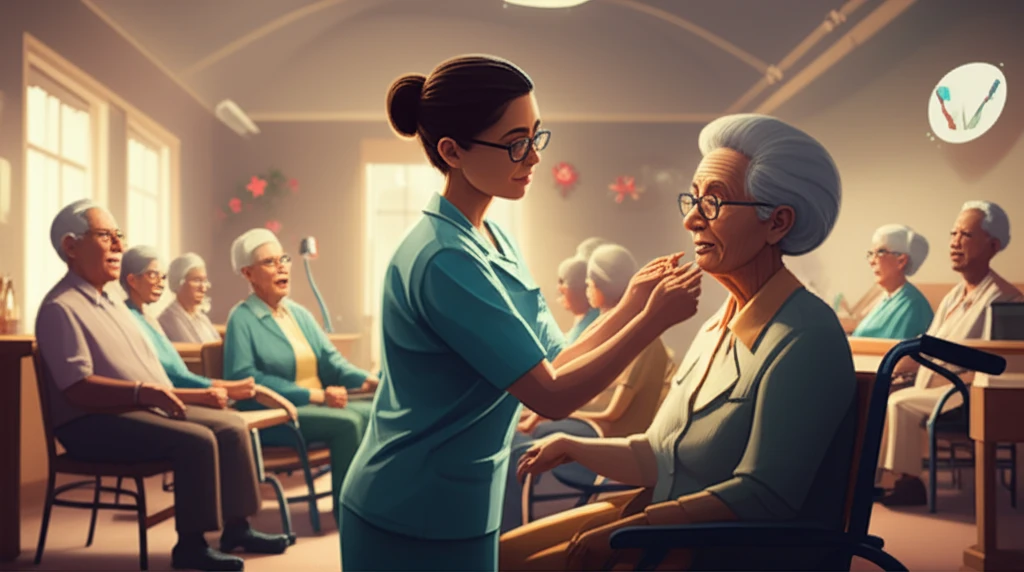
Nurse using ASBTO tool to screen elderly resident's oral health.

Is Nurse-Led Oral Health Screening the Future of Elderly Care? A New Look at the ASBTO Tool

"Discover how trained nurses can effectively assess oral health in elderly patients using the ASBTO tool, improving early detection and care in long-term facilities."


In long-term care facilities (LTCFs), oral health often takes a backseat, resulting in widespread neglect among residents. Studies consistently show a lack of adequate oral care, highlighting the urgent need for improved strategies and consistent attention.

As individuals age, their need for continuous care, including oral health, intensifies. Elderly populations often face poor oral health due to lifelong neglect. Those with dependencies or compromised autonomy are particularly vulnerable to poor oral hygiene.

Recognizing the need, there's a growing push for developing and validating tools that enable caregivers to screen elderly individuals, especially those with cognitive impairments, in LTCFs. These tools, combined with educational programs and tailored communication strategies, are crucial for enhancing oral health outcomes.

The ASBTO Tool: Empowering Nurses in Oral Health Screening

Nurse using ASBTO tool to screen elderly resident's oral health.

A recent study aimed to evaluate the effectiveness of the Oral Health Assessment Tool (ASBTO) when used by nurses to assess elderly residents in LTCFs. The goal was to determine its validity and reliability, ensuring it can be a trusted instrument for routine screenings.

The study involved nurses and dentists examining 50 elderly residents in a long-term care facility. The consistency of the nurses' assessments was measured using Cronbach’s Alpha coefficient and ANOVA, while stability and reliability were assessed through agreement percentages and Kappa tests. The results provided valuable insights into the tool's usability and effectiveness in the hands of nursing staff.

  • Improved Consistency: The study revealed that the ASBTO tool demonstrated good internal consistency when used by trained nurses.
  • High Agreement: Agreement percentages between nurses and dentists ranged from 60% in lip assessments to 90% in identifying natural teeth issues.
  • Moderate Kappa Value: The overall Kappa value for the instrument was 0.46, indicating moderate agreement, which is promising for a screening tool used by non-dental professionals.
These findings suggest that the ASBTO tool can be effectively used by nurses for initial oral health screenings, enabling earlier detection of potential issues and timely referrals to dental specialists. While the tool shows great promise, the study emphasizes the importance of adequate training and practical experience to standardize assessment criteria and ensure consistent results.

The Future of Oral Health in Elderly Care

By integrating tools like the ASBTO into routine care and providing comprehensive training, LTCFs can significantly improve the oral health and overall quality of life for their residents. Further research and implementation efforts will be essential to fully realize the potential of nurse-led oral health screening in elderly care.

About this Article -

This article was crafted using a human-AI hybrid and collaborative approach. AI assisted our team with initial drafting, research insights, identifying key questions, and image generation. Our human editors guided topic selection, defined the angle, structured the content, ensured factual accuracy and relevance, refined the tone, and conducted thorough editing to deliver helpful, high-quality information.See our About page for more information.

Everything You Need To Know

1

What is the ASBTO tool, and how is it used in elderly care?

The ASBTO (Oral Health Assessment Tool) is a screening tool designed to enable nurses in long-term care facilities (LTCFs) to assess the oral health of elderly residents. It's used for initial screenings to detect potential issues such as dental problems and poor oral hygiene. The goal is to facilitate early detection, prompt referrals to dental specialists, and improve overall oral health outcomes for older adults in these facilities.

2

Why is there a need for tools like the ASBTO in long-term care facilities?

Oral health often gets neglected in long-term care facilities, leading to poor oral health among residents. Elderly individuals, especially those with dependencies or cognitive impairments, are particularly vulnerable. The ASBTO tool helps address this issue by providing a standardized method for nurses to assess oral health, leading to earlier interventions. The use of tools like ASBTO combined with training programs and tailored communication strategies is crucial to improve oral health outcomes, ensuring that oral care receives the attention it deserves.

3

How reliable and valid is the ASBTO tool when used by nurses?

The study on ASBTO indicated that the tool demonstrates good internal consistency when used by trained nurses. The agreement percentages between nurses and dentists ranged from 60% to 90% across various assessments. The overall Kappa value of 0.46 indicated moderate agreement, suggesting that the ASBTO tool can be effectively used by nurses for initial oral health screenings. However, the study also emphasizes the importance of adequate training and practical experience to standardize assessment criteria and ensure consistent results.

4

What were the key findings regarding the ASBTO tool's effectiveness?

The study highlighted several key findings. The ASBTO tool demonstrated good internal consistency among trained nurses. High agreement percentages were observed between nurses and dentists, particularly in identifying natural teeth issues. A moderate Kappa value was achieved, indicating a reasonable level of agreement. These findings collectively suggest that nurses can effectively use the ASBTO for preliminary oral health assessments, helping in the early identification of potential problems and facilitating timely referrals to dental professionals.

5

How can the ASBTO tool improve the quality of life for elderly residents in long-term care facilities?

By integrating tools like the ASBTO into routine care and providing comprehensive training to nurses, long-term care facilities can significantly improve the oral health of their residents. Early detection of oral health issues, facilitated by the ASBTO, allows for timely interventions and treatments, leading to better oral hygiene and reduced discomfort. Improved oral health is directly linked to a higher quality of life, encompassing better eating habits, social interactions, and overall well-being for elderly residents. This approach supports the holistic health of older adults.

Newsletter Subscribe

Subscribe to get the latest articles and insights directly in your inbox.