
Is Microcapillary Culture the Future of Detecting H. pylori?

"A New Method Shows Promising Results in Diagnosing Stomach Infections, offering hope for more accurate and accessible testing."
Helicobacter pylori (H. pylori) is a common bacterium affecting a significant portion of the global population. While many infected individuals remain asymptomatic, H. pylori can lead to serious conditions such as gastritis, peptic ulcers, and even gastric cancer. Accurate and timely diagnosis is crucial for effective treatment and prevention of complications.
Traditional diagnostic methods, including classical culture (CC), rapid urease tests (CLO), and histopathology, have limitations in sensitivity and accessibility. Classical culture, while considered the gold standard, requires specialized equipment and conditions, hindering its widespread use. Other tests may lack the desired accuracy or be affected by factors such as medication use.
Now, a new method called microcapillary culture (MCM) is emerging as a promising alternative. This innovative approach offers increased sensitivity and ease of use, potentially revolutionizing H. pylori detection. This article explores the MCM technique, its advantages over traditional methods, and its potential impact on the future of H. pylori diagnostics.
How Does Microcapillary Culture (MCM) Work?
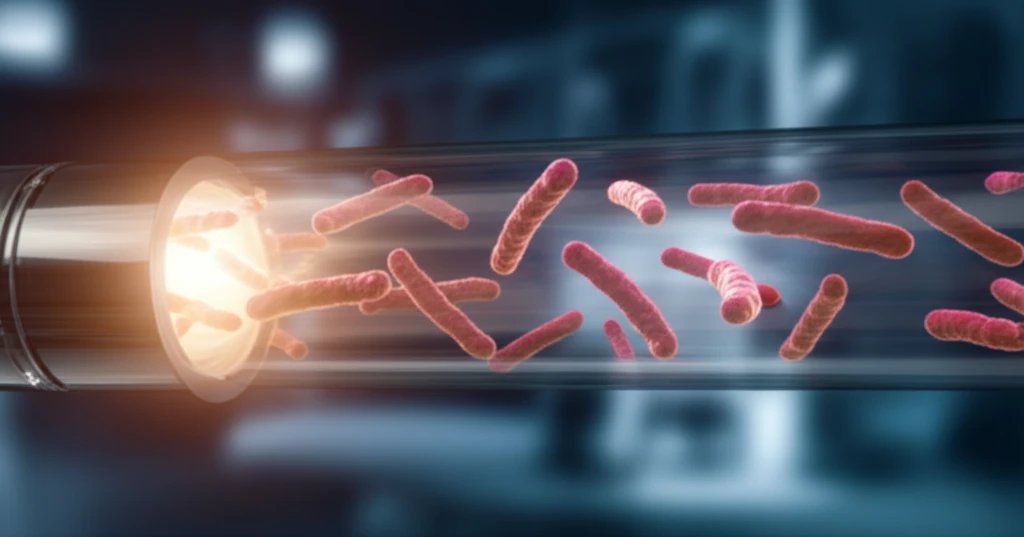
Microcapillary culture involves collecting small samples from stomach biopsies and placing them into thin capillary tubes. These tubes are then incubated without the need for a strictly controlled microaerophilic environment, simplifying the process. After incubation, the contents of the tubes are examined under a microscope to detect the presence of H. pylori. If H. pylori bacteria present, then they are evaluated and undergoe confirmatory classical culture testing.
- Increased Sensitivity: MCM was more effective at detecting H. pylori compared to traditional methods.
- Simplified Procedure: MCM does not require a strictly controlled microaerophilic environment.
- Potential for Early Detection: MCM could allow for the detection of bacteria even in samples with low bacterial counts.
What Does This Mean for the Future of H. pylori Diagnosis?
The findings suggest that microcapillary culture holds significant promise as a new diagnostic tool for H. pylori. Its high sensitivity and simplified procedure make it an attractive alternative to traditional methods. MCM could improve diagnostic accuracy, leading to more effective treatment and reduced complications.
However, further research is needed to optimize the MCM technique and address its limitations. Studies with larger patient populations are necessary to confirm these findings and refine the method.
Microcapillary culture has the potential to revolutionize H. pylori diagnostics, offering a more sensitive and accessible approach to detecting this common and potentially harmful bacterium. Future research will focus on optimizing the technique and exploring its applications in various clinical settings.