
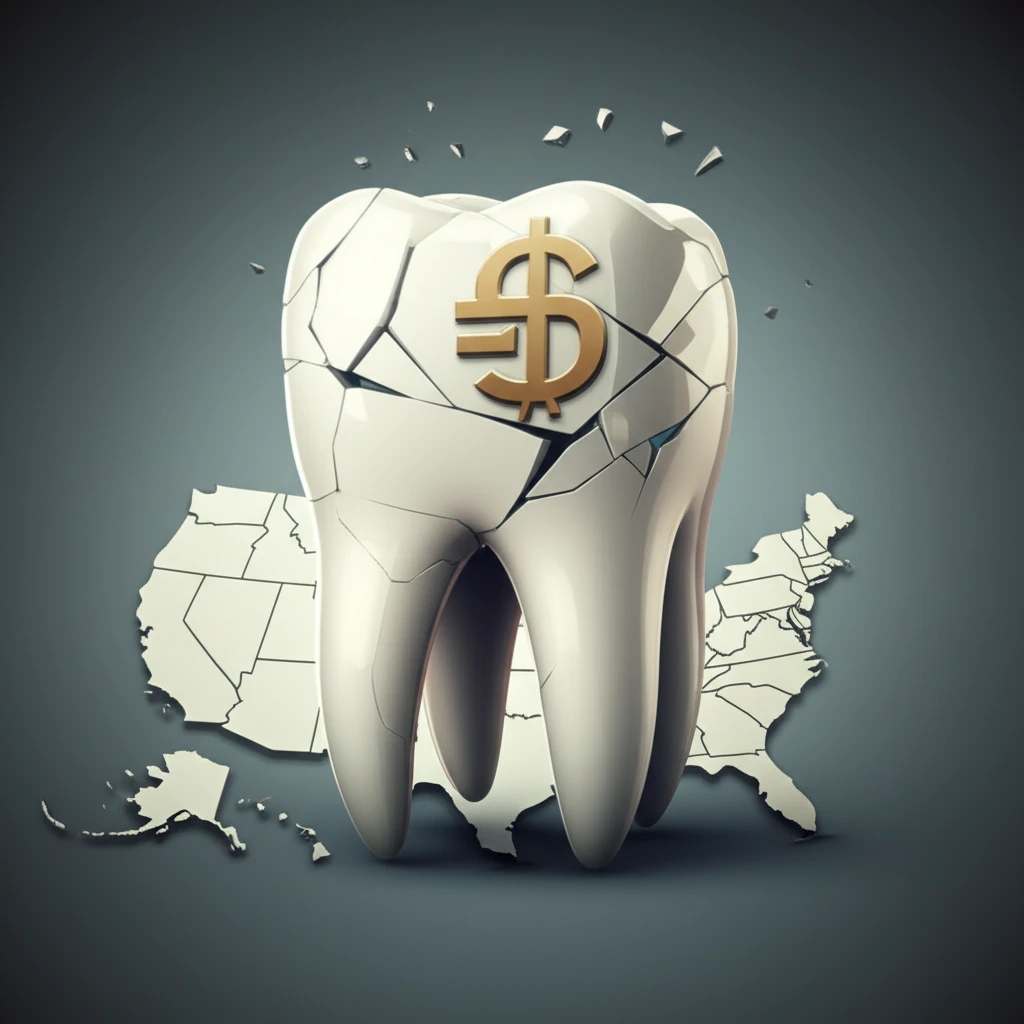
A fractured tooth pieced back together with a financial aid symbol representing Medicaid dental coverage.

Is Medicaid's Dental Coverage Gap Harming Adults? What the Research Says

"A new study reveals how non-emergency dental benefits impact access and affordability for low-income adults."


For many adults enrolled in Medicaid, access to dental care beyond emergency services is far from guaranteed. While some states offer comprehensive benefits, others provide limited or no coverage for non-emergency procedures like cleanings, fillings, and dentures. This patchwork system raises critical questions about fairness, health equity, and the long-term consequences of neglecting oral health needs for a significant portion of the population.

Recognizing this disparity, researchers have investigated the impact of Medicaid adult dental benefits on actual dental service utilization and expenditures. By analyzing data from thousands of Medicaid enrollees across different states, these studies shed light on whether coverage expansions translate to improved access, increased preventive care, and reduced financial burdens for low-income individuals. These are the questions our research addresses, exploring the nuances and consequences of a fragmented system.

This article will synthesize findings from a key study on Medicaid dental coverage, focusing on how non-emergency benefits affect service use, costs, and access to preventive care. By understanding these dynamics, individuals, healthcare advocates, and policymakers can work towards informed decisions about Medicaid benefits and strategies for improving dental health equity.

Medicaid Dental Benefits: A State-by-State Disparity

A fractured tooth pieced back together with a financial aid symbol representing Medicaid dental coverage.

The landscape of Medicaid dental coverage for adults is far from uniform. While all states offer some level of emergency dental services, the inclusion of non-emergency benefits—such as routine check-ups, fillings, and dentures—varies significantly. This creates a divide, impacting access to care and oral health outcomes for millions of low-income adults. Researchers highlight that factors, such as policy decisions, budget constraints, and differing priorities contribute to this state-by-state variation.

To understand the real-world impact of these coverage differences, a study was conducted using data from the Medical Expenditure Panel Survey (MEPS). The study examined how dental service utilization and expenditures differed between states that offered non-emergency dental benefits and those that did not. By analyzing a range of outcomes—including dental visits, preventive service use, and out-of-pocket spending—the researchers aimed to quantify the impact of Medicaid coverage on access to and affordability of dental care.

  • Increased Dental Visits: Enrollees in states with non-emergency dental coverage were approximately 9 percentage points more likely to have a dental visit.
  • Preventive Care Boost: These enrollees were also about 7 percentage points more likely to receive any preventive dental service.
  • Reduced Out-of-Pocket Costs: For those who had any dental visit, the out-of-pocket share of dental expenditures was significantly lower in covered states, by approximately 19 percentage points.
These findings suggest that Medicaid adult non-emergency dental benefits are associated with increased use of preventive and other dental services, along with a reduction in out-of-pocket costs for enrollees. However, the study also revealed that overall utilization rates remained low, even in states with coverage. This highlights the need to address other barriers to care, such as provider availability, transportation challenges, and lack of awareness about available benefits.

Policy Implications and The Path Forward

The research underscores that expanding Medicaid dental benefits can lead to tangible improvements in access to care and affordability for low-income adults. However, it also highlights that coverage alone is not enough to solve the problem of dental health inequities. To truly bridge the gap, a multi-pronged approach is needed.

Policymakers should consider strategies to address the following to bolster oral health across the board: <ul><li><b>Increase Provider Participation:</b> Enhance Medicaid reimbursement rates to encourage more dentists to participate in the program.</li><li><b>Expand Preventive Programs:</b> Invest in community-based dental programs and oral health education initiatives.</li><li><b>Address Social Determinants:</b> Tackle transportation barriers and other systemic issues that prevent people from accessing care.</li></ul>

By taking these steps, states can move closer to ensuring that all adults, regardless of income, have the opportunity to achieve and maintain good oral health.

About this Article -

This article was crafted using a human-AI hybrid and collaborative approach. AI assisted our team with initial drafting, research insights, identifying key questions, and image generation. Our human editors guided topic selection, defined the angle, structured the content, ensured factual accuracy and relevance, refined the tone, and conducted thorough editing to deliver helpful, high-quality information.See our About page for more information.

This article is based on research published under:

DOI-LINK: 10.1016/j.adaj.2018.08.010, Alternate LINK

Title: Association Between Medicaid Adult Nonemergency Dental Benefits And Dental Services Use And Expenditures

Subject: General Dentistry

Journal: The Journal of the American Dental Association

Publisher: Elsevier BV

Authors: Salam Abdus, Sandra L. Decker

Published: 2019-01-01

Everything You Need To Know

1

What is the difference in Medicaid dental coverage between states?

Medicaid dental coverage varies significantly from state to state. Some states offer comprehensive non-emergency dental benefits, like routine check-ups, fillings, and dentures, while others offer only emergency services or limited coverage. This variability creates a disparity in access to dental care for low-income adults, influencing their oral health outcomes and financial burdens.

2

Why are Medicaid adult dental benefits important?

Medicaid adult dental benefits are important because they directly impact the utilization of dental services. The research indicates that offering non-emergency benefits leads to a higher likelihood of dental visits, increased use of preventive care, and reduced out-of-pocket costs. These benefits are significant because they can improve oral health and financial well-being for enrollees.

3

What are the main impacts of expanding Medicaid dental benefits?

The findings suggest that expanding Medicaid dental benefits can improve access to care and affordability. Enrollees in states with non-emergency coverage are more likely to visit the dentist, receive preventive care, and pay less out-of-pocket. However, the research also reveals that simply having coverage is not enough. Other factors, like provider availability, transportation, and awareness of benefits, also influence access to care.

4

How was the research conducted to study Medicaid dental benefits?

The study used data from the Medical Expenditure Panel Survey (MEPS) to compare dental service utilization and expenditures between states offering non-emergency Medicaid dental benefits and those that did not. Researchers examined dental visits, preventive service use, and out-of-pocket spending to assess the impact of coverage on access and affordability.

5

What are the implications of the current system of Medicaid dental coverage?

The implications of a fragmented Medicaid dental system are significant. It can lead to dental health inequities, where low-income adults in states with limited coverage face barriers to care, resulting in poorer oral health outcomes. A multi-pronged approach is needed to bridge the gap, including coverage expansion, addressing provider availability, transportation, and awareness of benefits.

Newsletter Subscribe

Subscribe to get the latest articles and insights directly in your inbox.