
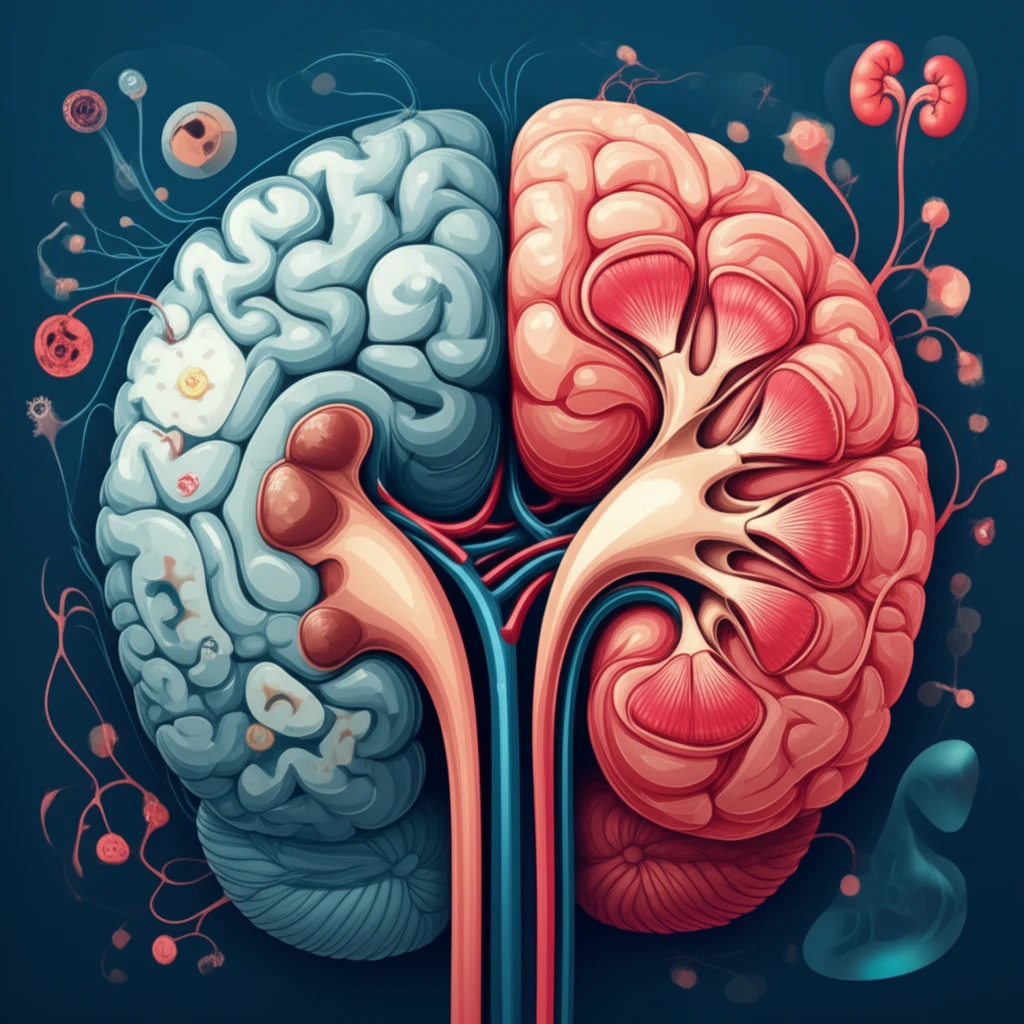
Is Kidney Disease Silently Stealing Your Brainpower? The Hidden Link You Need to Know

"Uncover the surprising connection between chronic kidney disease and cognitive decline, and what you can do to protect your mental sharpness."
We're increasingly aware of how interconnected our bodily systems are. Recent studies shed light on a concerning link between chronic kidney disease (CKD) and cognitive decline, meaning that kidney problems might affect your thinking and memory skills.
It's not just about aging; even in the earlier stages of CKD, cognitive abilities can decrease. This connection highlights the importance of understanding how kidney health can impact overall brain health.
This article explores the link between CKD and cognitive impairment. We'll break down the research, explain why this connection matters, and outline steps you can take to protect your cognitive function if you have CKD.
CKD and Cognitive Impairment: A Widespread Connection
Cognitive impairment is common among patients with chronic kidney disease and is associated with a poor prognosis, according to a systematic review and meta-analysis. Research indicates that CKD patients face a substantially higher risk for developing cognitive deficits compared with the general population, with both lower glomerular filtration rate and the presence of albuminuria linked to poorer cognitive function. This kidney-brain connection represents a significant clinical concern given the large number of people affected by CKD worldwide.
Methodological Challenges in Studying CKD-Related Cognitive Decline
Chronic kidney disease affects approximately 850 million people globally, and the prevalence of cognitive impairment among CKD patients ranges from 30 to 60%, though the link between CKD and cognitive impairment remains only partially understood. Researchers face significant methodological challenges and biases when studying cognitive function in CKD patients, complicating efforts to establish definitive causal relationships. Multiple intervention approaches have been explored to improve cognitive performance in CKD, but early intervention may be key to preventing progression of this condition.
Establishing the Kidney-Brain Axis
Cognitive impairment is often linked to renal decline, with the severity of cognitive deficits increasing in parallel with a reduction in glomerular filtration rate. A guidance document developed by the Cognitive Decline in Nephro-Neurology European Cooperative Target network provides comprehensive guidance on the epidemiology, risk factors, pathophysiology, diagnosis, and clinical management of CKD-related cognitive impairment. Research has established that both lower glomerular filtration rate and the presence of albuminuria are independently associated with the development of cognitive impairment.
The Surprising Ways Kidney Disease Impacts Your Brain
The relationship between CKD and cognitive decline is complex, but research points to several key factors. As kidney function declines, the body struggles to filter waste and regulate vital substances, leading to a cascade of effects that can impact the brain.
- Uremia: The buildup of toxins in the blood due to impaired kidney function can directly harm brain cells.
- Inflammation: CKD is often associated with chronic inflammation, which can damage brain tissue and impair cognitive function.
- Oxidative Stress: An imbalance between free radicals and antioxidants can lead to cellular damage in the brain.
- Anemia: Reduced kidney function can lead to anemia, depriving the brain of the oxygen it needs to function properly.
- Cardiovascular Issues: CKD increases the risk of hypertension and other cardiovascular problems, which can further impair cognitive function.
New Evidence on the Kidney-Brain Connection
A 2026 narrative review synthesizes current evidence on the pathophysiological mechanisms underlying CKD-associated cognitive decline, highlighting disruption of the kidney-brain axis. The review evaluates how CKD affects memory, executive function, and attention through multiple pathways. Researchers continue to explore the therapeutic potential of various interventions to address cognitive decline in this population.
Challenging Assumptions: GFR and Cognitive Risk
A cohort study of 5,607 participants with CKD from the Chronic Renal Insufficiency Cohort investigated whether CKD severity is truly associated with incident cognitive impairment. The findings raise important questions about which specific markers of kidney disease severity most reliably predict cognitive decline. This research challenges some earlier assumptions about the direct relationship between kidney function measures and brain health outcomes.
Comparing Markers of Kidney Disease Severity
Research examining different markers of CKD severity has produced nuanced findings regarding cognitive risk. Studies suggest that proteinuria may be a more significant predictor of cognitive decline than glomerular filtration rate alone, though this remains an area of active investigation. The relationship between various kidney function measures and cognitive outcomes warrants further comparative study to clarify which markers deserve the most clinical attention.
Protecting Your Brain: What You Can Do if You Have CKD
If you have CKD, taking steps to protect your cognitive function is essential. Early intervention and proactive management can make a significant difference.
Proteinuria as the Key Predictor
A 2026 investigation of approximately 5,600 people with chronic kidney disease found that a higher urinary protein to creatinine ratio was linked with impairments in attention, processing speed, and executive function over a median follow-up of 6 years. Notably, lower glomerular filtration rate was not associated with cognitive impairment after adjusting for proteinuria, suggesting proteinuria may be the more critical marker. A joint analysis of kidney function measures provides further insight into which patients face the greatest cognitive risk.
Unresolved Questions in CKD-Related Cognitive Decline
The relationship between CKD and cognitive impairment continues to evolve as new research emerges. Future studies will likely focus on identifying early biomarkers of cognitive decline and developing targeted interventions. Understanding the mechanisms linking kidney function to brain health remains a priority for improving patient outcomes.
The Clinical Challenge of Underrecognition
Cognitive impairment in chronic kidney disease is common and frequently underrecognized in clinical practice. The complexity of managing CKD alongside cognitive symptoms creates challenges for healthcare systems and patients alike. Greater awareness and systematic screening may be needed to address this hidden dimension of kidney disease burden.
Living with CKD and Cognitive Decline
Cognitive impairment represents a prevalent and debilitating complication for patients with chronic kidney disease, affecting daily functioning and quality of life. The disruption of the kidney-brain axis manifests in tangible ways that impact patients' ability to manage their condition, follow treatment plans, and maintain independence. Identifying risk factors and understanding whether CKD progression speed matters may help clinicians better detect and address cognitive symptoms early.
Here are some strategies to consider:
<ul> <li><b>Work Closely with Your Doctor:</b> Regular monitoring of kidney function and overall health is crucial. Discuss any cognitive changes or concerns with your healthcare provider.</li> <li><b>Manage Blood Pressure and Cardiovascular Risk Factors:</b> Keeping blood pressure under control and managing cholesterol levels can protect both your kidneys and your brain.</li> <li><b>Control Blood Sugar:</b> If you have diabetes, maintaining stable blood sugar levels is vital for preventing further kidney damage and cognitive decline.</li> <li><b>Follow a Kidney-Friendly Diet:</b> Limiting sodium, phosphorus, and potassium intake can help reduce the burden on your kidneys.</li> <li><b>Stay Active:</b> Regular physical activity can improve cardiovascular health, reduce inflammation, and boost cognitive function.</li> <li><b>Engage Your Mind:</b> Activities like puzzles, reading, and social interaction can help keep your brain sharp.</li> </ul>