
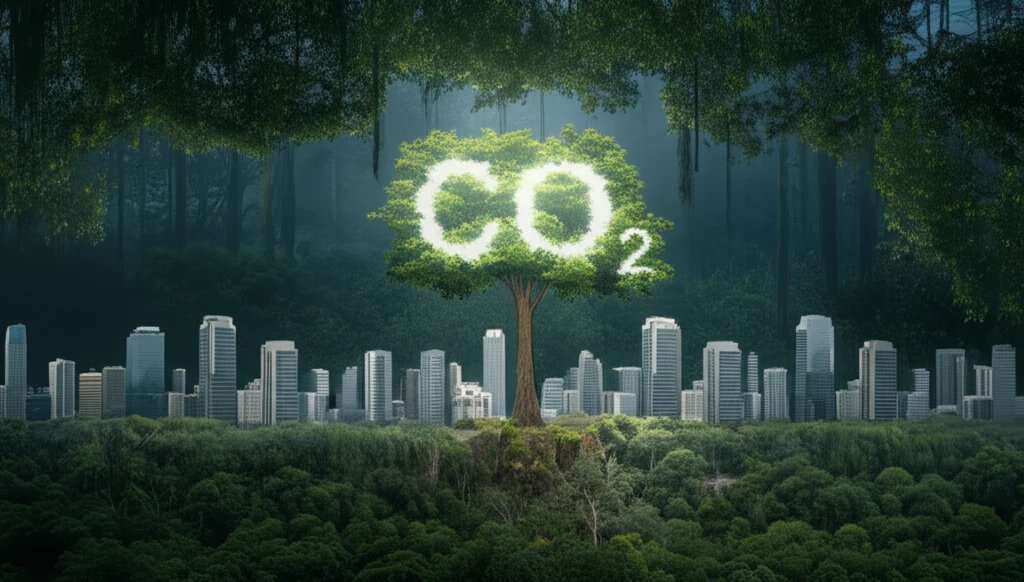
India's economic development intertwined with environmental sustainability

Is India Ready to Lead on Climate? Unpacking Its Evolving Relationship with CO2 Emissions

"A deep dive into India's economic growth, energy consumption, and its commitment to global climate agreements. Can the nation balance development with environmental responsibility?"


Climate change is one of the most pressing challenges of our time, with carbon dioxide (CO2) emissions as a primary driver. The international community has recognized the need for collective action, leading to agreements like the Kyoto Protocol and the Paris Agreement. These treaties aim to reduce greenhouse gas emissions and mitigate the impacts of a warming planet.

India, as one of the world's fastest-growing economies and a significant contributor to global emissions, plays a crucial role in these efforts. However, balancing economic development with environmental responsibility presents a unique set of challenges. The country faces the dual imperative of lifting millions out of poverty while simultaneously reducing its carbon footprint.

This article examines India's evolving relationship with CO2 emissions, exploring the factors that influence its trajectory and the effectiveness of its climate policies. We'll delve into the impact of economic growth, energy consumption, and international agreements on India's commitment to a sustainable future. Are India's actions aligning with its global commitments, and what more needs to be done?

The Kyoto Protocol: A Turning Point?

India's economic development intertwined with environmental sustainability

The Kyoto Protocol, adopted in 1997, marked a significant step in international climate policy. It set binding emission reduction targets for developed countries, while developing nations like India were encouraged to voluntarily limit their emissions as they reached certain income thresholds. This framework recognized the historical responsibility of industrialized nations in contributing to climate change.

However, the Kyoto Protocol's impact on India's CO2 emissions is a subject of debate. While the agreement aimed to promote cleaner technologies and sustainable practices, its effectiveness in curbing India's emissions growth remains questionable. Some argue that the country's focus on economic development has overshadowed its commitment to emission reduction targets.

  • Economic Growth vs. Emission Reduction: India's rapid economic expansion has led to increased energy demand, often met by carbon-intensive sources like coal.
  • Energy Consumption Patterns: Traditional, high-carbon fossil fuels used for power, transportation, heating, and cooking in homes and businesses have resulted in high emissions for the Indian economy.
  • Kyoto Protocol Impact: It remains debatable whether the Protocol effectively curbed emissions. It also brought questions about the commitment of developing countries like India to address global environmental issues.
Despite these challenges, India has taken steps to address climate change. It ratified the Kyoto Protocol in 2002 and voluntarily committed to reducing its emission intensity by 20-25% by 2020. The country has also implemented initiatives like the Clean Development Mechanism (CDM) and a National Action Plan on Climate Change. These efforts demonstrate India's growing awareness of the need to transition to a low-carbon economy.

Balancing Growth and Sustainability: A Path Forward

India's journey towards a low-carbon future is complex and multifaceted. While challenges remain, the country's growing awareness of climate change and its commitment to international agreements provide a foundation for progress. The key lies in balancing economic growth with environmental responsibility, promoting cleaner energy sources, and fostering international cooperation to achieve a sustainable future for all.

About this Article -

This article was crafted using a human-AI hybrid and collaborative approach. AI assisted our team with initial drafting, research insights, identifying key questions, and image generation. Our human editors guided topic selection, defined the angle, structured the content, ensured factual accuracy and relevance, refined the tone, and conducted thorough editing to deliver helpful, high-quality information.See our About page for more information.

Everything You Need To Know

1

What role did the Kyoto Protocol play in shaping India's approach to CO2 emissions?

The Kyoto Protocol, adopted in 1997, encouraged developing nations, including India, to voluntarily limit emissions as they reached certain income thresholds, while setting binding emission reduction targets for developed countries. While India ratified the Kyoto Protocol in 2002, the actual impact on curbing India's CO2 emissions is debated. Some suggest India's focus on economic development overshadowed its commitment to emission reduction targets, despite initiatives like the Clean Development Mechanism and a National Action Plan on Climate Change. The Kyoto Protocol acknowledged the historical responsibility of industrialized nations in contributing to climate change, a concept that continues to influence international climate negotiations.

2

How does India's rapid economic growth affect its ability to reduce CO2 emissions?

India's rapid economic expansion increases its energy demand, which has historically been met by carbon-intensive sources like coal. This creates a challenge, as reducing CO2 emissions requires a shift away from these traditional sources. Balancing economic growth with environmental responsibility is a key challenge for India. Investing in renewable energy sources and improving energy efficiency are crucial to decoupling economic growth from increased CO2 emissions. However, the transition requires significant investments and policy support to ensure continued economic progress without further environmental degradation.

3

What specific steps has India taken to demonstrate its commitment to reducing emission intensity?

India has ratified the Kyoto Protocol in 2002 and voluntarily committed to reducing its emission intensity by 20-25% by 2020. Furthermore, India has implemented initiatives like the Clean Development Mechanism (CDM) and a National Action Plan on Climate Change. These actions indicate India's growing awareness and commitment to transitioning to a low-carbon economy. While specific emission reduction targets are important, the implementation and effectiveness of these initiatives in achieving substantial emission reductions require ongoing monitoring and evaluation.

4

Beyond international agreements, what domestic factors contribute to India's CO2 emissions?

Traditional, high-carbon fossil fuels utilized for power, transportation, heating, and cooking in homes and businesses significantly contribute to India's CO2 emissions. Energy consumption patterns, heavily reliant on coal and other fossil fuels, drive emissions across various sectors. Addressing these domestic factors requires promoting cleaner energy sources, improving energy efficiency in buildings and transportation, and adopting sustainable practices in agriculture and industry. A comprehensive approach encompassing technological innovation, policy incentives, and behavioral changes is essential to mitigate CO2 emissions at the national level.

5

What are the implications if India fails to balance economic growth with environmental stewardship in relation to CO2 emissions?

If India fails to balance economic growth with environmental stewardship, it risks exacerbating the impacts of climate change, undermining its own sustainable development goals. Continued reliance on carbon-intensive energy sources could lead to increased air pollution, resource depletion, and vulnerability to climate-related disasters. Furthermore, failure to meet its international commitments could damage India's reputation and hinder its ability to attract foreign investment in green technologies. Balancing economic growth with environmental responsibility is crucial for ensuring a resilient and prosperous future for India and contributing to global climate stability. Prioritizing investments in renewable energy, promoting energy efficiency, and fostering sustainable practices are essential steps to mitigate these risks and achieve a more sustainable development path.

Newsletter Subscribe

Subscribe to get the latest articles and insights directly in your inbox.