
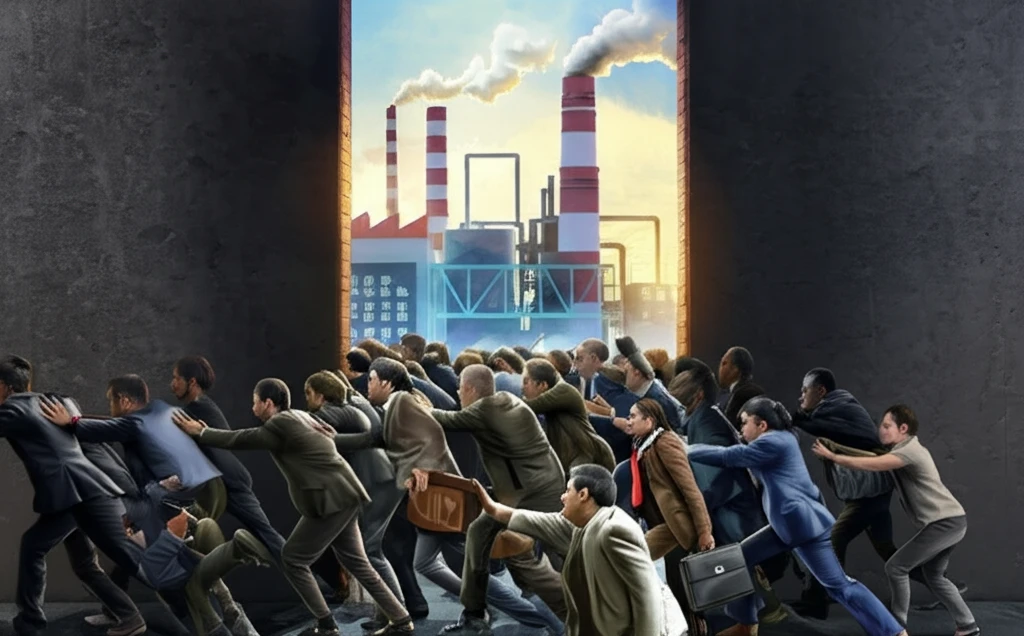
A visual metaphor representing the challenges and opportunities within the immigration and employment landscape.

Is Immigration Stealing Jobs? Unmasking the Truth Behind Migration and Unemployment

"New research reveals the complex relationship between immigration, job markets, and local unemployment rates – and what it means for you."


Immigration: a topic often simmering with controversy, especially when it comes to jobs. You've likely heard the arguments – that an influx of newcomers spells doom for local employment, a sentiment echoed in rising support for anti-immigration policies. But is this really the case? Do migrants swoop in and steal jobs, or is there more to the story?

The truth, as revealed by a recent study, is far more nuanced than simple headlines suggest. While some research confirms a short-term increase in unemployment among local workers following immigration, standard economic models often fail to capture the full picture. These models frequently assume that immigrants seamlessly integrate into the labor market without disrupting existing employment levels. However, real-world labor markets are rarely that simple.

This article unpacks the complexities of migration-induced unemployment, drawing on a new model that considers wages, job availability, and the overall health of the labor market. Discover how immigration can impact local workers, why these effects vary depending on economic conditions, and what policies might best navigate these challenges.

The Michaillat Model: A New Lens on Migration and Unemployment

A visual metaphor representing the challenges and opportunities within the immigration and employment landscape.

Traditional economic models often paint an incomplete picture of immigration's impact. To address this, economist Pascal Michaillat developed a model that factors in job rationing – the idea that there aren't always enough jobs to go around. This model blends a matching framework (connecting job seekers with employers) with the reality that available positions can be limited. It's like adding a crucial ingredient to a recipe, allowing for a more accurate understanding of how migration affects unemployment.

The Michaillat model works by acknowledging that when new workers arrive, the competition for jobs intensifies. This increased competition can drive down labor-market tightness – a measure of how easy it is for job seekers to find work. As labor-market tightness decreases, local workers face a tougher time landing jobs, leading to a rise in unemployment rates. However, this isn't the end of the story. The model also recognizes that immigration can benefit firms by making it easier to fill vacancies, boosting their profits. The overall impact on local welfare, therefore, depends on the state of the labor market.

  • When the labor market is slack: In-migration tends to reduce local welfare, as the increased competition for limited jobs outweighs any benefits to firms.
  • When the labor market is tight: In-migration can actually enhance welfare by easing labor shortages and boosting firm profits, more than offsetting any negative impacts on local workers' job prospects.
Essentially, the Michaillat model suggests that the impact of immigration is highly context-dependent. It's not simply a matter of migrants 'stealing' jobs; it's a complex interplay of labor supply, demand, and overall economic health.

What This Means for Policy and Public Perception

The Michaillat model provides valuable insights for policymakers grappling with immigration. It highlights the importance of considering the overall economic context when designing immigration policies. A one-size-fits-all approach is unlikely to be effective. Instead, policies should be tailored to the specific conditions of the labor market. This could involve encouraging immigration during periods of labor shortage and limiting it when unemployment is high. Ultimately, understanding the nuances of migration's impact is crucial for creating policies that benefit both local workers and the economy as a whole.

About this Article -

This article was crafted using a human-AI hybrid and collaborative approach. AI assisted our team with initial drafting, research insights, identifying key questions, and image generation. Our human editors guided topic selection, defined the angle, structured the content, ensured factual accuracy and relevance, refined the tone, and conducted thorough editing to deliver helpful, high-quality information.See our About page for more information.

This article is based on research published under:

DOI-LINK: https://doi.org/10.48550/arXiv.2303.13319,

Title: Modeling Migration-Induced Unemployment

Subject: econ.gn q-fin.ec

Authors: Pascal Michaillat

Published: 23-03-2023

Everything You Need To Know

1

What is the central argument about immigration and jobs, and what does the Michaillat model reveal?

The core debate revolves around whether immigration negatively impacts local employment. The Michaillat model, developed by economist Pascal Michaillat, offers a more nuanced perspective. It moves beyond simplistic views by incorporating job rationing, recognizing that the number of available jobs isn't always sufficient. This model considers factors such as labor market tightness, wage levels, and overall economic health to provide a more accurate understanding of how migration affects unemployment, differentiating itself from traditional economic models.

2

How does the Michaillat model function, and what key elements does it integrate to assess immigration's effects?

The Michaillat model integrates a matching framework, connecting job seekers with employers, alongside the reality of limited job availability, also known as job rationing. This approach allows the model to account for increased competition in the labor market when new workers arrive. The model looks at how immigration affects labor-market tightness, a metric reflecting the ease with which individuals can find employment. A decrease in labor-market tightness suggests a more challenging job search for local workers, potentially leading to higher unemployment rates. The model also acknowledges the benefits to firms from increased labor supply, recognizing a complex interplay of factors beyond a simple job-stealing narrative.

3

In what specific labor market conditions does immigration's impact differ according to the Michaillat model?

The Michaillat model highlights that the impact of immigration varies significantly depending on the labor market conditions. When the labor market is slack, meaning there are limited jobs relative to job seekers, immigration tends to reduce local welfare due to intensified competition. Conversely, when the labor market is tight, indicating a shortage of workers, immigration can enhance welfare by alleviating labor shortages and boosting firm profits, potentially offsetting negative impacts on local workers.

4

What insights does the Michaillat model offer to policymakers regarding immigration policies?

The Michaillat model emphasizes the importance of context-specific, rather than a one-size-fits-all approach, when designing immigration policies. Policymakers should carefully consider the overall economic conditions and labor market dynamics. For example, policies might encourage immigration during periods of labor shortages and limit it when unemployment rates are high. Understanding the nuances of migration's impact is crucial for creating policies that support both local workers and the overall economy.

5

Why do traditional economic models sometimes fail to accurately assess the impact of immigration on employment?

Traditional economic models often oversimplify the interaction between immigration and employment. These models frequently assume that immigrants seamlessly integrate into the labor market without disrupting existing employment levels. This assumption overlooks real-world complexities like job rationing and variations in labor market tightness. The Michaillat model improves upon this by incorporating these factors, providing a more realistic and accurate understanding of immigration's effects on local workers and the broader economy.

Newsletter Subscribe

Subscribe to get the latest articles and insights directly in your inbox.