
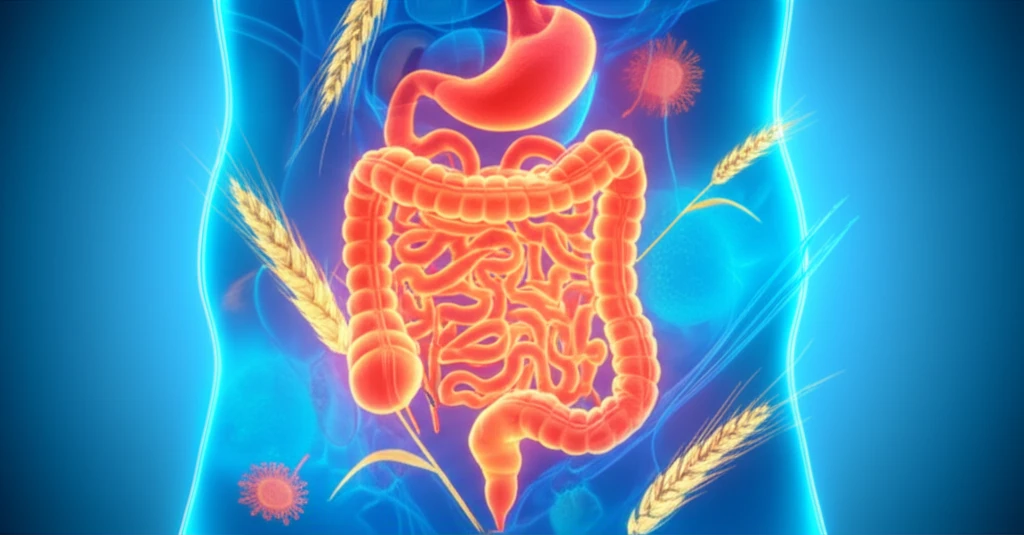
Interconnected digestive and immune systems with wheat.

Is Gluten Sensitivity More Than Just a Gut Feeling? The Autoimmune Connection You Need to Know

"Uncover the surprising link between gluten sensitivity, autoimmune diseases, and what it means for your health. Could your digestive issues be a sign of something more?"


For many, the words 'gluten-free' conjure images of trendy diets and health fads. But for a growing number of people, avoiding gluten is far from a lifestyle choice; it's a necessity for managing a condition known as non-celiac gluten sensitivity (NCGS). NCGS is characterized by a range of unpleasant gastrointestinal symptoms like diarrhea, abdominal pain, and bloating, triggered by the consumption of gluten.

While the symptoms of NCGS are primarily digestive, recent research suggests that the condition may involve more than just the gut. Studies are beginning to explore a potential link between NCGS and autoimmune disorders, raising important questions about the underlying mechanisms and long-term health implications.

This article dives into the fascinating world of NCGS, exploring the connection between gluten sensitivity and autoimmunity, what the symptoms are, and provides expert advice on what you should do.

NCGS and Autoimmunity: What's the Link?

Interconnected digestive and immune systems with wheat.

The idea that NCGS could be linked to autoimmune disorders isn't entirely new. Celiac disease, a well-known autoimmune condition triggered by gluten, has long been associated with other autoimmune problems. Researchers have observed that people with celiac disease are more likely to develop conditions like thyroiditis, type 1 diabetes, and rheumatoid arthritis.

Recent studies suggest that NCGS shares some immunological characteristics with autoimmune disorders, leading scientists to investigate a possible connection. Microscopic enteritis, an inflammation of the small intestine, is observed in some patients with NCGS. Enhanced infiltration of intraepithelial lymphocytes (IELs) in duodenal mucosa has been considered as the cause of mucosal damage mediated by the immune system. This immune activation could be a key factor linking NCGS to autoimmunity.

  • Increased Intestinal Permeability: Gluten can trigger increased intestinal permeability ('leaky gut') in susceptible individuals. This may allow molecules to cross the gut barrier, potentially triggering an immune response.
  • Molecular Mimicry: Gluten proteins may resemble certain proteins found in the body's tissues. The immune system may mistakenly attack these tissues.
  • Inflammatory Cytokines: Gluten can stimulate the release of pro-inflammatory cytokines, contributing to systemic inflammation and potentially triggering or exacerbating autoimmune conditions.
One particular study highlighted a potential link between NCGS and autoimmune thyroiditis, an autoimmune condition affecting the thyroid gland. The study found that people with NCGS were more likely to have autoimmune thyroiditis than those without gluten sensitivity.

What does this mean for you?

While more research is needed to fully understand the relationship between NCGS and autoimmune disorders, the current evidence suggests that the connection is worth considering. If you're experiencing digestive symptoms after eating gluten, especially if you have a family history of autoimmune disease, it's important to talk to your doctor.

About this Article -

This article was crafted using a human-AI hybrid and collaborative approach. AI assisted our team with initial drafting, research insights, identifying key questions, and image generation. Our human editors guided topic selection, defined the angle, structured the content, ensured factual accuracy and relevance, refined the tone, and conducted thorough editing to deliver helpful, high-quality information.See our About page for more information.

This article is based on research published under:

DOI-LINK: 10.3390/nu10122001, Alternate LINK

Title: Predictivity Of Autoimmune Stigmata For Gluten Sensitivity In Subjects With Microscopic Enteritis: A Retrospective Study

Subject: Food Science

Journal: Nutrients

Publisher: MDPI AG

Authors: Giuseppe Losurdo, Mariabeatrice Principi, Andrea Iannone, Antonio Giangaspero, Domenico Piscitelli, Enzo Ierardi, Alfredo Di Leo, Michele Barone

Published: 2018-12-18

Everything You Need To Know

1

What is non-celiac gluten sensitivity (NCGS), and how does it differ from Celiac disease?

Non-celiac gluten sensitivity (NCGS) is a condition where individuals experience gastrointestinal symptoms, such as diarrhea, abdominal pain, and bloating, after consuming gluten, but do not have Celiac disease. Unlike Celiac disease, which is a well-defined autoimmune disorder, NCGS lacks the specific autoimmune markers and intestinal damage characteristic of Celiac disease. However, recent research suggests that NCGS may share some immunological characteristics with autoimmune disorders, potentially increasing the risk of developing such conditions.

2

What are the main digestive symptoms associated with non-celiac gluten sensitivity (NCGS)?

The primary digestive symptoms associated with non-celiac gluten sensitivity (NCGS) include diarrhea, abdominal pain, and bloating. These symptoms arise after consuming gluten and can significantly impact an individual's quality of life. While these symptoms are mainly digestive, it's important to recognize that the implications of NCGS might extend beyond the gut, potentially involving a connection to autoimmune disorders.

3

How might non-celiac gluten sensitivity (NCGS) be linked to autoimmune disorders?

The link between non-celiac gluten sensitivity (NCGS) and autoimmune disorders is complex. Several mechanisms are under investigation. Increased intestinal permeability, or "leaky gut," which may be triggered by gluten, allows molecules to cross the gut barrier, potentially triggering an immune response. Molecular mimicry, where gluten proteins resemble the body's tissues, may cause the immune system to attack them. Additionally, gluten can stimulate the release of pro-inflammatory cytokines, contributing to systemic inflammation and possibly triggering or exacerbating autoimmune conditions.

4

What is the role of increased intestinal permeability in the context of non-celiac gluten sensitivity (NCGS) and autoimmunity?

Increased intestinal permeability, often referred to as "leaky gut," plays a crucial role in the connection between non-celiac gluten sensitivity (NCGS) and autoimmunity. When the gut barrier becomes more permeable due to gluten exposure, molecules that would normally be contained within the gut can cross into the bloodstream. This can trigger an immune response as the body perceives these molecules as foreign invaders. Over time, this constant immune activation may contribute to systemic inflammation and potentially increase the risk of developing autoimmune conditions.

5

If someone experiences digestive symptoms after eating gluten, and has a family history of autoimmune disease, what steps should they consider?

If someone experiences digestive symptoms after eating gluten, especially if there is a family history of autoimmune disease, it's crucial to consult a doctor. The doctor can assess the symptoms, conduct tests to rule out or confirm conditions like Celiac disease, and explore the possibility of non-celiac gluten sensitivity (NCGS). Further investigation may involve dietary modifications, such as a gluten-free diet, and monitoring for any improvements in symptoms. The doctor can also assess for potential underlying autoimmune conditions, given the increased risk in individuals with NCGS and a family history of autoimmune disorders.

Newsletter Subscribe

Subscribe to get the latest articles and insights directly in your inbox.